
Marionette lines are the vertical folds or shadows that run from the corners of the mouth toward the chin. They can make a face look tired or downturned, even when you feel neither.
This page explains how to view a consented gallery, compare images fairly, understand how Dr. Leonard Grossman plans and performs Restylane treatment, and prepare questions for your consultation.
Key Takeaways
- Judge photos by timing, expression, lighting, angle, and anatomy, not by the image alone.
- Restylane is a family of hyaluronic acid fillers, and the right choice depends on the individual face.
- Good results soften shadows and folds so you still look like yourself, rather than erasing every line.
- Credible galleries document consent, treatment details, and unaltered images.
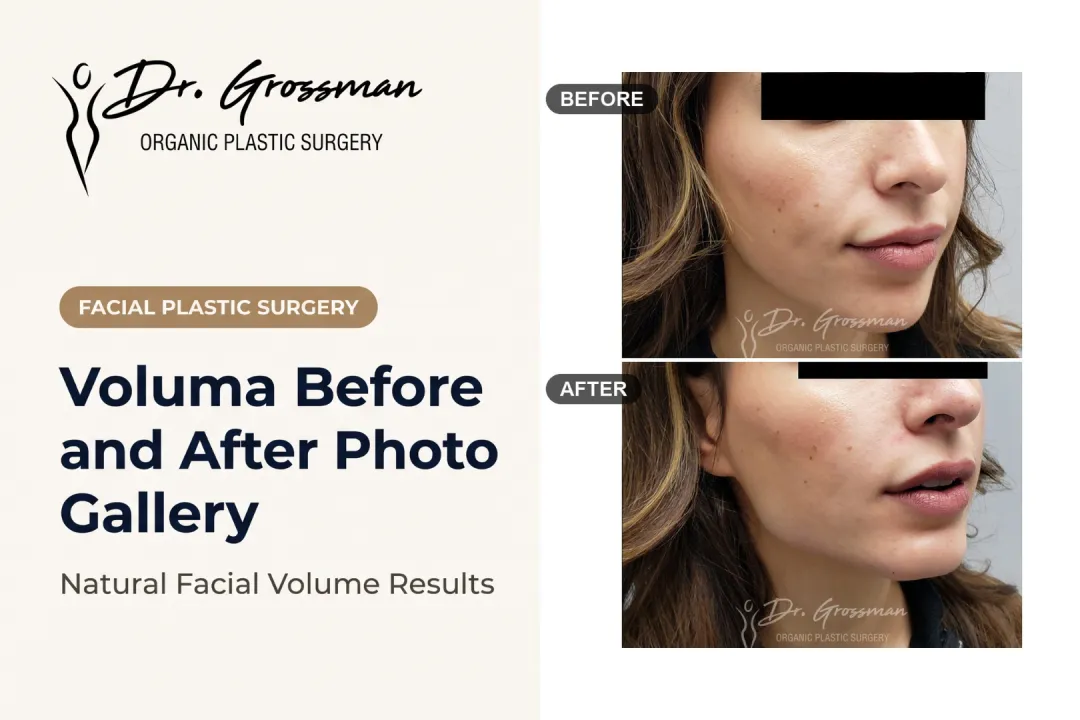
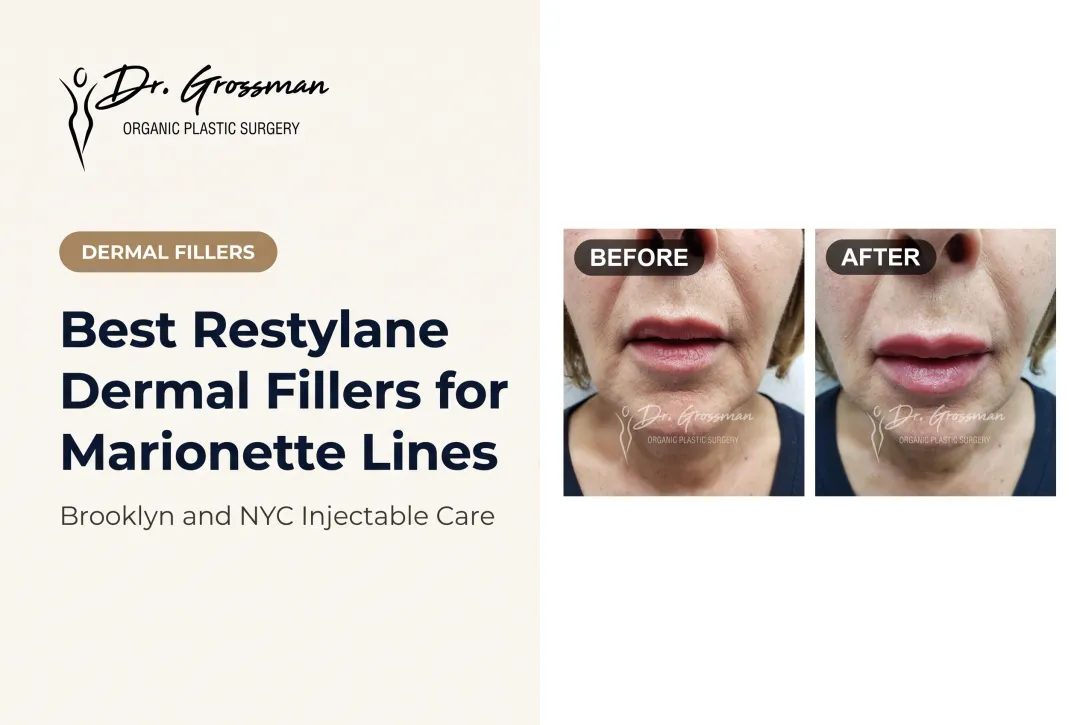
Restylane Marionette Lines Before and After Gallery
Dr. Leonard Grossman has used Restylane since 1995, when it was still in its experimental stages, and the practice reports more than 800 patients treated with Restylane products in that year alone. His Restylane before-and-after gallery is on his website, and the most useful photo review happens at your consultation in Brooklyn, NYC, where before-and-after photos are reviewed with you and he explains what is realistic for your own anatomy and concern.
How to Use This Gallery
When you look at Restylane marionette lines before and after photos, find cases that match your own concern:
- Mild lines
- Deeper folds
- Downturned mouth corners
- Broader lower-face volume loss
Matching the concern matters because patients with these different problems do not receive the same treatment, the same product, or the same amount of filler.
What Each Caption Should Include
- Treatment date or follow-up interval
- Front or oblique view
- Facial expression
- Whether the image shows an early, intermediate, or settled result
If a photo lacks these details, ask the practice that posted it. At your consultation, Dr. Grossman explains which Restylane formulation and which areas (sometimes the cheeks or chin as well as the fold itself) he would plan for you, and whether treatment would be staged.
Image Disclaimer
Outcomes vary with facial anatomy, skin quality, age, metabolism, muscle activity, previous procedures, and aftercare. A gallery illustrates what happened for one patient. It does not promise what will happen for you.
How Restylane May Improve Marionette Lines
A 2024 peer-reviewed review describes marionette lines, also called melomental folds, as downward-curving lines from the mouth corners. Contributors include:
- Bone resorption
- Loss of skin and subcutaneous support
- Tissue descent from gravity
- Pull from the depressor anguli oris muscle
What Filler Does
Hyaluronic acid filler can restore volume and support in selected facial planes. That may reduce shadowing and smooth the transition between the mouth, lower cheek, chin, and jawline. Dr. Grossman's Restylane page names marionette lines, "the lines running down from the corners of the mouth", among the folds Restylane softens.
Treatment is not always about the crease itself. Dr. Grossman's view of facial aging is that gradual volume loss, more than gravity, creates the "deflated" look, so he evaluates the cheeks, mouth corners, chin, and jawline to see whether lost support nearby is deepening the line.

Restylane Is a Product Family
Restylane is not a single filler. FDA notes that filler approvals are product- and site-specific. According to Galderma's U.S. product information:
- Restylane Defyne is indicated for deep facial wrinkles and folds, and for chin augmentation in mild-to-moderate chin retrusion.
- Restylane Lyft is indicated for deep folds, cheek augmentation, and midface contour deficiencies.
- Restylane Silk is indicated for lip augmentation and perioral wrinkles.
None of these listings expressly names marionette lines as an indication, so ask how a chosen product fits your anatomy. Dr. Grossman's own Restylane pages describe Restylane, Restylane Lyft for the cheeks and midface, and Restylane Sub-Q for the cheeks and chin.
Realistic Expectations
Filler can soften lines and improve balance. It cannot stop aging or permanently remove every crease. ASPS notes that minimally invasive treatments cannot match facelift results, which matters when skin laxity or tissue descent is significant. For patients who want longer-lasting volume, Dr. Grossman may also discuss facial fat grafting with their own fat, the basis of his Organic Plastic Surgery approach.
How to Read Restylane Before-and-After Photos
Photography can change how a line looks as much as filler can. A slight smile, a tilted chin, or a shadow from overhead light can deepen or hide a fold.
Compare Like With Like
Look for matching:
- Head position and camera distance
- Lighting and background
- Makeup and image scale
- Facial expression
A 2021 study of 51 subjects found that changing light angle significantly shifted ratings of attractiveness and perceived BMI. Lighting alone can alter how a face reads.
Name the Specific Change
Skip vague words like "rejuvenated." Look for concrete differences: less shadowing at the mouth corners, a less downturned appearance, smoother transitions to the chin, or better lower-face balance.
Check Gallery Credibility
- Written patient consent
- No filters, retouching, or AI enhancement
- Clearly stated treatment dates
- Consistent photography
- Disclosure of whether the result came from one session or a staged plan
Mind the Follow-Up Interval
Early photos may show swelling, redness, or temporary asymmetry. Later photos better represent the settled outcome. A good gallery labels the interval instead of passing off an immediate image as final.
What to Expect Before, During, and After Restylane Treatment
The Consultation
Expect a review of:
- Medical history, allergies, and medications
- Previous filler, facial movement, and skin quality
- Your treatment goals
Dr. Grossman examines you himself and judges whether your lines come mainly from volume loss, muscle activity, laxity, or a mix, then tells you honestly whether filler, fat, or another approach fits. FDA patient information for Defyne also notes treatment-area photographs at this stage.
The Procedure
The skin is cleansed, Dr. Grossman maps out the injection sites for balanced, symmetrical results, and a numbing cream may be applied for comfort. Placement is conservative and guided by anatomy, and results are visible immediately. Treatment uses fine needles, with no incisions or stitches. Defyne patient information says the procedure usually takes 15 to 30 minutes.

Afterward
Common effects include:
- Tenderness, swelling, and redness
- Bruising, and sometimes lumps
Defyne patient information says temporary reactions generally last 1 to 2 weeks, while the FDA summary expects most to resolve within a week. Dr. Grossman's Restylane page notes that mild swelling, redness, or bruising usually subsides within a few days, and recovery rarely interrupts your routine: most patients return to regular activities right away. Treat these as ranges, not a schedule.
Follow the instructions you are given about pressure on the area. Longevity depends on the area treated and your skin, so check how long after treatment each later gallery photo was taken.
Safety, Candidacy, and Choosing a Qualified Provider
Risks
FDA warns that infection and raised nodules are possible. The most concerning risk is accidental injection into a blood vessel, which can cause tissue necrosis, vision problems including blindness, and stroke.
Seek immediate care for unusual pain, vision changes, or white, gray, or blue skin near the injection site.
Candidacy
Tell your provider about:
- Allergies, including to lidocaine
- Pregnancy or breastfeeding (filler safety has not been studied in either)
- Active skin infection near the treatment site
- Bleeding disorders and blood-thinning medication
- Previous filler
Never stop a prescribed medication without medical advice.
Choosing a Provider
Look for:
- Documented plastic surgery residency training, not a weekend injection course
- Knowledge of facial anatomy
- Transparent photo documentation and informed consent
- Emergency protocols
- Willingness to recommend conservative or alternative treatment
Dr. Leonard Grossman completed a fully accredited plastic surgery residency at Scott & White Memorial Hospital in Texas in 1995 and has practiced in New York City for more than 30 years. He treats patients at his fully accredited (AAAHC) office-based center at 3039 Emmons Avenue in Brooklyn, where you can talk through Restylane marionette lines before and after expectations with him and plan your own treatment in private.

Frequently Asked Questions
What is the best filler for marionette lines before and after?
There is no universal best. The right Restylane formulation, or an alternative such as your own fat, depends on anatomy, line depth, volume loss, skin quality, and goals, and Dr. Grossman chooses it after examining you in person.
What should I look for in Restylane marionette lines before-and-after photos?
Look for consistent lighting, angle, and expression, plus stated timing and treatment details. Confirm patient consent and that images are not digitally altered.
How long does Restylane for marionette lines last?
Dr. Grossman's practice cites 6 to 18 months for Restylane, depending on the area and your skin. Formulation, placement, facial movement, and metabolism all play a part, so expect a range rather than a fixed date.
Will Restylane completely erase marionette lines?
Filler aims to soften folds and improve balance, not erase them completely. Skin laxity or deeper structural changes limit what it can do, and Dr. Grossman will tell you if another approach would serve you better.
What can I expect immediately after Restylane treatment for marionette lines?
Results show right away. Mild swelling, bruising, redness, or tenderness usually subsides within a few days, and most patients resume regular activities immediately. Contact the office about any worsening or concerning symptoms.