
Some swelling, tenderness, discoloration, tightness, itching, or sensitivity can follow surgery. The course varies with technique, anatomy, healing, and aftercare. This guide covers how scars and pain typically change, what affects healing, safe recovery habits, and which symptoms your operating surgeon should review.
Key Takeaways
- Early firmness, swelling, and tenderness don't predict the final result.
- Pain should trend downward; worsening or persistent pain needs medical advice.
- Friction, pressure, early sex, and unapproved products can disrupt healing.
- No surgeon can promise a scar that never shows or an identical recovery, but technique and aftercare help keep scarring minimal.
How Labiaplasty Scars and Pain Usually Change During Healing
Normal early scar appearance
Early on, incisions may look pink, raised, firm, swollen, or uneven. Bruising, tenderness, and sensitivity can make the area look far from the eventual result.
Timelines from major sources give a rough guide, not a promise. Cleveland Clinic describes most swelling fading by about 6 weeks, though full resolution can take 4 to 6 months. Sutures typically dissolve in 3 to 4 weeks, and the scar may feel firm afterward before softening over several months.
Dr. Leonard Grossman performs labiaplasty as an outpatient procedure under local anesthesia, with or without IV twilight anesthesia, at his fully accredited (AAAHC) surgery center in Brooklyn, NYC, so you go home the same day. His patients typically report minimal discomfort, most swelling resolves within days to a few weeks, and compression garments, narcotics, or special pillows are not needed. Sexual relations can usually resume within three to four weeks, and the final result settles at three to six months.

Changing sensations as the incision heals
Common sensations include:
- Soreness and pulling
- Itching, especially in the first week
- Tightness
- Brief sharp twinges
- Sensitivity when clothing or movement rubs the area
Nerve irritation can cause burning, tingling, or hypersensitivity. With a wedge technique, temporary numbness or hypersensitivity may occur before normal sensation returns. But persistent or worsening symptoms shouldn't be assumed normal without an exam.
How scar maturation affects the final look
Scars gradually flatten, soften, fade, and blend into the natural folds of vulvar tissue. Maturation can continue for months. General surgical-scar guidance puts full maturity at 12 to 18 months, though that isn't specific to labiaplasty.
Early appearance and long-term result are different things. Rely on scheduled exams rather than repeated self-inspection, which tends to fuel anxiety.
Why timelines differ
Many factors shape recovery:
- Surgical technique and incision placement
- Tissue tension and skin characteristics
- Prior scarring
- General health, smoking, and medications
- How closely you follow aftercare
Online photos and other patients' timelines are poor predictors. Your healing is your own.
Why Labiaplasty Scars May Hurt or Look More Noticeable
Surgical technique and incision placement
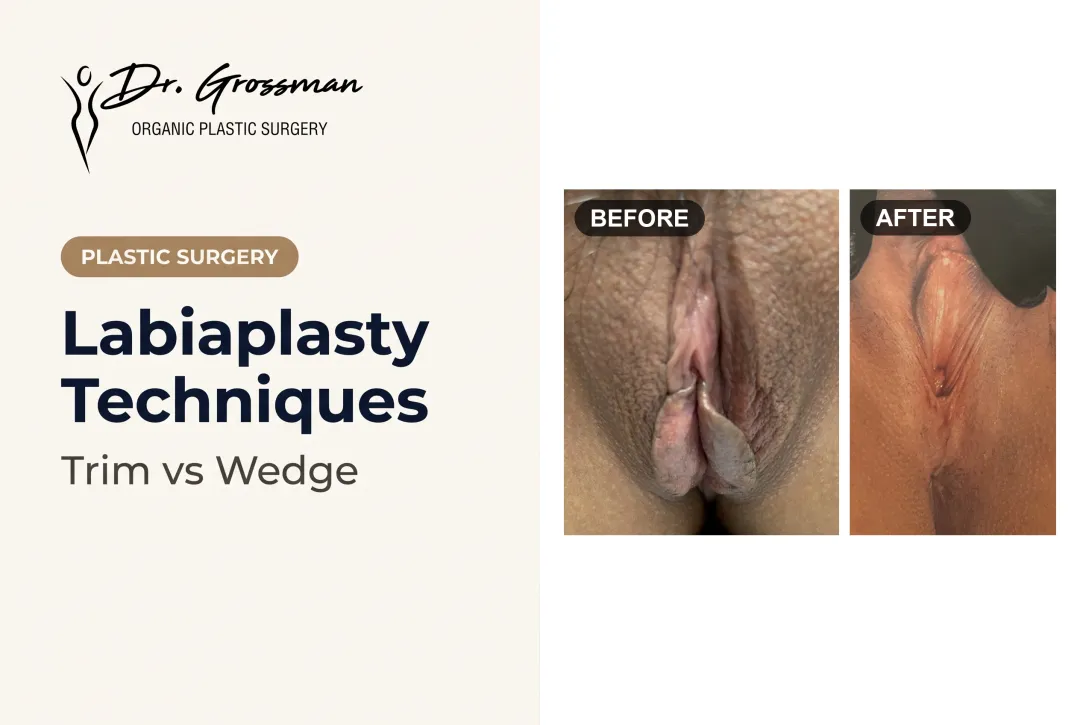
The trim approach removes tissue along the edge. The wedge approach removes a V-shaped section and closes the gap, which can preserve the natural edge. Incision location and length influence scar visibility, tension, and sensitivity.
Neither is best for everyone. Selection should reflect your anatomy, symptoms, tissue quality, and your surgeon's assessment. Dr. Grossman discusses the size and shape of the labia with each patient in advance, because no two labiaplasties are the same operation: the plan may involve the labia minora, the labia majora or both, and some patients add a clitoral hood reduction or fat grafting to restore fuller labia majora. His aim is a natural-looking, symmetrical result with scarring kept as minimal and discreet as possible. A 2022 meta-analysis found technique-specific wound separation estimates of 3% for wedge resection and 5% for laser-assisted procedures, but these aren't head-to-head rankings.

Sources of scar-related pain
Ordinary healing discomfort differs from pain caused by:
- Friction or wound tension
- Inflammation or infection
- Nerve sensitivity
- An incompletely healed incision
Pain may feel aching, burning, pulling, stinging, or tender to touch. The description alone can't identify the cause.
Friction and pressure during recovery
Tight clothing, exercise, prolonged sitting, cycling, sex, and tampons can irritate healing tissue if resumed too soon. Returning to strenuous activity early can stress the wound, tear sutures, and delay healing.
Follow your own surgeon's restrictions. Don't copy another patient's timeline from a forum or website.
Factors that affect scar formation
Genetics matter. Keloids are more likely with a family history; the American Academy of Dermatology notes that roughly a third to half of people who develop keloids have an affected relative. Health factors also play a role. General wound-healing research links smoking, diabetes, malnutrition, steroid use, and some medications to poorer healing.
None of this means patients cause every unfavorable outcome. Healing is partly out of anyone's control.
When a scar needs more than observation
See a clinician if you notice:
- A thickening scar
- Wound separation
- Ongoing focal tenderness
- Pain that interferes with sitting or sex
Don't pursue revision based on early appearance, since scars keep changing. A qualified clinician should decide timing; general scar literature suggests waiting about 12 months for maturation.
Aftercare That Supports Healing
Follow the surgeon's wound-care instructions
Your surgeon's instructions come first. They typically cover washing and drying the area, prescribed medication, dressings if used, and follow-up visits. Dr. Leonard Grossman provides detailed post-operative instructions, including how to keep the area clean and manage any discomfort, along with a schedule of follow-up visits.
Call the surgical team before changing wound care, applying antiseptics, or using over-the-counter products on or near the incision.
Reduce friction and protect the repair
- Wear loose, breathable clothing.
- Avoid pressure, rubbing, stretching, and trapped moisture until cleared.
- Use cold therapy only as directed.
Wrap the ice pack or place it over clothing, never directly on skin, and keep pressure light. Cleveland Clinic suggests 20 minutes on and off.
Return to sex, exercise, and inserted products
Postpone sex, strenuous exercise, cycling, swimming, and tampons until the incision is healed and your surgeon says yes. Starting early can increase irritation, bleeding, wound stress, and scar sensitivity.
Published guidance varies, so treat any number of weeks as a reference point, not a rule. Your surgeon's clearance is the standard.
Scar creams, silicone, and massage
Creams, silicone, massage, and desensitization exercises should wait until the wound has closed and your surgeon approves them. Evidence is modest: silicone studies are small with short follow-up, and massage research is mixed.

Never place unapproved products inside the vagina or on an open, draining, or infected incision.
Monitoring progress and preparing for follow-up
Keep brief notes on pain level, triggers, discharge, swelling, wound appearance, and activity-related symptoms. Then ask your surgeon:
- Is my healing pattern expected?
- When can I resume activity?
- Is a scar treatment appropriate for me?
- Which symptoms need urgent contact?
When Pain or Scarring Needs Medical Assessment
Warning signs that should prompt timely contact
Contact your surgeon promptly for:
- Pain that's getting worse instead of better
- Fever
- Spreading redness
- Increasing swelling
- Foul-smelling discharge or pus
- Heavy bleeding
- A wound that is reopening
- Difficulty urinating
The CDC advises contacting your provider for redness, pain, drainage, or fever at a surgical site. Severe symptoms, rapidly worsening swelling or bleeding, or signs of serious infection call for urgent or emergency care, not a routine appointment.
Persistent pain after the expected recovery period
Get evaluated if pain:
- Lasts longer than you were told to expect
- Blocks normal activities
- Returns after improving
- Occurs with touch or sex
Don't self-diagnose a "painful scar." A clinician may examine the incision, scar texture, nerve sensitivity, signs of infection, and wound healing before recommending next steps.
Consultation and treatment planning
Depending on the exam, options may include:
- Observation and wound care
- Medication
- Scar management or desensitization
- Infection treatment
- Revision after adequate healing
If you have questions about pain or scarring after labiaplasty, contact Dr. Leonard Grossman's Brooklyn, NYC practice at 212-585-2133 to schedule a consultation at his fully accredited surgery center on Emmons Avenue.
Frequently Asked Questions
How long until labiaplasty looks normal?
Swelling, bruising, and firmness can alter the look early on. Most swelling settles by about 6 weeks, while the scar and tissue may keep softening for months. No exact date can be guaranteed.
How long does pain last after labiaplasty?
Discomfort should generally improve as you heal; mild pain often lasts a few days. Severe, persistent, or worsening pain should be discussed with your operating surgeon.
What do painful scars after labiaplasty feel like?
They may feel tender, burning, pulling, stinging, or sensitive. Different causes can feel similar, so sensation alone can't diagnose the problem.
When should I contact my surgeon about labiaplasty pain?
Call for worsening pain, fever, spreading redness, unusual discharge, wound separation, significant bleeding, urinary difficulty, or pain that doesn't follow the expected pattern.
Can labiaplasty scars be treated or revised?
Yes, depending on scar maturity and cause. Options range from observation and conservative care to clinician-directed scar treatment or revision.
Can I use scar cream or massage after labiaplasty?
Wait until the incision is fully healed and your surgeon approves. That applies to creams, silicone, massage, and desensitization techniques.