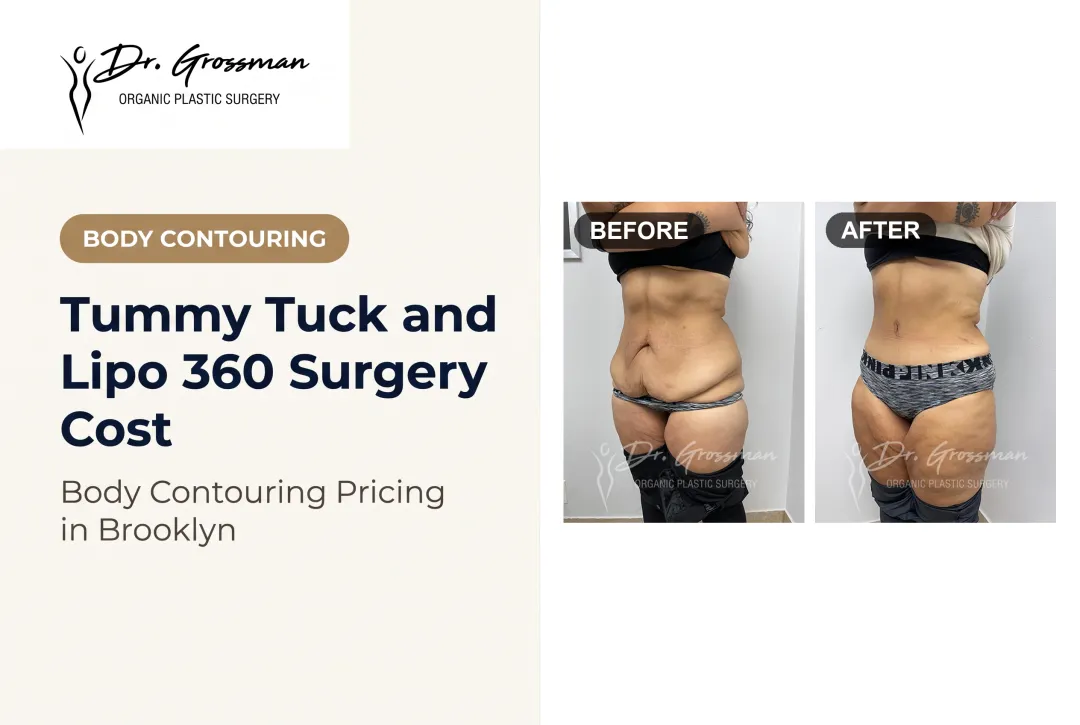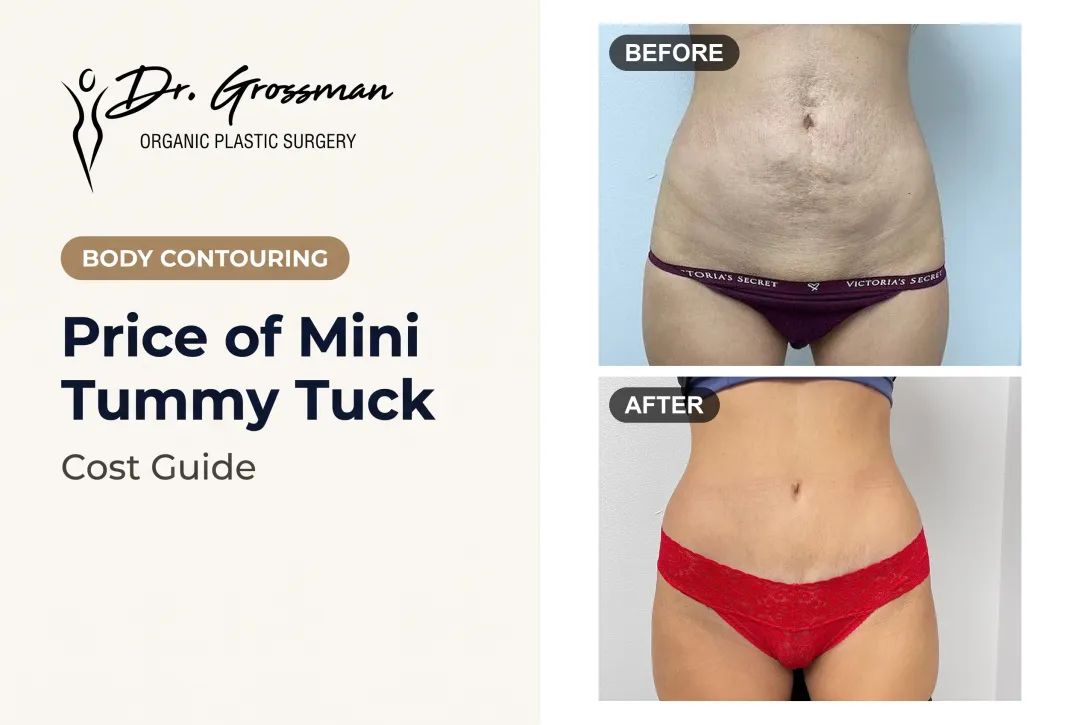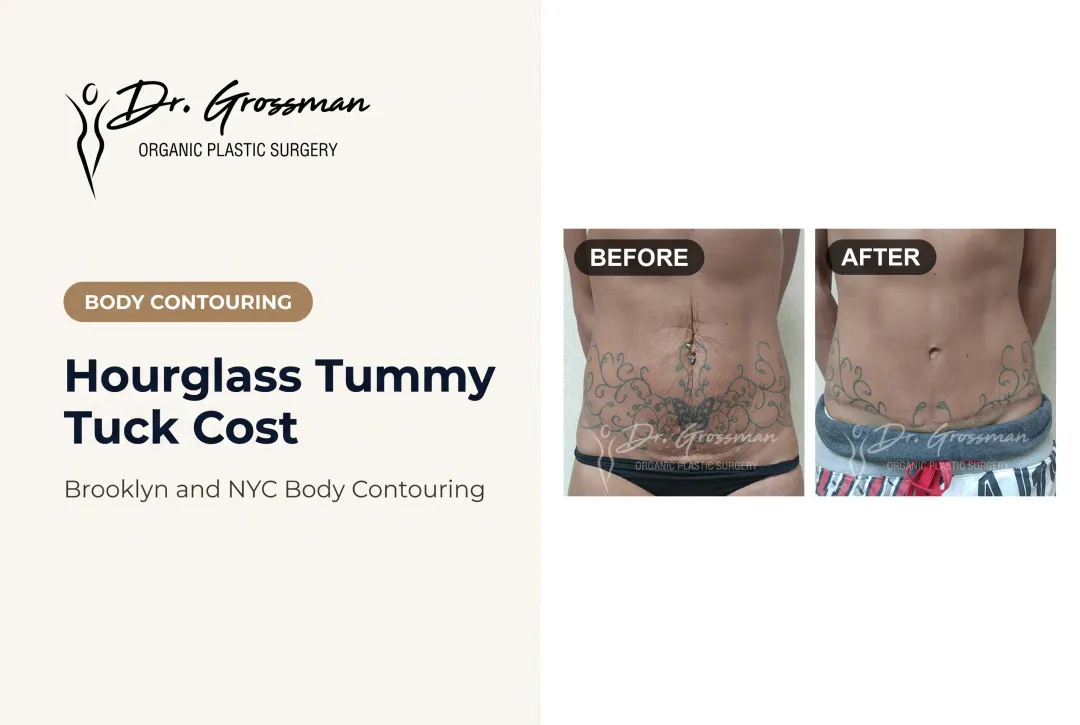

Published U.S. prices add to the confusion. Some figures show only the surgeon's fee. Others fold in facility charges, and almost none include everything you'll actually pay.
This guide explains why published U.S. figures mislead, what a quote includes, the factors that move the price, insurance, and how to build a realistic budget. It also explains how Dr. Leonard Grossman's drainless technique at his Brooklyn, NYC practice changes what a quote covers.
Key Takeaways
- There is no single national price: cost varies significantly by location and by your anatomy, and published figures usually exclude anesthesia and other costs.
- Procedure extent, muscle repair, added liposuction, surgeon, location, and facility all shift the price.
- Cosmetic tummy tucks are usually self-pay; a medically necessary panniculectomy is judged differently.
- Dr. Grossman's tummy tuck is drainless and needs no compression garments, removing common line items.
- The cheapest quote isn't the best value. Compare inclusions, surgical training, facility accreditation, and follow-up.
How Much Does a Tummy Tuck Cost? (Pricing Overview)
There is no universal price. Abdominoplasty is tailored to how much skin you have, where it sits, how lax the muscles are, and what else is done in the same operation.
The danger is misreading a quote. Patients underbudget, compare a surgeon-only fee with an all-inclusive number, or get surprised by anesthesia, facility use, garments, medication, and follow-up.
What Drives Abdominoplasty Cost by Procedure Type
Published figures use different fee bases, and that alone makes them hard to compare. Here is what actually moves the cost of a tummy tuck:
| Cost factor | Why it varies |
|---|---|
| Fee basis of published figures | The ASPS cost page and the ASPS 2024 fee table report surgeon/physician fees only; anesthesia and operating-room costs are extra |
| Geographic location | Fees differ significantly from one city and region to another |
| Your anatomy | Amount of loose skin, muscle separation, a hernia, and fat that may need liposuction |
| Procedure type | Mini, full, endoscopic or extended work changes operating time |
| Facility and anesthesia | Hospital vs. accredited outpatient center; general anesthesia vs. twilight sedation |
| Recovery items | Aesthetic Society data note that anesthesia, tests and garments may be billed on top |

No published figure is an all-in price, and none is split by technique, so the descriptions below explain scope rather than cost.
- Mini tummy tuck: a shorter, lower incision for limited excess skin below the navel. It generally skips belly-button repositioning and offers less muscle repair and skin removal than a full procedure.
- Full (traditional): a longer lower-abdominal incision, broader skin removal, muscle tightening, and belly-button repositioning.
- Extended or fleur-de-lis: extended work reaches the flanks; fleur-de-lis adds a vertical incision for laxity in both directions. More area usually means more operating time and a higher fee.
Labels vary by source. Cleveland Clinic calls circumferential work an extended tummy tuck, while other references treat belt lipectomy separately, so confirm exactly what your surgeon means.
Dr. Grossman's practice offers full, mini, endoscopic, Brazilian Thong, reverse, and Tulua tummy tucks, plus a Renuvion (J-Plasma) tightening option offered since 2016. He considers the mini ideal when the abdominal wall is minimally stretched and excess fat sits mainly below the navel.
What the Published Price May Include or Exclude
A quote may bundle the surgeon's fee, anesthesia, facility charges, and routine follow-up, or list them separately. Ask directly about:
- Preoperative testing
- Prescriptions
- Compression garments and dressings
- Medical supplies and pathology
- Follow-up visits and revision-related care
- Extra charges if surgery runs longer than planned
At Dr. Grossman's practice, the consultation ends with a transparent, itemized cost breakdown. His tummy tuck uses no drain tubes, and compression garments aren't required; some patients choose a binder for comfort. Scarring is part of any tummy tuck, but he uses techniques to minimize and conceal the scar so it heals as discreetly as possible. He aims for natural-looking, outstanding results: a flatter, smoother abdomen that suits your proportions.
Key Factors That Affect the Cost of a Tummy Tuck
Price reflects your surgical needs, the provider and facility, and the care before, during, and after the operation.
Type and Extent of the Procedure
Mini, full, extended, fleur-de-lis, circumferential, and combination approaches cover progressively more area and take longer. Choose by anatomy and goals, not price. Someone who needs a full procedure but picks a mini to save money may be disappointed with an incomplete result. Even two operations both called a "full tummy tuck" are rarely identical: the length of the incision, how much the muscles are tightened, and whether the flanks need liposuction are set by your body, which is why Dr. Grossman builds the plan, and the quote, only after examining you.
Amount of Excess Skin and Muscle Repair
Loose skin quantity and distribution, muscle separation, prior surgeries, scars, and hernias all shape the plan. A tummy tuck is not a weight-loss procedure. ASPS says it is no substitute for weight loss or exercise, so discuss cost against a stable, realistic goal. Dr. Grossman assesses weakened or separated muscles and tailors any repair to your anatomy and surgical plan.
Surgeon, Facility, Anesthesia, and Geography
ASPS names surgeon experience, procedure type, and office location as fee drivers. Anesthesia-provider fees and facility type are billed separately in many quotes. Office-versus-hospital cost differences are not standardized, so request itemized quotes for each setting. Dr. Grossman operates in his own outpatient center, so there's no hospital stay to pay for.

Verify before you compare prices:
- Ask for proof of plastic surgery residency training at an accredited program. Dr. Grossman warns that in New York any physician can legally operate in an office. A public surgeon credential search can also help.
- In New York, offices using more than mild sedation must be accredited. The state health department publishes a list of accredited practices. Dr. Grossman's center at 3039 Emmons Avenue in Brooklyn is fully accredited by the AAAHC.
Additional Procedures
Liposuction, hernia treatment, breast procedures, or other contouring raise the total, and may change facility and anesthesia charges. There is no fixed add-on amount; ask for a quote that reflects the full combination. ASPS notes that combining procedures adds stress, more healing sites, and a potentially more intense recovery. It's not automatically safer, cheaper, or right for everyone. Dr. Grossman can graft abdominal fat to other areas in the same session, but only while operating time stays at five hours or less.
Recovery, Medical, and Practical Expenses
Budget for:
- Consultations and preoperative testing
- Prescriptions and wound-care supplies
- Compression garments or an abdominal binder (Mayo Clinic says roughly 6-8 weeks), which Dr. Grossman does not require
- Transportation and a caregiver for at least the first days
- Time off work (general guidance often cites about 2-4 weeks depending on your job; with Dr. Grossman, some patients drive and resume work within a day, while others need as long as two weeks)
Dr. Grossman's patients go home the same day, walk right away, shower the next day, and usually manage tightness with over-the-counter medication such as Tylenol or Motrin, with no narcotics required. Patients of normal weight drive in about three days on average.
Complications or slow healing can add costs, though they aren't inevitable.
Cost Breakdown, Price Comparisons, and Budget Planning
Your total commitment goes beyond the advertised surgical fee. Request a written, itemized estimate so each charge is easy to review.
Typical cost categories include:
- Surgeon and professional fees (one-time): Covers planning, the operation, and professional care. Confirm whether consultations, routine follow-ups, and revisions are included.
- Anesthesia and facility charges (one-time): Often billed separately and scaled to procedure length, facility type, and monitoring level.
- Preoperative and postoperative costs: Testing, prescriptions, garments, dressings, transportation, and help during early recovery.
- Follow-up and contingency costs: Routine follow-up may be in the quote. Budget a reserve for extra visits, complication care, or revision surgery.
Low-Cost vs. High-Cost: What's the Difference?
- Lower price: may reflect a smaller procedure or fewer included services. It doesn't automatically mean lower quality.
- Higher price: may reflect broader contouring, longer surgery, experienced care, facility standards, or bundled services. It doesn't prove better safety or results.
- What to compare: inclusions, the surgeon's plastic surgery training, facility standards, anesthesia arrangements, follow-up plans, before-and-after photos, and communication quality.
How to Estimate the Right Budget
- Request an itemized written estimate separating surgeon, anesthesia, facility, testing, medications, garments, follow-up, and optional procedures.
- Factor in procedure type, skin excess, muscle repair, combination treatments, recovery time, transport, caregiver help, and lost income.
- Add a contingency line for anything the quote omits.
- Confirm policies on cancellations, revisions, complications, and follow-up.

Dr. Leonard Grossman is a Brooklyn, NYC plastic surgeon with more than 30 years of experience, guided by the natural, conservative philosophy of his Organic Plastic Surgery approach. His practice describes the "drainless" tummy tuck as a procedure he designed and perfected; by 2015 he had gone 18 years without drain tubes, which he says lowers infection risk and avoids snagging. Surgery uses twilight combination anesthesia (IV propofol sedation with local anesthesia), never general anesthesia, in his fully accredited surgery center. Financing options are available through Cherry and Prosper Healthcare Lending.
What Most People Miss When It Comes to Tummy Tuck Cost
- Fixating on the surgeon's fee. Anesthesia, facility use, testing, garments, medication, and follow-up may sit outside it.
- Assuming insurance helps. Aetna classifies abdominoplasty as cosmetic, and Cigna treats it as not medically necessary. A panniculectomy for a hanging skin apron with chronic rash may qualify (Aetna requires 3+ months of unresponsive rash plus stable weight). Confirm with your insurer.
- Ignoring recovery economics. Time off work, rides, caregiver help, and home supplies add up.
- Choosing the cheapest quote blindly. Check qualifications, facility safety, the anesthesia plan, written scope of care, and postoperative support. Corrective surgery, Dr. Grossman notes, costs far more than getting it done right the very first time.
Conclusion
Tummy tuck cost varies with procedure type, anatomy, surgeon and facility fees, location, anesthesia, added procedures, and recovery expenses. A reliable budget starts with a transparent, itemized quote, not a single advertised number or national average.
Book a consultation with Dr. Leonard Grossman in Brooklyn to discuss candidacy, expected results, risks, insurance questions, and the full financial commitment before deciding.
Frequently Asked Questions
Is a tummy tuck covered by insurance?
Cosmetic tummy tucks are generally not covered. Medically necessary skin removal, such as a panniculectomy, may be evaluated under different criteria, so confirm with your insurer.
Is a tummy tuck worth the cost?
It depends on your goals, anatomy, expected benefits, risks, recovery, and realistic expectations, not on price alone.
Is abdominoplasty a risky surgery?
It's major surgery. Mayo Clinic lists fluid buildup, bleeding, infection, changes in sensation, and anesthesia reactions. Your risk depends on health, scope, anesthesia, and aftercare. Dr. Grossman's protocol avoids general anesthesia and drain tubes, and your individual risks are reviewed at consultation.
How much weight will a tummy tuck take off?
It removes excess skin and some fat but isn't a weight-loss procedure. The amount varies from person to person, so it's best to reach a stable weight first.
What disqualifies you from getting a tummy tuck?
Planned substantial weight loss or pregnancy, unstable weight, smoking, blood-thinner use or high clot risk, uncontrolled conditions, or inability to safely undergo anesthesia may delay or rule out surgery. Mayo Clinic calls 6-12 months of stable weight ideal. Dr. Grossman also advises waiting if you plan another pregnancy.
How long do tummy tuck results last?
Dr. Grossman considers tummy tuck results permanent as long as your weight stays stable. Major weight changes, pregnancy, and aging can still alter the contour over time.