
The trouble is that online prices rarely compare cleanly. One source lists only the surgeon's fee. Another folds in anesthesia, facility charges, and aftercare. Otoplasty cost varies significantly by geographic location and by individual need, such as your ear anatomy and whether one or both ears are treated. The technique, anesthesia, the facility, and the surgeon matter too.
This guide separates surgeon fees from total costs, shows what a quote may include, and helps you build a realistic budget. It also explains how Dr. Leonard Grossman approaches otoplasty at his Brooklyn practice.
Key Takeaways
- National ASPS fee statistics cover only the surgeon's fee and exclude anesthesia and facility costs, so they can't tell you what your otoplasty will cost.
- Case complexity, technique, anesthesia, facility, surgeon experience, and location all move the total.
- Cosmetic otoplasty is usually not covered by insurance.
- Compare itemized quotes, not headline prices.
- Dr. Grossman usually performs otoplasty under local anesthesia, with twilight sedation available, which shapes the anesthesia line of a quote and keeps recovery quick and comfortable.
How Much Does Otoplasty Cost? (Pricing Overview)
Otoplasty has no single fixed price. The most cited national figure is the average surgeon's fee the ASPS reports from its statistics. It is a professional fee, not a total cost, and it blends regions and cases that may look nothing like yours.
Misreading it causes real problems:
- Underbudgeting, because anesthesia, facility, medications, or follow-up were left out.
- Choosing a technique by price alone, without confirming it suits your cartilage and goals.
- Surprise expenses for recovery, travel, time off work or school, or revision care.
What Shapes Otoplasty Cost
The ASPS also publishes a projected surgeon-fee range, which is a different measure from its average, so the two can't even be compared with each other, let alone with your quote.
No reliable national all-in low, typical, and high figures exist. Here is how to think about the tiers instead:
- Limited correction: A minor or one-ear correction usually needs less operating time. Anesthesia and facility charges may be billed separately.
- Standard primary otoplasty: Bilateral ear pinning involves more work than a one-ear correction. Confirm the professional fee, anesthesia, facility, and follow-up visits.
- Complex treatment: Revision surgery, significant asymmetry, congenital differences, trauma reconstruction, or more involved cartilage work usually need a larger budget. No standardized revision benchmark exists.
Treating one ear may cost less than two, but savings often aren't proportional. Facility and anesthesia charges may be fixed or only partly reduced.
Age matters too. Children may need different anesthesia or facility arrangements, while adult cartilage and prior surgery can add complexity.
A 2026 study of U.S. children's hospitals found estimated costs were higher with general anesthesia than with local anesthesia. Those are hospital costs, not patient prices. Dr. Grossman performs otoplasty as an outpatient procedure in his fully accredited surgery center, so there is no hospital stay on the bill.

Key Cost Factors and Otoplasty Cost Breakdown
Your otoplasty total is a set of separate charges, so request an itemized estimate rather than relying on a headline number.
Case Scope and Anatomy
Prominent ears don't all stick out for the same reason. An underdeveloped cartilage fold, an oversized ear bowl, a protruding lobe, or a mix of these each calls for different surgical steps, which is why two otoplasties can differ in scope and cost. These factors change operating time and complexity:
- Ear prominence and asymmetry
- Cartilage flexibility and ear shape
- One-versus-both-ear treatment
- Revision or reconstruction versus primary cosmetic pinning
Surgical Technique and Anesthesia
Suture-based, cartilage-sparing methods (Mustarde and Furnas) differ from approaches that score or remove cartilage. Suture-based doesn't mean incision-free: incisions usually sit behind the ear. Dr. Grossman keeps his incisions in inconspicuous areas behind the ear to minimize visible scarring. Technique alone rarely drives a clear price premium, so ask which approaches your surgeon actually uses. Dr. Grossman uses advanced imaging at the consultation to help you visualize the potential outcome, and his methods are designed to minimize trauma to the tissues.
Anesthesia also shapes the quote. In many practices, young children receive general anesthesia, while older children and adults may receive local anesthesia with sedation. Dr. Grossman's otoplasty is usually done under local anesthesia rather than general anesthesia, with twilight anesthesia available for patients who are anxious or want added comfort. Your anesthesia plan is confirmed at consultation.
Surgeon and Facility Charges
Surgeon fees reflect experience, procedure type, and office location. A higher price doesn't mean a better result. Ask for documentation that the surgeon completed plastic surgery residency training at an accredited program, and confirm the facility is accredited by AAAASF (now QUAD A), AAAHC, or The Joint Commission. Dr. Grossman completed his plastic surgery residency at Scott & White Memorial Hospital in Texas in 1995 and operates in an AAAHC-accredited office-based surgery center at 3039 Emmons Avenue in Brooklyn.
Itemized Cost Components
Ask for each line and who bills it:
- Surgeon's professional fee
- Anesthesia
- Facility or operating-room fee
- Preoperative testing, if required
- Medications
- Compression headband (at Dr. Grossman's practice, a beanie or sweatband may be required)
- Postoperative visits
Recovery and Other Expenses
Budget beyond the surgical quote for:
- Transportation and lodging if you travel
- Time away from work or school
- Childcare and prescriptions
General guidance often allows about a week at home. Dr. Grossman's approach is designed to minimize discomfort and shorten that: surgery is outpatient, and patients usually return to work, school and daily activities within a few days, often two to three, while avoiding strenuous activity and sports for 5 days. Ask whether routine follow-up is included and how complications or later revisions are billed.
Low-Cost vs High-Cost Otoplasty: What's the Difference?
Neither end is automatically better or worse. Look at what's behind the number.
Performance, Safety, and Precision
A lower quote may reflect a simpler case, a different anesthesia plan, a lower-overhead setting, or omitted services. A higher one may reflect complexity, specialist experience, anesthesia needs, or facility standards. Either should come with transparent detail. No reliable evidence shows higher fees alone reduce recurrence, revision, or complications.

Quote Inclusions and Follow-Up
Verify what each quote leaves out:
- Consultation fees
- Anesthesia and facility use
- Postoperative supplies
- Follow-up visits
- Revision policy
A higher quote might bundle these. A lower one might bill them later.
Long-Term Value
Otoplasty is meant to be a lasting structural change. A 2024 meta-analysis found a pooled 4.27% recurrence or reoperation rate for cartilage-sparing techniques, so revision is possible but uncommon. An unusually low quote deserves questions before you commit.
How to Estimate the Right Otoplasty Budget (and What Most People Miss)
Your budget should fit your treatment plan, recovery situation, and ability to cover the full cost, not just the advertised starting price.
Build an Individualized Budget
Start with the itemized quote, then add any costs billed separately. Use this checklist and mark each line included, excluded, or pending:
| Item | Included / Excluded / Pending |
|---|---|
| Consultation | |
| Surgeon's fee | |
| Anesthesia | |
| Facility fee | |
| Testing | |
| Medications and ear protection | |
| Follow-up visits | |
| Travel and time off | |
| Revision policy |
Compare Quotes Fairly
Ask every practice the same questions:
- Which ears are treated?
- Which technique?
- What anesthesia?
- Where is surgery performed?
- What happens if more care is needed?
Two all-inclusive quotes compare meaningfully. An all-inclusive quote against a surgeon-only fee does not.
Insurance and Payment Planning
Most plans don't cover elective otoplasty. Cigna's 2026 policy treats it as cosmetic for any indication, and Aetna considers correction of prominent ears alone cosmetic.
Aetna may cover surgery that improves hearing for congenital or trauma-related deformity. Congenital difference or bullying alone doesn't establish coverage, so confirm benefits and preauthorization with your insurer.
If you finance, read the terms. The CFPB warns that with deferred-interest plans, interest can accrue from the purchase date if the balance isn't repaid by the deadline. That isn't the same as interest-free credit. Dr. Grossman's practice offers financing options through Cherry and Prosper Healthcare Lending.

What Most People Miss
- Fixating on the upfront price while ignoring recovery costs
- Picking an unfamiliar provider only because the quote is lower
- Paying for add-ons your anatomy and goals don't require
Ask these before you book:
- What is your revision policy?
- How do I reach you after surgery?
- How are complications handled and billed?
- What are the cancellation terms?
- Can the fee change if the surgical plan changes?
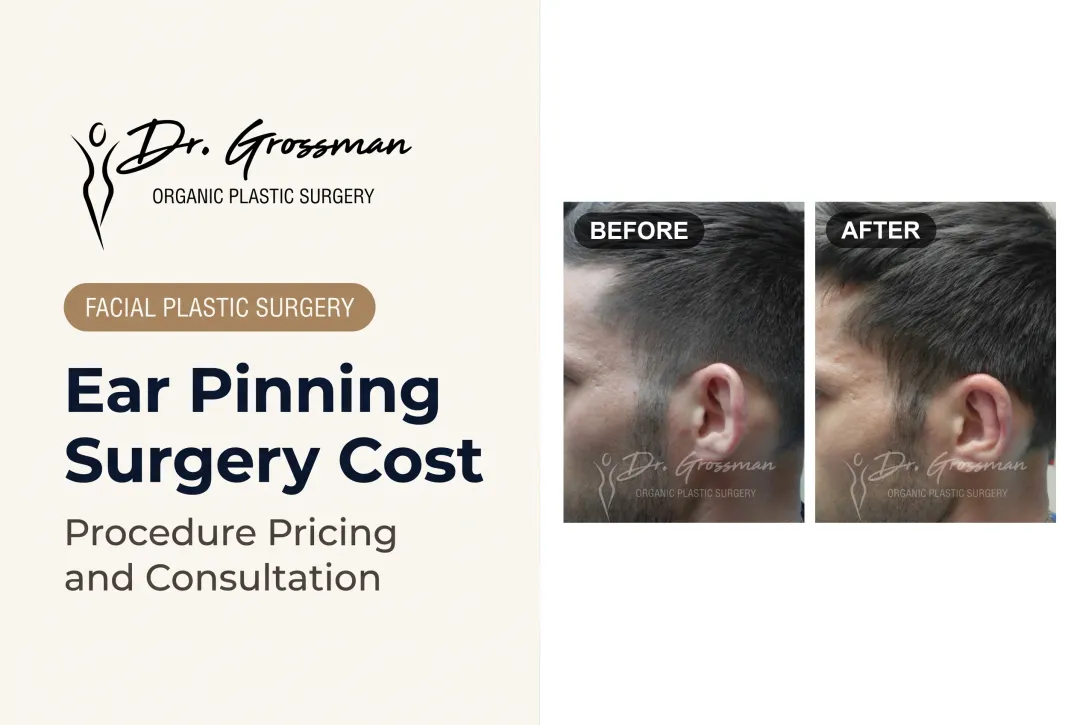
At the first visit, Dr. Leonard Grossman gives you a personalized quote that itemizes what is included. Dr. Grossman is a Brooklyn, NYC plastic surgeon with more than 30 years of experience, and his ear reshaping gallery shows patients aged 19 to 28 one year after surgery. His goal is natural-looking, well-balanced ears with discreet incisions behind the ear. Otoplasty can also be combined with rhinoplasty or a facelift. To discuss your situation and get an itemized estimate, call 212-585-2133.
Conclusion
Otoplasty cost depends on the scope of correction, technique, anesthesia, facility, surgeon, location, and what the quote includes. The published ASPS figures cover the surgeon's fee only.
Compare complete estimates, confirm insurance limits, and plan for recovery costs. Choose safe, qualified, personalized care over the lowest advertised price.
Frequently Asked Questions
How much does otoplasty usually cost?
There is no usual figure that applies to you. ASPS statistics cover only the surgeon's fee, anesthesia and facility costs are extra, and cost varies with location and with what your ears need. Dr. Grossman quotes each case after examining your ears.
Will insurance cover otoplasty?
Cosmetic cases are usually excluded. Congenital, traumatic, or functional cases may qualify depending on the policy. Verify benefits and preauthorization with your insurer.
Why is otoplasty so expensive?
The total covers surgeon expertise, anesthesia, facility use, supplies, and follow-up. It also reflects the precision of reshaping cartilage, not just time in surgery.
How long does an otoplasty last?
Results are typically long-lasting. Healing, cartilage behavior, aging, or trauma can affect the outcome, and occasional revision is needed. Dr. Grossman can perform revision otoplasty.
What is the best age for otoplasty?
Many surgeons treat children from around age 5, once the ears are developed enough. Dr. Grossman typically performs otoplasty on children over 8, when the ear cartilage is stable enough for correction, and adults have no upper age limit. Candidacy depends on development, health, readiness, and goals.
Is it possible to get an otoplasty without surgery?
Newborn ear molding can reshape pliable ears, ideally started before 4 weeks. It's a distinct early-infant treatment, not a substitute for surgery later. Get a professional evaluation first.