
The term itself is slippery. "Under-eye Botox" usually means carefully placed injections for movement-related lines beneath or beside the eyes. It is not automatically the answer for dark circles, hollows, puffiness, or pigmentation.
This guide explains why published US prices mislead, what goes into a quote, the factors that move the final number, ongoing costs, and the questions to ask before you book. You'll also see how Dr. Leonard Grossman approaches the eye area at his Brooklyn practice, where crow's feet are treated with neuromodulators and hollows with other methods.
Key Takeaways
- No single price applies: cost varies significantly by location and by your muscles, anatomy, and goals.
- Units, pricing model, injector expertise, location, and add-on treatments shape the total.
- Botox suits movement-related lines, not hollows, bags, or pigmentation.
- The cheapest quote rarely gives the best value.
How Much Does Under-Eye Botox Cost? (Pricing Overview)
There is no single fixed price. Practices charge per unit, per treatment area, with a minimum fee, or as part of a larger rejuvenation plan. No authoritative national under-eye-only price exists, and a posted number from another city or practice says little about what your own treatment needs.
Why Botox Under Eyes Price Varies So Much
The ASPS cost page publishes a national average for botulinum toxin injections, but it blends several brands and unspecified treatment areas, so it is not an under-eye price.
What actually separates one quote from another:
| Tier | What drives the quote | What to check |
|---|---|---|
| Lower | Fewer units, a single small area, new-client minimums or promotions | Who injects, the unit minimum, and what is excluded |
| Middle | A per-eye unit count set by muscle strength, with both sides treated | How many units per side and whether review visits are included |
| Higher | A premium urban market, physician injector, longer assessment, follow-up included | Whether the fee buys expertise and follow-up or just amenities |
A per-unit rate is not your final bill. Minimum charges and consultation fees can raise the total.
What Lower Prices Often Mean
Lower quotes can reflect fewer units, a limited treatment area, introductory pricing, a lower-overhead setting, or a promotion. They may suit someone with mild, clearly dynamic lines who wants a conservative treatment. Candidacy and safety still need a qualified medical professional's judgment.
What Mid-Range Pricing Usually Covers
A standard quote often covers an assessment, the product, the injection visit, aftercare guidance, and a defined treatment area. Confirm whether a review appointment is included, and whether touch-ups, extra units, or nearby areas are billed separately.
What Drives Higher Fees
Higher fees may reflect an experienced injector, a specialist medical setting, complex anatomy, several treatment areas, longer consultations, or a premium urban market. Judge them by credentials, technique, product transparency, and patient support. A bigger number does not by itself mean a better result.

Cost Breakdown of an Under-Eye Botox Appointment
- Consultation: free at some practices, charged at others. Ask whether it is credited toward treatment and whether the provider weighs alternatives first. At Dr. Grossman's practice, the consultation can be combined with the treatment itself.
- Product and injection: units multiplied by the per-unit rate, a flat area fee, or a minimum fee.
- Follow-up: find out whether adjustments or extra product are included.
- Other treatments: filler, laser, skincare, or eyelid procedures address concerns Botox cannot, and they add to the budget.
- Maintenance: results are temporary, so budget beyond the first visit.
Key Factors That Affect the Cost of Under-Eye Botox
The price reflects clinical decisions, provider expertise, setting, and recurring care, not just the product.
Treatment Concern and Injection Area
Fine lines beneath the eyes, lateral crow's feet, the brow, and multi-zone treatments are priced differently. Do not add quotes together unless each is clearly labeled.
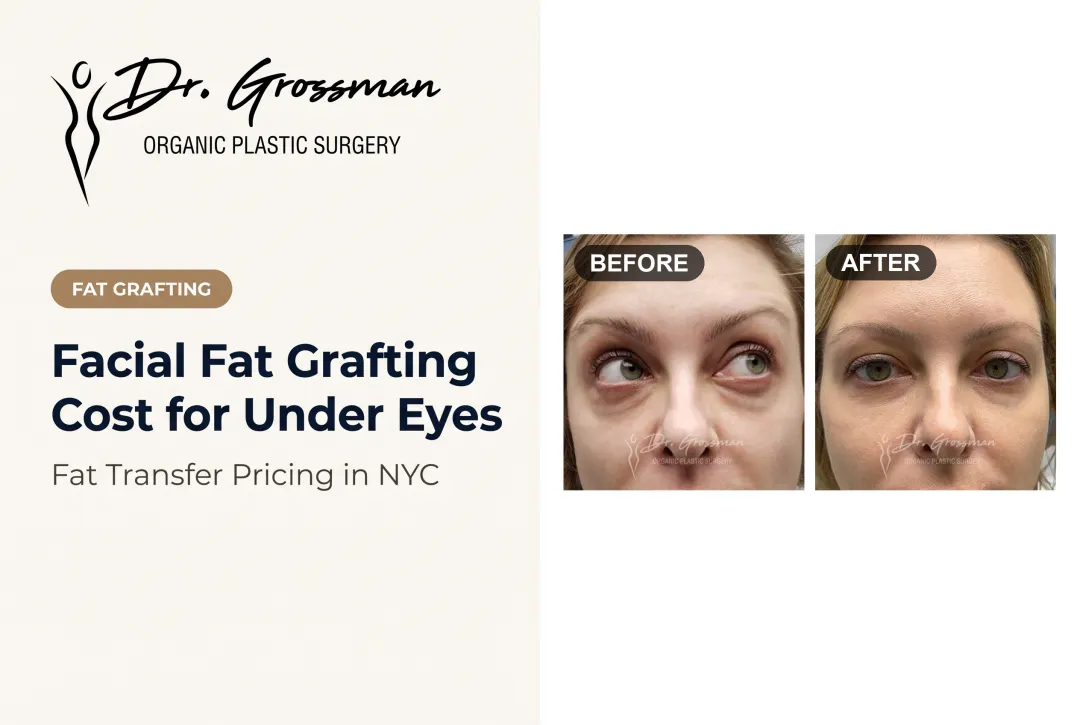
The cause matters too. Muscle-related lines may respond to Botox. Pigment, hollowness, fat pads, puffiness, and static texture changes usually need other options. Dr. Grossman's documented under-eye results come from fat grafting, not Botox. In one gallery case, what looked like lower-eyelid bags was actually hollow lower lids and a severe tear trough, treated with fat grafting using the patient's own fat.
Number of Units and Treatment Complexity
Providers set units based on muscle activity, anatomy, goals, and whether one or both sides are treated. The FDA-approved label for crow's feet is 24 units total (12 per side), a reference dose that is adjusted per patient. A strong squint may need more; a light, preventive touch may need less.
Cosmetic injection in the lower eyelid itself is not a labeled indication. Under-eye use for wrinkles is off-label, according to Cleveland Clinic guidance.
Under-eye work calls for a conservative, precise approach. More units are not automatically better.
Product choice can change the bill too. If Botox, Dysport, or Xeomin has stopped working on your crow's feet, Dr. Grossman offers Myobloc, a type B toxin that starts working within hours. It costs more than the other products, so ask how it changes your quote.
Provider Expertise and Medical Setting
Training in facial anatomy, experience with delicate periocular injections, patient assessment, and complication management all influence fees. Check:
- Documented medical and plastic surgery training, not just a license (in New York, any physician can legally perform surgery in an office)
- Experience with comparable cases
- Before-and-after examples
- Willingness to explain risks and alternatives
Dr. Grossman brings more than 30 years of plastic surgery experience and completed a fully accredited plastic surgery residency at Scott & White Memorial Hospital in Texas.
Geographic Market and Practice Overhead
The American Society of Plastic Surgeons (ASPS) names geographic office location among its cost factors but publishes no city-by-city periocular schedule. Rent, staffing, demand, and practice type all play a part, which is why posted prices in Beverly Hills, Queens, and New York City differ from one another. Do not read a New York City quote as a national rate.
Product, Storage, and Pricing Transparency
Ask whether the practice uses authentic, properly handled Botox Cosmetic and whether your quote names the product and unit count. The FDA's counterfeit Botox alert in April 2024 reported adverse events and hospitalizations in multiple states.
Botox units cannot be compared directly with Dysport or Xeomin units. The label states that units are specific to each product's preparation and assay method.
Combination Treatments and Maintenance
Adding filler, laser resurfacing, skincare, or other facial areas raises both the immediate price and the long-term budget. Botox typically lasts about 3 to 4 months, sometimes longer, per the American Academy of Dermatology. Dr. Grossman's practice gives a similar two-to-four-month range, with full effect visible one to two weeks after treatment. His practice blog adds that some men prefer to keep a few lines around the eyes for a more masculine look, which can mean a lighter plan.
The label notes that dosing more often than every 3 months has not been clinically evaluated. Your annual cost depends on your own interval, not a fixed schedule.

Low-Cost vs High-Cost Under-Eye Botox: What's the Difference?
Price gaps for under-eye Botox usually come down to scope, skill, and what the fee actually covers. Compare quotes by what is included, who performs the treatment, and how clearly the practice communicates.
Performance and Precision
- Lower cost: may mean a smaller scope or a promotion. Verify the injector's qualifications, the dosing plan, and whether the quote matches your concern.
- Higher cost: may bring a fuller consultation, individualized planning, and experienced technique. Price alone does not prove better results.
Safety, Transparency, and Follow-Up
- Lower cost: confirm authentic product, a professional medical setting, informed consent, clear fees, and a process for handling concerns.
- Higher cost: ask whether the extra fee buys clinical expertise and real follow-up, or mostly amenities.
Long-Term Value
A low price can make sense when the scope is truly limited. A poor result, unplanned touch-up, or correction can erase those savings quickly.
A higher fee earns its place when it reflects precision and individualized care. Either way, request an itemized quote and compare like-for-like services.
How to Estimate the Right Budget for Under-Eye Botox
Start with the cause of your concern and the right treatment, not the lowest advertised price.
Define the Treatment Goal Before Comparing Quotes
Decide what bothers you: expression lines, crow's feet, hollowness, pigmentation, puffiness, or texture. A consultation might point to Botox, filler, laser, skincare, eyelid surgery, or no procedure at all, depending on anatomy, history, and expectations.
Request an Itemized Consultation Quote
Ask for:
- Number of units and price per unit or area fee
- Consultation charge and any minimum fee
- Included follow-up and touch-up policy
- Cost of adjacent areas
- Confirmation that it is Botox Cosmetic, and why that product and dose fit your goals
Calculate the Ongoing Cost
Multiply your quoted session price by your likely visits per year, then add possible consultation or touch-up charges and complementary treatments. Your injector sets the actual interval, and some patients go longer between visits than others.
Compare Value, Credentials, and Patient Support
Use this checklist:
- Medical qualifications and periocular injection experience
- Realistic expectations and informed consent
- Product sourcing and a clean clinical setting
- Emergency guidance and follow-up availability
A transparent provider will decline treatment or suggest an alternative when Botox is unlikely to fix the real problem. The AAD also warns against non-medical settings and products sold without a medical license.

Consider Coverage, Financing, and Promotions Carefully
Cosmetic Botox is generally paid out of pocket. Medicare, for instance, does not cover cosmetic procedures, while medically indicated toxin use needs documented necessity. Check with your insurer and provider.
Third-party rewards programs and medical credit plans exist; read deferred-interest terms carefully. Never choose an unsafe provider to save money. For patients who want to spread payments out, Dr. Grossman's office has financing available through Cherry and Prosper Healthcare Lending.
What Most People Miss When It Comes to Under-Eye Botox Cost
- Focusing only on the injection price while overlooking consultation fees, minimums, repeat visits, and touch-ups.
- Picking the cheapest option without checking qualifications, product authenticity, and aftercare.
- Budgeting for Botox when the real issue is pigmentation, significant hollowness, fat-related bags, or static wrinkles.
If you want to discuss the eye area, Dr. Leonard Grossman sees patients at his fully accredited office-based surgery center on Emmons Avenue in Brooklyn, NYC. He examines your eyes, explains whether your concern is muscle-driven or a matter of lost volume, and gives you a personalized quote, whether the answer is crow's-feet Botox, Myobloc if other toxins have stopped working, or a fat-based approach to hollows. A neuromodulator session usually takes under 10 minutes, feels like a small pinch (a topical anesthetic is available if needed), and leaves no incisions, so you can go back to work the same day; his aftercare advice is simply to carry on with your routine. He aims for smoother lines without a frozen look, so your expression stays natural. Call 212-585-2133 to schedule.
Conclusion
Under-eye Botox pricing shifts with the treatment area, units, provider, setting, pricing model, and need for repeat care. The right budget balances transparent pricing, the correct treatment, qualified medical care, realistic results, and long-term value. The lowest advertised fee rarely wins on that measure.
Frequently Asked Questions
Is under-eye Botox worth it?
It depends on whether your concern is dynamic wrinkles, how much improvement you expect, how long it lasts, repeat costs, and provider safety. In a crow's-feet trial, 58% of treated subjects were responders versus 5% on placebo.
How long does under-eye Botox last?
Typically about 3 to 4 months, sometimes longer. Duration varies with muscle activity, dose, and treatment area, and no exact duration can be promised.
At what age should I start Botox?
There is no universal age. Candidacy depends on dynamic wrinkles, anatomy, goals, health history, and an in-person assessment. Evidence for preventive Botox is limited.
Can I use UK prices to estimate US Botox costs?
No. The UK is a different market with its own fees, product pricing, and regulations, so a UK clinic's posted price is not a benchmark for US costs. Even within the US, cost varies significantly by location and by the patient.
Does under-eye Botox treat dark circles and hollows?
No. Botox relaxes muscles. Pigmentation, visible vessels, volume loss, tear-trough hollows, and fat-related bags may need filler, fat grafting, laser, or surgery.
What should I ask about an under-eye Botox quote?
Ask about the product, unit count, pricing method, consultation and follow-up fees, touch-up policy, injector qualifications, and product authenticity. Also ask what happens if Botox is not the right treatment.