
Introduction
Breast augmentation is elective surgery, and the first practical question most people ask is the price. The answer depends on what a quote includes.
The American Society of Plastic Surgeons (ASPS) publishes national surgeon-fee statistics for implant placement, but they cover the surgeon's fee only, not the whole bill, and they vary by region. Breast augmentation cost varies significantly by geographic location and by your anatomy, goals and the components your plan actually needs. Implant type, anesthesia, facility and surgical complexity all move the final number, which is why any single published figure can mislead.
This guide covers why published price statistics mislead, what a quote should include, the factors that raise or lower the total, financing and insurance, and the questions to ask before you commit. It also explains how Dr. Leonard Grossman, a Brooklyn, NYC plastic surgeon who has performed transumbilical breast augmentation (TUBA) since 1996 and fat transfer to the breasts since 1995, builds a quote.
Key Takeaways
- ASPS surgeon-fee statistics exclude anesthesia and facility costs, so they understate what a patient actually pays.
- Implants, surgical complexity, facility, anesthesia and location drive the total. An outpatient surgery center avoids hospital-stay charges.
- Low advertised prices may leave out implants, anesthesia, facility fees or aftercare.
- The best value is an itemized quote after an in-person exam, not the lowest number. Dr. Grossman quotes each patient individually at consultation.
How Much Does Breast Augmentation Cost? (Pricing Overview)
There is no single national price. Sources measure different things: some count only the surgeon's fee, others add the facility, and advertised packages bundle everything differently. Comparing them directly is misleading.
Misreading a quote has real consequences:
- Underbudgeting because you only counted the surgeon's fee
- Comparing a bare-bones quote against an all-inclusive one
- Choosing an unsuitable implant to hit a price
- Facing unplanned recovery or revision costs
Breast Augmentation Cost Range: What Drives It
Instead of a price list, here is what actually drives the range from one patient to the next:
| Cost factor | Why it varies |
|---|---|
| Technique | Fat transfer, saline implants through the navel (TUBA) and silicone implants use different instruments, operating time and materials |
| Your anatomy | Breast shape, skin elasticity, asymmetry, tissue coverage and the position of the breast fold change how the pocket is planned |
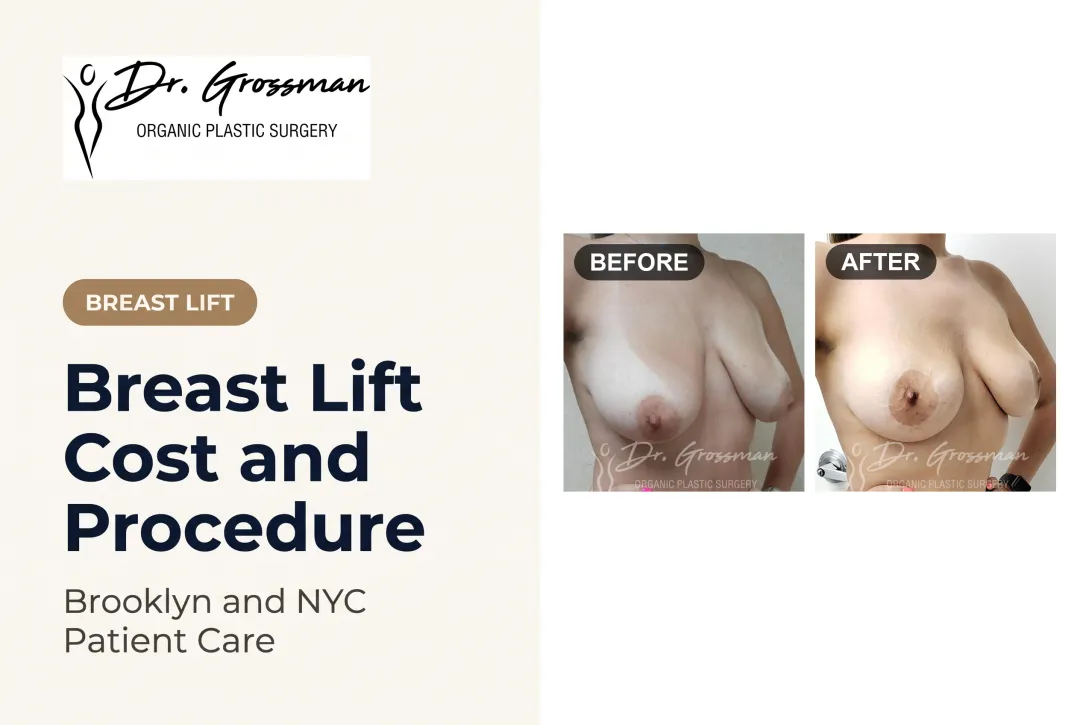
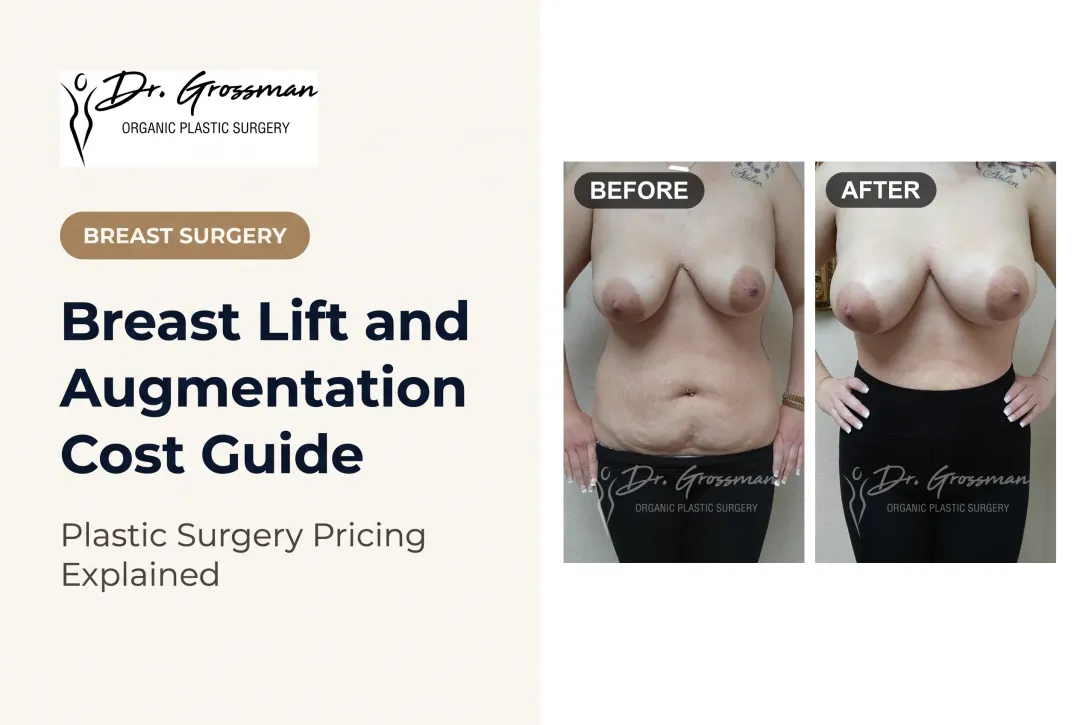
| Added components | A lift, fold lowering, asymmetry correction, implant exchange or a second fat session add steps |
| Anesthesia and facility | Local anesthesia with IV sedation in an outpatient center is billed differently from general anesthesia in a hospital |
| Location | Fees differ from city to city and region to region |
| Follow-up and long-term care | Imaging for silicone, future revisions and what the quote includes for aftercare |
Published national figures mix these together. The ASPS category combines primary and revision surgery, and it does not separate out augmentation with a lift. A peer-reviewed pricing study of advertised breast augmentation prices gives no New York-specific figure, and what is included differs from one practice to the next. A higher price in a given city does not guarantee better care.

Straightforward, Customized and Complex Augmentation
No authoritative source defines fixed price tiers for entry-level, mid-range or complex cases, because the same procedure name covers very different operations. What the sources do show is which variables matter.
- Straightforward cases involve a standard procedure with limited extra surgical work. Even then, tests, prescriptions, time off work and follow-up care may sit outside the quote.
- Customized plans may add a specific implant profile, extra evaluation or tailored placement.
- Complex cases include a lift, fat transfer, asymmetry correction or revision. These take more operating time.
For higher totals, judge the quote on surgeon qualifications, facility standards, implant details, included care and follow-up policy. Price alone tells you little.
What Is Included in the Cost of Breast Augmentation?
Three things get called "the price": a surgeon's fee, a bundled all-inclusive package, and your complete out-of-pocket cost. Ask for an itemized written quote so you know which one you're looking at. ASPS lists these possible components:
- Surgeon's fee
- Anesthesia
- Hospital or facility costs
- Medical tests
- Post-surgery garments and prescriptions
That last line reflects the conventional protocol. Dr. Grossman's augmentation recovery does not call for compression garments, so ask each practice what its own aftercare actually requires.
Surgeon and Consultation Fees
The surgeon's fee generally covers planning, the operation and postoperative oversight. It is usually a one-time charge. Ask whether the consultation fee is separate or credited toward surgery, and how long follow-up care lasts.
Implants and Surgical Materials
Implant cost varies with fill (saline or silicone), size, profile, shape and manufacturer. Typical device prices aren't published as a single standard figure, so get the implant cost in writing from the practice. This is generally a one-time cost, with replacement or revision handled separately.
Anesthesia and Surgical Facility
Anesthesia, operating-room charges, staff, monitoring and recovery services may be bundled or billed separately. They change with surgery length and facility type. In New York, office-based surgery involving sedation requires full accreditation, so ask which accrediting agency covers the facility.
Dr. Grossman performs breast augmentation in his own fully accredited (AAAHC) office-based surgery center at 3039 Emmons Avenue in Brooklyn. The practice standard is local anesthesia with advanced IV sedation instead of the general anesthesia most clinics use, and TUBA is most commonly done under IV (twilight) sedation combined with local anesthesia. Surgery is outpatient, so there is no hospital stay on the bill. Your anesthesia plan is confirmed at consultation.
Preoperative, Postoperative and Recovery Expenses
Budget for these, and confirm which the quote covers:
- Medical testing and prescriptions
- Dressings and recovery supplies
- Follow-up visits
- Transportation and help at home
Most are short-term. Extra visits or treatment can add charges. Recovery is where Dr. Grossman's approach differs most. Surgery is outpatient, so you go home the same day, and his augmentation protocol is designed without compression garments, narcotics or special pillows. He does not feel a drain is warranted in TUBA cases, so after TUBA you leave with only an elastic band above the breasts and a small dressing over the navel. Discomfort is usually felt as pressure once the local anesthetic wears off, many patients report feeling well within a day, and the practice reports that most TUBA patients return to work the next day, with showering and the gym resuming within a few days.
Future Monitoring, Replacement or Revision
The FDA states that breast implants are not lifetime devices, and one or more additional operations may be needed. For silicone-gel implants, the FDA recommends periodic imaging (ultrasound or MRI) to check for silent rupture.
Manufacturer warranties help but are limited. Natrelle, Mentor and Sientra, for example, each cap rupture assistance at a fixed amount, with conditions and deadlines. They don't cover the full cost of a second surgery.
What Factors Change the Price of Breast Augmentation?
Medical, technical, facility, geographic and patient-specific factors all play a role. Two people can get different estimates for what looks like the same operation. ASPS names surgeon experience, procedure type and office location as fee factors, and the Aesthetic Society adds implant type.
Implant Type and Configuration
Saline and silicone implants differ in feel, fill, size and profile options, and each has trade-offs. Silicone-gel implants require rupture screening, which adds long-term cost. Neither is universally best. Manufacturer and warranty terms also affect the price, and so does how the implant goes in.
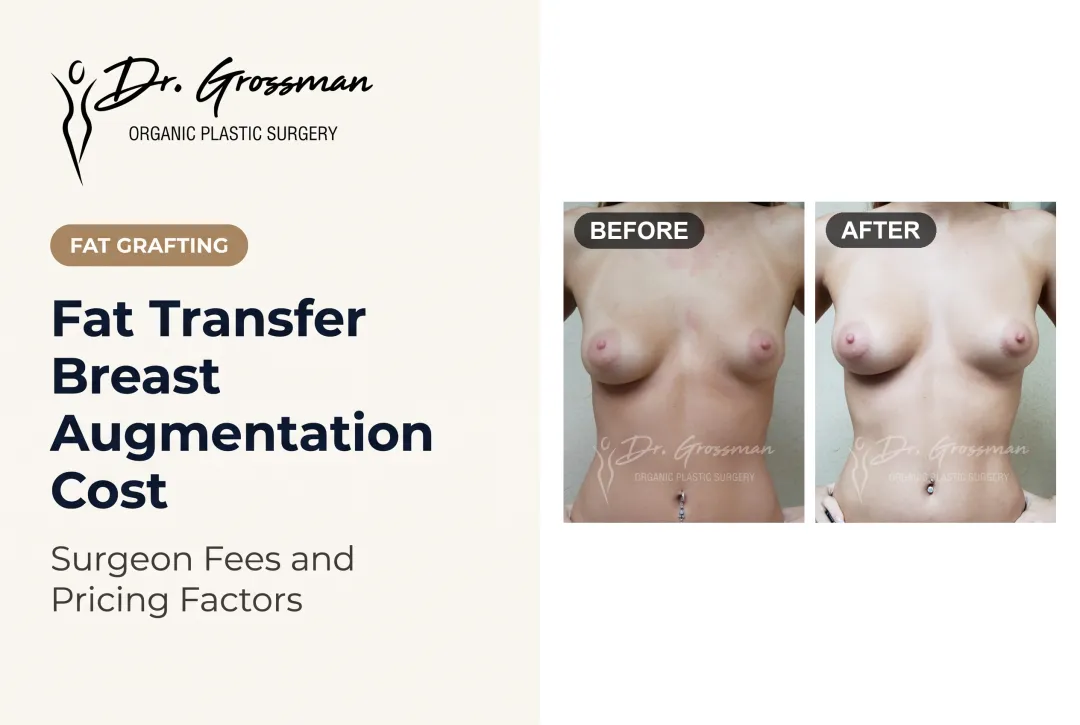
Dr. Grossman's rule of thumb starts with your goal and your body. If you want about 1 to 1.5 cup sizes and have unwanted fat elsewhere, fat transfer (what he calls Organic Breast Augmentation) may fit. If you want more and have little spare fat, implants are the better tool, and his practice notes that saline is likely to be the preferred option because the risk of capsular contracture is much lower. He places saline implants through a small incision inside the navel, so no incision is made on the breast itself and the only scar is a small one tucked into the belly button. For fat transfer, the fat goes in through tiny entry points with a blunt cannula, so scarring is minimal. Both are choices designed to minimize scarring while keeping the result natural-looking.
Surgical Complexity and Additional Procedures
A lift, fat transfer, asymmetry correction, implant removal, capsular contracture treatment or revision add operating time and cost. In the FDA's 10-year MemoryGel core study of primary augmentation patients, 25.5% had at least one reoperation. That is one product's data, not a universal rate, but it shows why future costs deserve a place in your budget.
Surgeon Experience, Facility and Market
Training, breast-surgery experience, operating-room standards, the anesthesia provider, malpractice and staffing costs, and local demand all influence fees. Dr. Leonard Grossman completed fellowships in microsurgery and in burns and reconstruction, then a fully accredited plastic surgery residency at Scott & White Memorial Hospital in Texas in 1995. According to his practice, he performed close to 8,000 TUBA procedures between 1996 and 2022. His view on fees is direct: an experienced surgeon helps you avoid the cost of corrective procedures, which run far higher than a well-performed first operation.
Patient Anatomy and Customization
Breast shape, tissue coverage, skin laxity, asymmetry, prior surgery, desired size, implant placement and medical history all shape the plan, testing and technique. That is why two augmentations with the same name are rarely the same operation. One patient may need only a pocket created under the muscle through the navel; another may need the breast fold lowered, an asymmetry corrected, a small lift, or fat taken from donor areas and placed in layers. Each added component changes the steps involved, and the cost with them.

Low-Cost Versus High-Cost Options
Price alone doesn't predict results. Compare quotes on:
- Transparency and itemization
- Included services and implant brand
- Warranty
- Facility accreditation
- Surgeon qualifications
- Follow-up and revision policy
An unusually low quote deserves questions. Ask:
- Does it include the implants?
- Who provides anesthesia?
- Is the facility accredited?
- What is the emergency plan?
- What does aftercare cost?
- What is the revision policy?
How to Plan and Pay for Breast Augmentation
Budget for the whole journey, not just the operation, and compare at least two detailed estimates when you can.
Build a Complete Personal Budget
Include these items:
- The surgical quote
- Consultation and testing
- Medications and recovery supplies
- Transportation
- Time away from work
- Childcare or home help
- Travel and lodging, if applicable
- A reserve for the unexpected
Recovery planning matters. Cleveland Clinic suggests at least three days off work, and labor-intensive jobs may need three weeks or more. With Dr. Grossman's outpatient approach, most TUBA patients are back at work the next day, which can shrink this line of the budget; your own timeline is confirmed at consultation. Use current local estimates for each line.
Financing and Insurance
Common approaches include savings, practice financing plans, healthcare credit cards, personal loans, or a mix. Dr. Grossman's practice offers financing options, including Cherry and Prosper Healthcare Lending. Whatever you choose, compare APR, promotional period, fees, credit requirements, penalties and total repayment.
Be careful with deferred-interest medical cards. A CFPB report found interest was incurred on 20% of healthcare purchases charged to deferred-interest cards from 2015 to 2020. Miss the deadline and interest can apply to the full purchase.
ASPS says most health plans don't cover cosmetic augmentation or related complications. Reconstruction after mastectomy may be different: the Women's Health and Cancer Rights Act requires covered plans to include reconstruction benefits for those who elect it. Confirm coverage and authorization with your insurer directly.

Questions to Ask at the Consultation
- Is the estimate itemized in writing?
- Are implants, anesthesia, facility fees, follow-up, garments and prescriptions included?
- What happens if a complication or revision is needed?
- What warranty applies to my implant, and what does it actually pay?
- Did the surgeon complete an accredited plastic surgery residency, and is the facility accredited?
- What costs may come later, and how many future operations should I expect?
If you're considering breast augmentation, you can discuss your goals and get a personalized estimate with Dr. Leonard Grossman at his fully accredited surgery center at 3039 Emmons Ave, Brooklyn, NY 11235. He examines you, takes photographs and measurements, explains whether fat transfer, TUBA saline implants or silicone suits your anatomy, and involves you in every decision. Call 212-585-2133.
Conclusion
Breast augmentation cost varies with implant selection, surgical complexity, surgeon and facility fees, anesthesia, location and the postoperative care included. An itemized quote and a full personal budget prevent surprises and make provider comparisons fair.
The right investment balances safety, qualifications, personalized planning, clear communication and long-term value. The lowest advertised number rarely does. As Dr. Grossman puts it, the goal is to have the surgery you want done right the very first time.
Frequently Asked Questions
How much does a boob job typically cost in the US?
There is no reliable single number. ASPS surgeon-fee statistics exclude anesthesia and facility costs, and advertised packages bundle different items. Because cost varies significantly by location and by each patient's anatomy and plan, the only accurate figure is an itemized quote after an exam.
How do most people pay for breast implants?
Many combine savings, practice payment plans, medical financing and personal loans. Compare total repayment, APR and deferred-interest terms before choosing.
Will insurance pay for a breast augmentation?
Elective cosmetic augmentation is usually self-pay. Reconstruction after mastectomy may be covered under different rules, so confirm with your insurer.
How long do breast implants usually last?
They aren't lifetime devices, and the FDA gives no fixed replacement date. Plan for monitoring and possible revision. Silicone-gel implants need periodic imaging to check for silent rupture. Dr. Grossman's practice notes that a saline leak is easy to spot because the breast visibly changes size, and the saline itself poses no risk.
Is it cheaper to get a breast lift or implants?
They treat different concerns, and prices vary with complexity and location. A lift combined with implants typically costs more than either procedure alone. With Dr. Grossman, a small-to-moderate lift can often be achieved through TUBA at the same time as the implants.
Are breast implants worth the money?
It depends on your goals, expected benefits, risks, recovery, long-term costs and confidence in your surgeon. A consultation where Dr. Grossman compares implant and fat-based options for your body, followed by an itemized plan, helps you decide.