
The distinction matters because the FDA has approved Dysport for cosmetic use only on glabellar lines (the frown lines between the brows). Treating crow's feet or the lower eyelid is off-label, which calls for careful patient selection and an experienced injector.
This guide separates the different under-eye concerns, explains who may be a reasonable candidate, walks through the process, and covers safety, cost, and provider selection. It also shows how Dr. Leonard Grossman, a Brooklyn, NYC plastic surgeon with more than 30 years of experience, matches each eye-area concern to a treatment.
Key Takeaways
- Dysport works on movement-related lines, not bags, hollows, or pigment.
- Crow's feet and lines directly under the lower lid are different problems.
- Periocular Dysport is off-label in the US.
- Lower-eyelid concerns need an in-person exam first. Dr. Grossman uses Dysport for crow's feet and treats hollows, crepey skin, and bags with other methods.
What Dysport Can and Cannot Treat Under the Eyes
How Dysport works
Dysport contains abobotulinumtoxinA, a botulinum toxin type A. It blocks the release of acetylcholine at the nerve-muscle junction, so the targeted muscle contracts less forcefully. The skin above it can look smoother during expression.
The current US prescribing information (revised October 2024) lists cosmetic approval for moderate to severe glabellar lines in adults younger than 65. Its Medication Guide states it is not known whether Dysport is safe or effective for other wrinkles.
Dysport units are not interchangeable with, or convertible to, units of other botulinum toxin products.
Dysport is one of six neuromodulators Dr. Grossman uses, alongside Botox, Xeomin, Jeuveau, Daxxify, and Myobloc. As his practice puts it, they "differ in formulation, onset of action, and duration of effects," and he recommends the one that fits your needs.
Different concerns, different causes
- Crow's feet: expression lines fanning out from the outer corners of the eyes.
- Lower-eyelid lines: fine creases directly beneath the lash line, often crepey and tied to skin quality.
- Bags: fat pads shifting forward as supporting tissue weakens.
- Puffiness: fluid pooling, which can fluctuate through the day.
- Tear-trough hollows and dark circles: shadowing, pigment, or visible vessels under thin skin.
- Loose skin: a baggy look that a muscle relaxer cannot tighten.
Bags, puffiness, tear-trough hollows, dark circles, and loose skin come from fat, fluid, pigment, vessels, or laxity, not muscle overactivity, so a muscle relaxer will not correct them.
Dr. Grossman checks whether your lines appear mainly when you smile or squint, or stay visible with the face fully relaxed. Lines etched in at rest respond less to a muscle relaxer.

Why the lower eyelid is delicate
The orbicularis oculi is one continuous muscle ring around the eye. Relaxing one portion can change movement in the next. Excess or poorly placed product near the lower lid may contribute to:
- Temporary lid weakness or laxity
- Asymmetry
- Altered blinking
- Dry-eye symptoms
- A change in how the wrinkles look
A good consultation targets the underlying cause rather than adding toxin to every visible line. Near the eye, placement matters more than the brand name; his practice notes that a drooping eyelid can happen but is extremely rare in his hands.
Is Dysport Appropriate for Under-Eye Wrinkles?
Who may be a reasonable candidate
A reasonable candidate has expression-related lines, realistic expectations, no relevant contraindications, and a preference for a temporary, nonsurgical approach. Individual assessment also weighs:
- Eyelid anatomy and skin thickness
- Muscle strength, baseline lid tone, and brow position
- Past responses to injectables
A 2023 narrative review lists an abnormal snap test, lower-lid puffiness, and previous lower-lid blepharoplasty as unfavorable features for infraorbital toxin treatment. The Dysport label also urges caution with surgically altered anatomy, marked asymmetry, ptosis, and excessive dermatochalasis.
When Dysport may not be the right choice
Dysport is unlikely to correct true bags from protruding fat, significant puffiness, tear-trough volume loss, marked skin laxity, or pigmentation.
The label also sets limits on who should receive it:
- Hypersensitivity to any botulinum toxin product, cow's milk protein, or formulation components (contraindicated)
- Infection at the injection site (contraindicated)
- Neuromuscular disorders such as myasthenia gravis, ALS, or Lambert-Eaton syndrome (close monitoring)
- Pregnancy or breastfeeding (no adequate studies; no breastfeeding data)
- Aminoglycosides, anticholinergics, and muscle relaxants (caution)
Comparing options by concern
| Concern | Options a clinician may consider |
|---|---|
| Expression lines | Neuromuscular relaxation (off-label near the eyes) |
| Fat-related bags | Lower blepharoplasty |
| Tear-trough hollows | Selected hyaluronic acid fillers or fat grafting |
| Pigment or texture | Sun protection, selected resurfacing |
| Loose skin | Resurfacing or surgery, depending on cause |
Several hyaluronic acid fillers carry FDA approval for infraorbital hollows, including Restylane Eyelight (2023) and Juvéderm Volbella XC (2022). Filler and surgery carry their own risks, such as swelling, bluish Tyndall discoloration, and, rarely, vascular injury. Neither is an automatic substitute for the other. Anatomy and diagnosis determine which option fits.
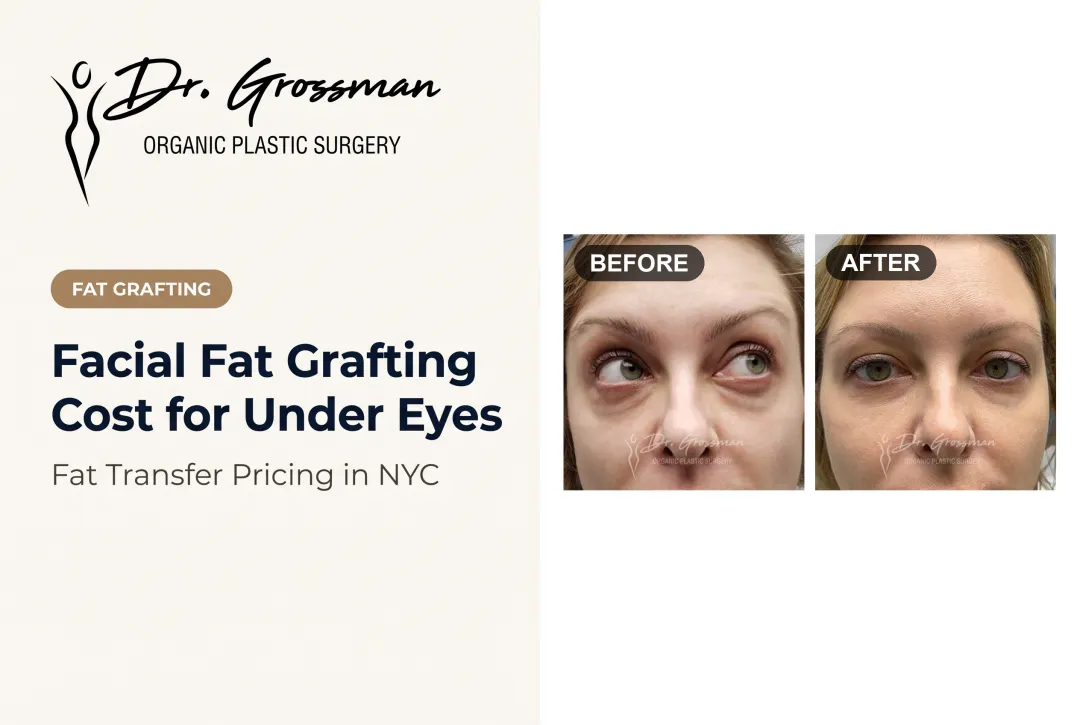
At Dr. Grossman's practice, the plan follows the cause. Restylane can soften under-eye hollows, but he uses it there only in patients with thick skin. The under-eye and tear-trough results in his galleries come from fat grafting, part of his Organic Plastic Surgery approach of restoring volume with your own tissue instead of synthetic material. For crepey lower-lid skin with minimal excess, CO2 laser resurfacing alone may be offered, while protruding fat bags point toward a lower blepharoplasty.
Setting realistic expectations
- Dysport softens movement-related lines. It rarely erases creases already etched into resting skin.
- Results are temporary and vary by person and area.
- Conservative dosing near the eyes helps preserve natural blinking and expression.
Come to the consultation ready to discuss your goals, how your face moves, medical history, past injectables, and whether you'd consider alternatives.
What the Dysport Treatment Process Involves
Consultation and assessment
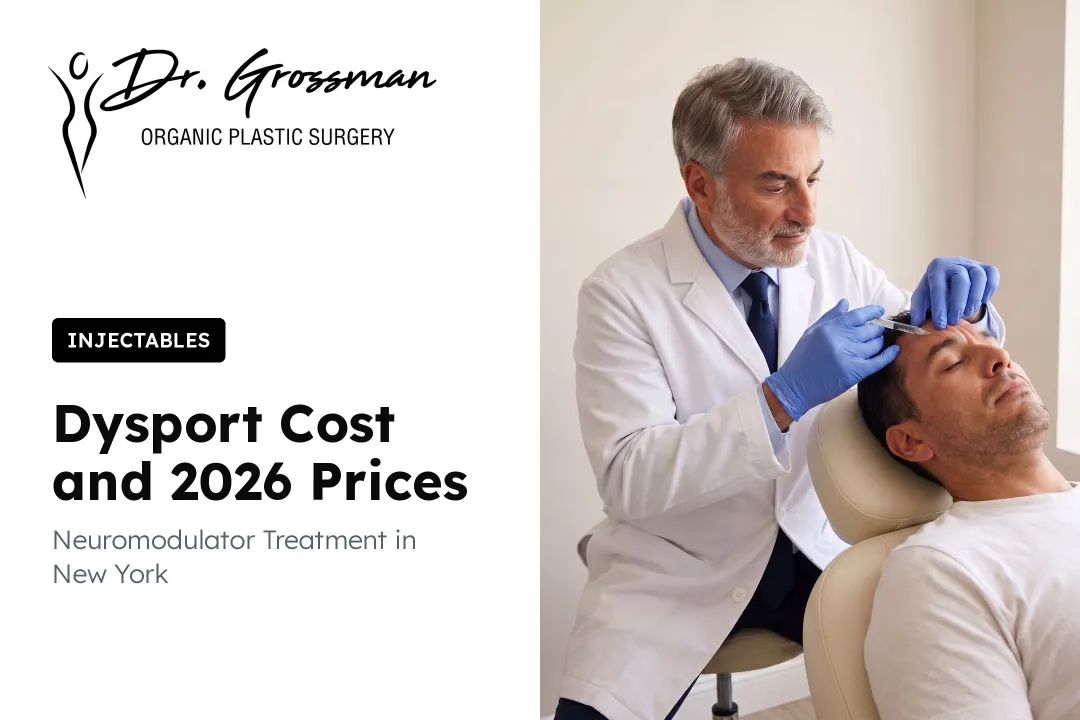
Dr. Grossman reviews your medical history, medications, allergies, prior botulinum toxin treatments, and any eye complaints. At his practice, the consultation can be combined with the treatment itself. Expect to be observed at rest and while smiling, squinting, raising the brows, and contracting the lower lid.
Baseline photos help judge results later. Your provider should also say plainly whether the proposed treatment is approved or off-label.
Injection planning and administration
Typically, the skin is cleansed, treatment points are marked, and a fine needle places small, measured amounts into selected muscles. The number and position of those points depend on how your eye muscles move, so no two plans are identical. Near the eye, the priorities are precise placement, conservative dosing, and preserving eyelid function. Dr. Grossman aims for natural-looking results: crow's feet soften while your smile and blink stay your own. At Dr. Grossman's practice, a neuromodulator session typically takes under 10 minutes and takes place at his fully accredited (AAAHC) surgery center on Emmons Avenue in Brooklyn. Most patients feel only a small pinch, and a topical anesthetic can be applied if needed. With no incisions and no surgical recovery, most people go straight back to work or their day.

Be wary of anyone promising a fixed number of units. Dose depends on anatomy, muscle strength, and area. The US label supplies no approved lower-eyelid protocol, so glabellar dosing should not be treated as an under-eye regimen.
What results look and feel like
The effect is gradual. Results typically appear within a few days and reach full effect in one to two weeks. One 2013 randomized study of glabellar lines found Dysport onset around 5 days in women.
Tenderness, small raised bumps, redness, swelling, or bruising can occur, especially in the thin skin around the eyes. Judge the result only after the product has had time to work. Adding more early because lines still show is how overtreatment happens. Dr. Grossman's practice offers a complimentary touch-up within the first two weeks, so any fine adjustment is made once the product has fully settled.
Aftercare
- Follow your clinician's specific instructions. Dr. Grossman's own neuromodulator aftercare has no special restrictions: return to your normal routine.
- Other providers may advise against rubbing the area, strenuous exercise, heat, alcohol, or facial treatments for a short time. Advice varies by provider.
- Call the practice if swelling, asymmetry, or eyelid changes are more pronounced or last longer than expected.
Follow-up and maintenance
A follow-up visit lets the provider check symmetry, eyelid function, and wrinkle response, and decide whether any adjustment makes sense. Maintenance means periodic reassessment, not automatic retreatment.
The label says glabellar retreatment should come no sooner than every 3 months, and that is not a validated lower-lid schedule. In Dr. Grossman's practice, neuromodulator results typically last two to four months, longer in some patients, and maintenance visits usually fall every three to six months. Daily sunscreen and a sensible skincare routine support skin quality between visits, but they do not replace medical treatment.
Safety, Side Effects, and When to Seek Care
Common short-term effects
In the label's pooled glabellar trials, 48% of Dysport recipients reported any adverse reaction versus 33% on placebo. Headache affected 9%, injection-site pain 3%, eyelid ptosis 2%, and eyelid edema 2%.

These are glabellar figures, not under-eye rates. Most reactions appeared about a week after treatment and lasted several weeks.
Risks specific to the eye area
- Eyelid or brow drooping
- Asymmetry
- Reduced blinking or tear production, and dry eye
- Lower-lid weakness or ectropion
- Unintended effects on nearby muscles from product spread
Seek prompt assessment for persistent irritation, light sensitivity, or vision changes. An ophthalmology referral may be needed.
Seek urgent care for
Effects of botulinum toxin can spread beyond the injection site. Get medical help right away for any of these, which can appear hours to weeks after treatment.
- Trouble breathing, swallowing, or speaking
- Widespread allergic symptoms
- Double or blurred vision, or significant vision changes
- Severe eye pain
- Generalized weakness or loss of bladder control
- Rapidly worsening swelling
Cost and Choosing a Qualified Provider
What drives the price
No reliable average exists for under-eye Dysport in New York, and cost varies significantly by location and by patient. The American Society of Plastic Surgeons publishes national neuromodulator statistics, but they are category-wide and exclude regional differences, so they are not a Dysport quote.
Price depends on product amount, areas treated, provider expertise, time involved, and location. Because Dysport and Botox use different unit systems, comparing per-unit prices can mislead. Ask for a complete treatment estimate.
Dr. Grossman doesn't publish prices. His quote depends on the neuromodulator chosen, the number of areas treated, your goals, and how often you return for maintenance, and you receive it at consultation.
Provider checklist
- Appropriate medical licensure and documented training, such as an accredited plastic surgery residency
- An accredited treatment setting
- Real experience with periocular anatomy
- Transparent discussion of approved versus off-label use
- Product sourced from an authorized supplier (the FDA warned in November 2025 about illegal toxin sellers)
- Informed consent and an emergency plan
- Before-and-after examples relevant to your concern
Next step
If you're weighing neuromodulation against another facial rejuvenation approach, Dr. Leonard Grossman sees patients at his fully accredited surgery center at 3039 Emmons Ave in Brooklyn, NYC. He uses Dysport for crow's feet and other expression lines. When the problem under the eye is volume or skin rather than movement, he can discuss Restylane for suitable skin, fat grafting, CO2 laser resurfacing, or eyelid surgery. Call 212-585-2133 to book an evaluation of your goals.
From your first consultation to your last check-up, you can count on privacy, professionalism, and a straight answer on whether Dysport suits your concern.
Frequently Asked Questions
Does Dysport work for under-eye bags?
Generally no. Dysport does not remove fat pads, fill tear-trough hollows, or resolve puffiness from fluid or loose skin. An exam identifies the actual cause.
What is the best treatment for under-eye bags?
There's no universal best. The right option depends on whether fat, fluid, hollows, skin laxity, or allergies are behind the bags. Dr. Grossman matches the treatment to the cause: eyelid surgery for protruding fat, fat grafting or a carefully selected filler for hollows, and laser resurfacing for crepey skin.
What's the average cost of Dysport?
There's no single figure. Cost varies by the areas treated, the units your muscles need, the provider, and location, and national statistics blend every area and market. Request a personalized estimate: Dr. Grossman quotes individually after examining you, and financing options are available.
Can Dysport be injected directly under the eyes for wrinkles?
It can be, but it's off-label. It requires careful patient selection, conservative dosing, and a provider who knows periocular anatomy well.
How long does Dysport last under the eyes?
No lower-lid-specific duration is established. The label says glabellar effect may last up to 4 months, and Dr. Grossman's practice cites two to four months for neuromodulators, longer in some patients, but individual results differ.
What's the difference between Dysport for crow's feet and under-eye wrinkles?
Crow's feet sit at the outer corners; under-eye lines sit beneath the lower lid. The lower lid's role in blinking and lid support makes treatment there carry different functional and safety considerations.