
Online numbers add to the confusion. Some reflect only the surgeon's fee, while the real out-of-pocket total can also include anesthesia, facility charges, consultations, prescriptions, and follow-up care.
This guide explains why published benchmarks can't predict your total, how one-ear and two-ear correction differ, what drives cost, what a quote should include, insurance, financing, and how to prepare for a consultation. It also explains how Dr. Leonard Grossman performs otoplasty, often called an "ear tuck," at his Brooklyn practice.
Key Takeaways
- Published national figures measure different things and can't predict your total, because ear pinning cost varies by region and by the correction your ears need.
- Technique, anesthesia, facility, surgeon, and location all move the price.
- Adult, pediatric, and complex cases often need different anesthesia and facility plans.
- The cheapest quote is rarely the best value. Check plastic surgery training, facility accreditation, and inclusions.
- Dr. Grossman usually performs otoplasty under local anesthesia, with twilight anesthesia available, places incisions behind the ear to keep scarring discreet, and most patients resume daily activities within two to three days.
How Much Does Ear Pinning Surgery Cost in the U.S.?
Otoplasty has no universal price. A real quote requires an exam of your ears, a conversation about your goals, and a proposed surgical approach. Dr. Grossman gives you a personalized quote at the consultation, and your quote will itemize what is included.
Why Published U.S. Ear Pinning Cost Figures Mislead
You will find several published benchmarks, and they should not be blended or treated as your price:
- ASPS fee statistics: the American Society of Plastic Surgeons publishes national surgeon/physician fee statistics in its 2024 fee schedule, but they cover only the surgeon's portion and exclude anesthesia, operating-room facilities, and related expenses.
- Consumer-finance averages: lender surveys publish national figures without saying whether they are fee-only or an all-in total.
- Your own ears: no national figure knows how far your ears protrude, whether one or both need correcting, or how firm your cartilage is.

No verified national all-in figure exists. Cost varies significantly by geographic location and by individual patient needs, which is why Dr. Grossman doesn't name a number before he has examined your ears.
One Ear Versus Two Ears
The national sources do not publish separate one-ear and two-ear prices. Correcting one ear may cost less, but the saving is rarely proportional. Anesthesia, facility time, and staffing may not shrink in proportion. Ask the practice to quote both scenarios in writing; Dr. Grossman examines your ears and gives a personalized quote for the correction you actually need.
What Published Figures May Include or Exclude
ASPS lists several possible components of total cost:
- Surgeon's fee
- Anesthesia
- Hospital or surgical facility charges
- Prescriptions
- Post-surgery garments such as headbands
- Medical tests
Misreading a starting price leads to underbudgeting and surprise bills. It also makes quotes hard to compare when they don't cover the same services. Always request an itemized written quote.
Key Factors That Affect the Cost of Ear Pinning Surgery
Price comes from clinical, operational, and geographic factors, not a simple per-ear calculation. ASPS names surgeon experience, type of procedure, and office location as the main drivers. No reliable technique-specific price premium has been published.
Surgical Technique and Case Complexity
Surgeons use several approaches:
- Suture-based techniques that reshape the antihelical fold and secure cartilage
- Cartilage scoring or cutting methods
- Incisionless suture techniques
- Combined approaches, such as pairing a fascial flap with cartilage-sparing work
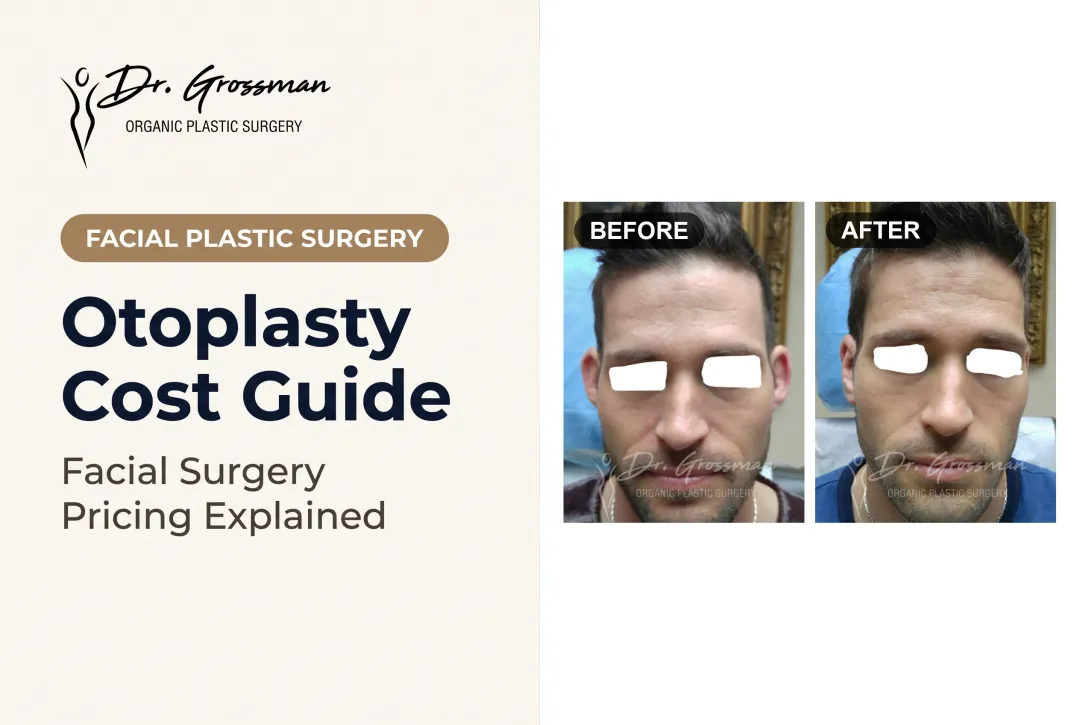
Two people asking for "ear pinning" can need quite different operations. One needs a missing fold in the cartilage recreated, another needs a deep ear bowl set back, and a third needs only one ear brought into line with the other. Dr. Grossman plans the steps around your cartilage structure, how far the ears protrude, any asymmetry, and the correction you want, rather than following a fixed template. Incisions are placed in an inconspicuous spot behind the ear to minimize visible scarring. Revision surgery, congenital differences, trauma-related deformities, or added earlobe work can extend operating time and raise the estimate. Dr. Grossman also performs revision otoplasty for patients unhappy with an earlier ear surgery or an injury.
Cartilage also has a "memory," which is one reason a secondary adjustment is sometimes needed. A 2026 review of 1,590 patients reported pooled recurrence of 2.8% and revision of 2.1%, though individual results vary, per a 2026 systematic review.
Surgeon Experience and Geographic Market
Specialized training, experience with children or adults, demand, practice overhead, and regional costs all shape surgeon fees. Consumer-finance surveys show a clear spread between states, which is one reason a figure from another region tells you little about a quote in New York. Their fee basis isn't specified either, so treat any state average as a rough indicator at best.
A lower-cost region doesn't mean lower-quality care, and a high price doesn't prove quality either.
Anesthesia, Facility, and Patient Factors
Ear surgery can use local anesthesia, IV sedation, or general anesthesia, and many practices put children under general anesthesia. Dr. Grossman's approach is different: he usually performs otoplasty under local anesthesia, with twilight anesthesia available for anxious patients, and he typically treats children over 8, when the ear cartilage is stable enough to allow correction. His approach is designed to minimize discomfort and shorten recovery, and your anesthesia plan is confirmed at consultation.
Settings include an accredited office-based facility, an ambulatory surgery center, or a hospital. Each carries different charges and safety requirements. ASPS advises choosing facilities that are accredited, state-licensed, or Medicare-certified. Dr. Grossman operates in his own fully accredited (AAAHC) office-based surgery center in Brooklyn, so you avoid hospital charges and go home the same day.
One pediatric hospital study of 3,428 patients found hospital costs were noticeably higher under general anesthesia than under local anesthesia. Those are hospital costs, not patient cash prices, but they show the anesthesia plan matters.

Medical history, testing needs, and medications can also add pre-operative expense.
What Does the Total Otoplasty Cost Include?
Your total commitment goes beyond the surgeon's fee. Review it as a complete package before scheduling.
| Component | Timing | What it covers |
|---|---|---|
| Surgeon's fee | One-time | Planning, operating time, surgical skill. Confirm whether it covers one ear, both, or extra corrections |
| Anesthesia and facility | One-time | Anesthesia professional, medications, monitoring, operating room. May be billed separately |
| Consultation, testing, preparation | Usually one-time | Photos, measurements, medical clearance, labs, medication and smoking instructions |
| Post-operative care and supplies | One-time or short-term | Dressings, headband, prescriptions, follow-up visits |
| Indirect and contingency costs | Variable | Transportation, childcare, time off work or school, extra visits |
Post-Operative Care and Supplies
MedlinePlus says bandages typically come off after 2 to 4 days, and a head wrap or headband is worn for 2 to 3 weeks. Ask which supplies the practice provides and which you buy yourself. Recovery after otoplasty with Dr. Grossman is usually light: surgery is outpatient, you go home the same day, and most patients return to work or school within one to a few days. A beanie or sweatband may be required, and strenuous activity and sports wait at least 5 days.
Indirect Costs
Exact amounts vary by household, so build them into your budget early. A parent taking a few days off work, or an adult arranging a ride home and overnight help, adds real expense.
Lower-Cost Versus Higher-Cost Options
Lower prices may reflect:
- A simpler correction or local anesthesia
- Fewer facility requirements
- A low-overhead setting
Higher prices may reflect:
- Complex cartilage work or general anesthesia
- Revision surgery or extensive follow-up
- An expensive market
Compare safety standards, credentials, technique suitability, inclusions, and follow-up, not just the headline figure.
How to Estimate the Right Budget for Ear Pinning Surgery
Base your budget on your treatment plan and total expected expenses, not the lowest number you find online.
Build an Itemized Personal Estimate
Ask the practice for separate figures for:
- Surgeon's fee
- Anesthesia
- Facility
- Consultation and testing
- Prescriptions and garments
- Follow-up appointments
- Revision policy
Also confirm:
- Whether the quote is unilateral or bilateral
- Which technique is recommended
- What could change the estimate
- How long the quote stays valid
Insurance, Financing, and Payment Planning
Cosmetic ear pinning is usually excluded from coverage. Aetna, Cigna, and UnitedHealthcare policies all classify correction of prominent ears as cosmetic under their stated criteria, though plan language and state mandates differ. Documented congenital deformity, trauma, or functional impairment may be handled differently. Verify benefits and pre-authorization directly with your insurer.
For financing, look past the monthly payment. CareCredit's promotional plans, for example, can charge interest from the purchase date if the balance isn't paid in full by the deadline, as CareCredit explains. Compare:

- Interest and promotional terms
- Deposits and payment schedules
- Credit requirements
- Penalties for missed payments
For families who prefer to spread the cost, financing is available at Dr. Grossman's practice through Cherry and Prosper Healthcare Lending.
What Most People Miss When Comparing Costs
Be wary of an unusually low quote, especially when credentials, facility accreditation, anesthesia arrangements, or inclusions are unclear. Ask about:
- The surgeon's experience with cases like yours
- Expected recovery limitations
- How complications are handled
- Whether additional treatment is billed separately
If you're in the New York area, Dr. Leonard Grossman performs ear pinning for children and adults at his fully accredited surgery center at 3039 Emmons Avenue in Brooklyn. At the consultation he examines your ears, uses imaging to help you visualize the likely result, and explains the recommended approach with its full cost breakdown. His aim is natural-looking ears that suit your face, with incisions kept discreetly behind the ear. Otoplasty can also be combined with a rhinoplasty or facelift when that fits your goals.
He has more than 30 years of plastic surgery experience and completed his plastic surgery residency at Scott & White Memorial Hospital in Texas in 1995. From your first consultation to your last check-up, you can count on privacy and professionalism. Call 212-585-2133 to schedule an ear-surgery consultation and discuss pricing.
Conclusion
Ear pinning costs vary with the correction needed, one ear versus two, technique, anesthesia, facility, surgeon, geography, and aftercare. A generic online average can't account for any of that.
An itemized quote, plus a realistic cushion for indirect expenses, makes a far better budget. Choose a surgeon with documented plastic surgery training who operates in an accredited facility, and weigh safety, expected results, communication, and long-term value alongside price.
Frequently Asked Questions
How much does the average otoplasty cost?
No average will match your case. ASPS statistics cover only the surgeon's fee and leave out anesthesia and facility charges, and lender averages don't say what they include. Because cost varies by location and by what your ears need, Dr. Grossman gives a personalized quote after an exam.
How much does it cost to have one ear pinned back?
No national source publishes one-ear pricing. It may cost less than two ears, but savings often aren't proportional because anesthesia and facility charges may stay similar. Dr. Grossman gives a personalized quote after examining you.
Will insurance pay for ear pinning?
Major insurers classify correction of prominent ears as cosmetic. Cases involving trauma, congenital differences, or functional concerns may be reviewed separately, so check your plan and pre-authorization rules.
How long does ear pinning last?
ASPS says the ear is permanently positioned closer to the head. Recurrence can still occur, and a second procedure may be needed if the ear sticks out again. Dr. Grossman's practice describes otoplasty results as long-lasting, and he performs revision otoplasty when it is needed.
What is the best age for ear surgery?
ASPS says generally age 5 or once ear cartilage is stable enough. Healthy teenagers and adults are also candidates. Dr. Grossman typically performs otoplasty on children over 8, and healthy adults have no upper age limit.
Is otoplasty surgery worth it?
It depends on your goals, risks, recovery, and budget. A 2026 study of 615 RealSelf reviews found 90.7% rated it "Worth It," but that is a self-selected sample.