Skip to content

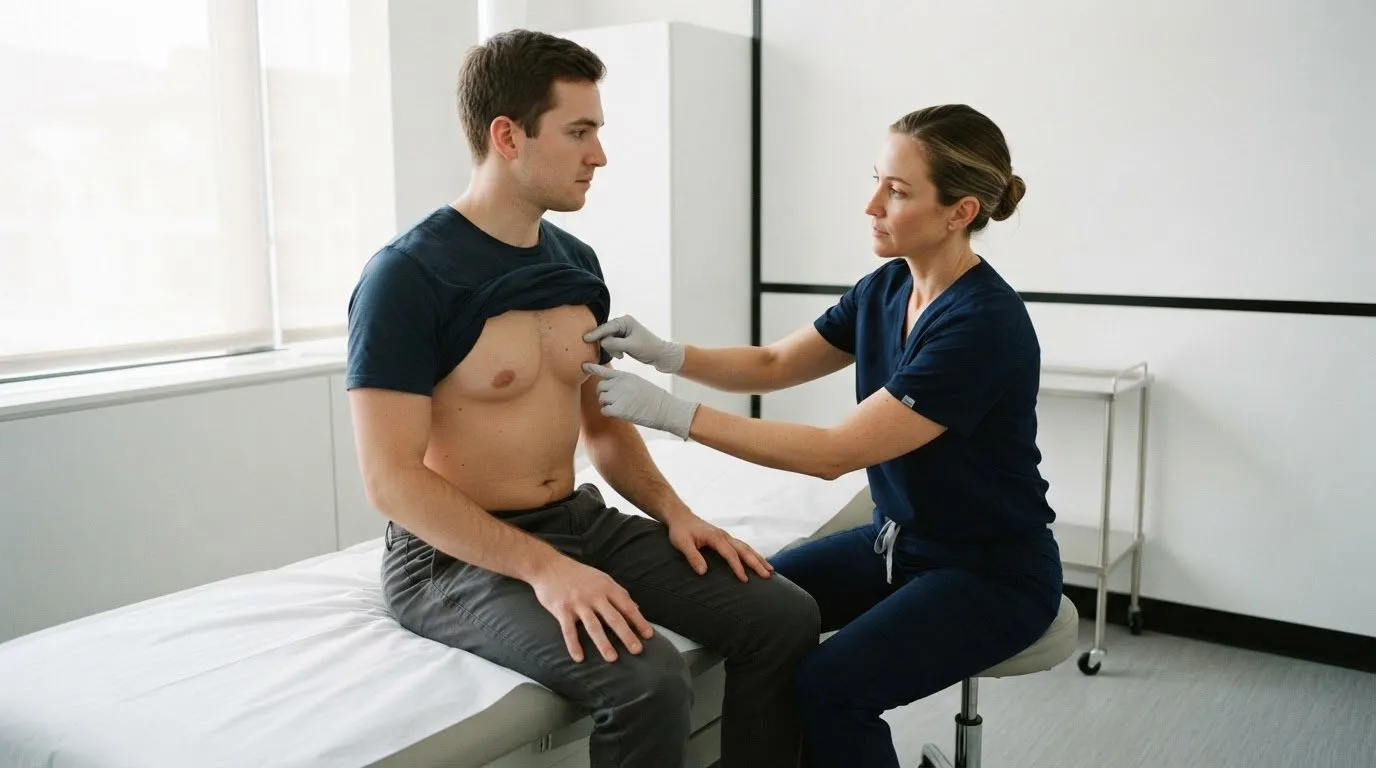
Breast enlargement during puberty often fades as hormone levels change. Understanding what causes gynecomastia in men starts with the balance between testosterone and estrogen: when testosterone falls relative to estrogen, or estrogen rises, glandular breast tissue may grow. According to the National Institutes of Health, puberty-related gynecomastia usually goes away without treatment within 6 months to 2 years.
If you’re concerned about breast changes, it’s natural to wonder whether they’re temporary or point to another cause. Hormonal shifts are one possibility, but health conditions, medicines, alcohol, and other substances can also play a role. Here’s how these factors may affect breast tissue, and why gynecomastia related to puberty often improves over time.
Key Takeaways
- Gynecomastia can develop when the balance between testosterone and estrogen shifts, including during puberty and older adulthood.
- Some health conditions can affect hormone levels or how the body processes hormones, making evaluation of the underlying cause important.
- Prescription medicines, anabolic steroids, alcohol, and some recreational substances may contribute; a clinician can review medications safely.
- Puberty-related breast enlargement often improves over time, while persistent changes may call for a discussion of treatment options.
Hormonal changes at birth, puberty and older adulthood
Gynecomastia can develop when testosterone falls relative to estrogen or estrogen rises. This imbalance can affect glandular breast tissue even when both hormones are present. Hormonal changes at birth, during puberty, and with age can shift that balance. Some illnesses and testicular problems can also alter hormone levels.
Before birth, estrogen from the mother can affect a newborn’s breast tissue. Swelling usually goes away within 2 to 3 weeks after birth. Breast buds may take longer to fade, gradually disappearing by 6 months of age. These changes are linked to maternal estrogen, not necessarily an ongoing disease. The timing can differ because swelling and breast buds are related signs, but they may not resolve at the same pace.
During puberty, changing hormone levels can temporarily favor estrogen’s effect on breast tissue. More than half of male adolescents have some degree of breast enlargement during puberty. Gynecomastia caused by puberty-related hormone changes usually goes away without treatment within 6 months to 2 years, according to the National Institutes of Health. During this period, the body’s shifting hormone balance can change as development continues. The presence of breast enlargement alone does not identify the exact cause, but the timing during puberty offers useful context.
Hormone levels can shift again in older adulthood, creating another imbalance between estrogen and testosterone. Gynecomastia is common in males over 50 years old. About 24% to 65% of men ages 50 to 80 have the condition. These figures describe a broad age range, not an individual diagnosis. A new change in breast tissue later in life may relate to age-associated hormone changes, but disease, medication effects, and other causes can also contribute. A clinician’s assessment helps distinguish these possibilities and identify whether a hormone-related condition needs attention.
Medical conditions associated with gynecomastia
Several health conditions can affect hormone levels and contribute to male breast tissue growth. Understanding what causes gynecomastia in men means looking beyond hormone changes to conditions such as hypogonadism, when the body produces too little testosterone, and hyperthyroidism, which can disrupt hormone activity. Breast enlargement alone can’t identify the cause, so its timing and any other health changes are important.
Liver disease can affect how the body processes estrogen. Cirrhosis and malnutrition are associated with gynecomastia, as are kidney failure and chronic renal insufficiency. Hormonal changes during dialysis may also contribute. Lung cancer and tumors involving the testes, adrenal glands, or pituitary gland can affect hormone production. Some tumors produce hormones that disrupt the balance between estrogen and testosterone. An estrogen-producing tumor can also cause breast enlargement in preteen boys.
Medicines are another possible contributor. Examples include anti-androgens, anabolic steroids, cimetidine for ulcers, some heart medicines, antiretroviral drugs, opioids, and certain antidepressants or antibiotics. If breast changes begin after you start a medicine, note the timing for a medical review. A doctor can assess your medication list and may adjust treatment when appropriate. Prolonged, extensive use of tea tree or lavender oils may also contribute because these products have weak estrogen activity. Mention supplements and topical oils, too.
Questions about what causes gynecomastia in men often lead to questions about treatment. Care depends on the cause and whether breast tissue persists. Options may include addressing an underlying condition, reviewing medicines, or surgery to remove glandular tissue. Liposuction may also help contour the chest when excess fat contributes to fullness. The price in the United States depends on the case and is provided after a quote request. Cost factors include the amount of tissue to remove and whether liposuction is used.

Medications and substances that may cause gynecomastia
Medicines and substances can affect hormones or breast tissue. Drugs account for an estimated 10% to 25% of cases among males seeking medical attention for gynecomastia. Possible contributors include anti-androgens, anabolic steroids, some antiretroviral medicines, opioids, and certain antidepressants, antibiotics, and medicines for ADHD or anxiety.
Specific examples include prednisone and dexamethasone, cimetidine for ulcers, and digitalis or other heart medicines. Spironolactone, verapamil, nifedipine, and digoxin have also been associated with breast tissue growth. A medicine’s role varies by person, so don’t stop a prescription on your own. A doctor can review your medication list and consider whether an adjustment is appropriate.
Alcohol, marijuana, methamphetamine, heroin, and methadone may also contribute. Heavy alcohol use can affect testosterone production and the liver’s handling of estrogen. Anabolic steroids may contribute when excess testosterone converts to estrogen. Prolonged, extensive use of tea tree or lavender oils may also play a role because these products have weak estrogen activity. Share your use of supplements, oils, and recreational substances during a medical review.
Doctors assess possible causes by reviewing when the breast changes began, your health history, medicines, and substance use, along with a physical examination. This helps distinguish glandular gynecomastia from pseudogynecomastia, in which fat creates a fuller male breast appearance, and guides decisions about further evaluation.
Breast enlargement can affect one or both breasts and may be uneven. Seek medical assessment for new or persistent changes, tenderness, or a noticeable lump. A pituitary or other hormone-producing tumor is one possible cause, but breast changes alone don’t establish that diagnosis. Identifying a possible medication effect or health condition comes before considering treatment, including plastic surgery, because each requires a different approach.
Natural course of pubertal gynecomastia
Puberty-related breast enlargement often changes as development continues. The body’s hormone levels shift during puberty, and glandular breast tissue may become noticeable during that process. In most patients, pubertal gynecomastia resolves on its own within several weeks to 3 years. The pattern can differ: one side may become more prominent, or both breasts may enlarge. These changes don’t, by themselves, establish whether the tissue will persist.
Age and the amount of tissue can help describe the likely course. In preteen boys, breast buds tend to go away within the first year. For adolescents, larger breast tissue may be slower to regress. Pubertal gynecomastia in patients with breasts larger than 4 cm in diameter may not regress completely. That measurement is a reason to discuss the change with a clinician, not a prediction that surgery will be needed.
Timing matters: breast enlargement during puberty may settle as development progresses, while tissue can persist after other pubertal changes have finished. Testosterone levels are part of this changing hormonal picture, but a single symptom can’t show how an individual’s levels are changing. Alcohol, medicines, or a separate health condition may also affect an assessment. Mention prostate-related treatment when discussing medicines, since some anti-androgens can contribute to gynecomastia.
A practical approach is to note when the breast change began and whether it is growing, shrinking, or staying similar. A clinician can assess persistent or changing breast tissue and consider other causes. Surgery is a possible option for lasting gynecomastia, rather than the expected next step for every adolescent. If breast enlargement continues beyond puberty, discuss persistent gynecomastia and whether gynecomastia surgery fits your situation.
Dr. Leonard Grossman: Gynecomastia Surgery
Dr. Leonard Grossman performs gynecomastia surgery to address persistent breast enlargement by removing glandular tissue. When excess fat also contributes to chest fullness, liposuction may help contour the area. The approach depends on whether enlargement comes from glandular tissue, fat, or both.
Surgery may be worth discussing when breast tissue persists after puberty or after an underlying cause has been addressed. It doesn’t correct hormone imbalances or treat a medical condition, so those causes need appropriate attention as part of care. Understanding what contributes to the enlargement can help you decide whether surgery fits your goals.
For a personal discussion about gynecomastia surgery, contact Dr. Leonard Grossman.
Consider a Thoughtful Next Step
Understanding what causes gynecomastia in men is a starting point, not the whole decision. Consider what you want to change, how chest fullness affects your comfort, and whether surgery aligns with your goals. A discussion can also help distinguish appearance concerns from questions that need medical evaluation.
Gynecomastia surgery is an option to discuss if persistent chest fullness remains a concern. Your decision should reflect the source of the fullness, your health, and the outcome you hope to achieve, not pressure to act quickly. Bring questions about the procedure and recovery to a consultation, then use the answers to decide whether to proceed.
To explore your options, contact Dr. Leonard Grossman. Taking time to understand your choices is a constructive next step, and you can move forward at a pace that feels right.
Frequently Asked Questions
What is gynecomastia?
Gynecomastia is an enlargement of glandular breast tissue in males. It can affect one or both sides and may feel firm or sensitive, though those features alone don’t establish the cause. The term describes glandular tissue growth, not simply a change in chest shape. If breast changes appear or persist, a medical assessment can help distinguish gynecomastia from other causes.
What is gynecomastia and how is it different from chest fat?
Gynecomastia involves growth of glandular tissue, while pseudogynecomastia refers to fat that makes the chest look enlarged. Fat-related fullness may change with overall weight, but appearance alone can’t reliably distinguish the two. Firmer tissue or breast sensitivity may point to glandular growth; softer tissue may be fat. A clinician can assess the tissue rather than rely on appearance alone.
Can puberty or aging cause gynecomastia, and how common is it?
Yes. Puberty-related hormone shifts can cause temporary breast enlargement, and the National Institutes of Health says these cases usually go away without treatment within 6 months to 2 years. More than half of male adolescents experience some degree of enlargement during puberty. It’s also common in older men: estimates range from 24% to 65% among men ages 50 to 80.
Which medications can cause gynecomastia in men?
Medicines potentially associated with gynecomastia include anti-androgens, anabolic steroids, cimetidine, digitalis, and some heart medicines. Other examples include certain antiretroviral medicines, antibiotics, opioids, ADHD or anti-anxiety medicines, and tricyclic antidepressants. A medicine’s connection depends on the person and circumstances. Don’t stop a prescribed medicine on your own. Discuss when the breast changes began and your full medication list with a doctor.
What medical conditions can cause male breast enlargement?
Conditions that may contribute include hypogonadism, hyperthyroidism, kidney failure, chronic kidney disease, cirrhosis, and malnutrition. Hormone-producing tumors involving the testes, adrenal glands, or pituitary gland can also disrupt hormone levels. Liver or lung cancer may also be associated with male breast enlargement. Because these causes require different evaluations, a clinician considers your health history alongside the breast changes.
Can alcohol, marijuana, or anabolic steroids cause gynecomastia?
They may contribute. Heavy alcohol use can impair the liver’s processing of estrogen and suppress testosterone production. Anabolic steroids can raise testosterone, which the body may convert into estrogen. Marijuana is also linked with male breast enlargement, as are substances such as heroin and methamphetamine. Mentioning alcohol, recreational substances, and steroid use during a medical assessment can help clarify possible contributors.