Skip to content
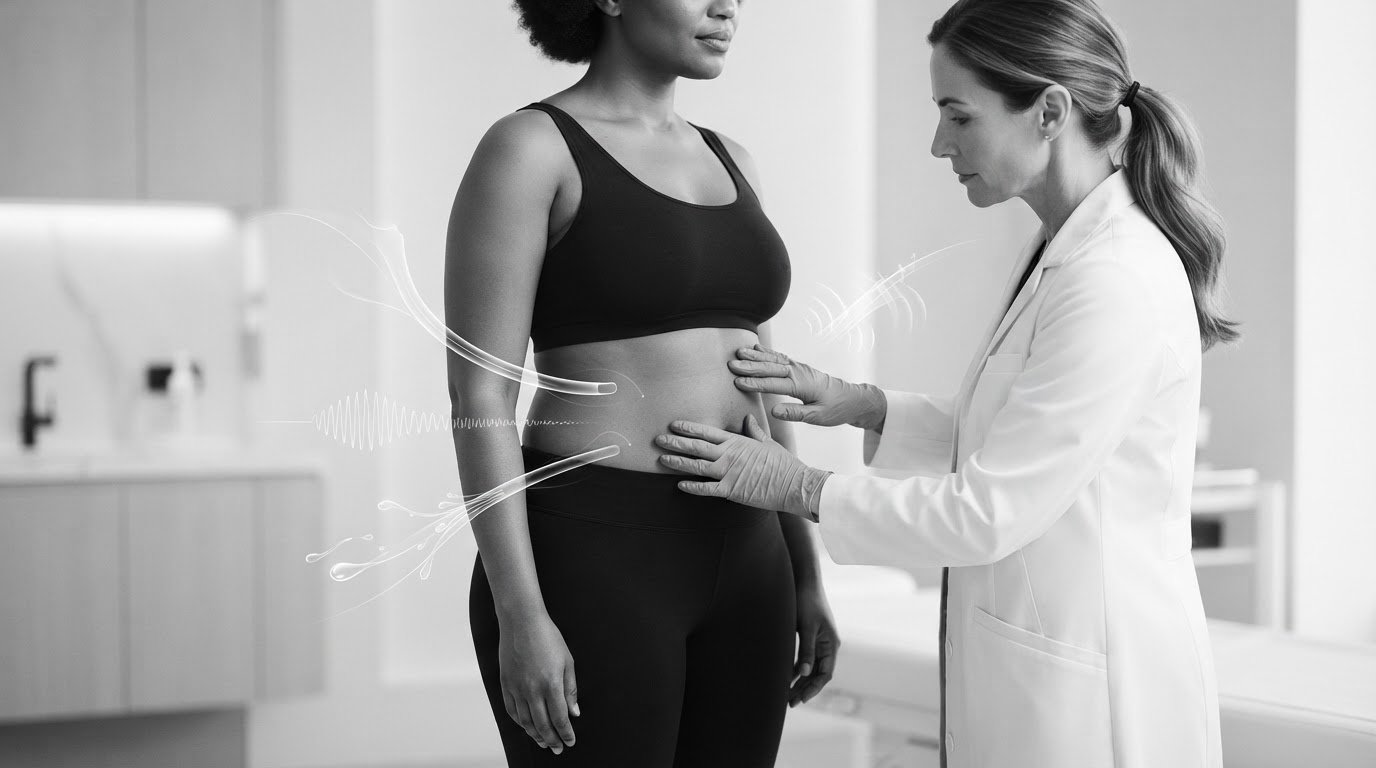
What if the most advanced-sounding liposuction technique isn’t automatically the right one for you? The names can blur together, especially when each method is presented as an advantage. In this guide to the types of liposuction techniques explained, the key difference is how each approach assists with fat removal, not a guarantee of better results.
You’ll learn how conventional, power-assisted, ultrasound-assisted, and other approaches differ, and what a surgeon may consider when matching a technique to your goals and anatomy. Liposuction removes targeted fat; it isn’t a weight-loss method, and fat removal alone doesn’t necessarily tighten loose skin.
As you compare options, a consultation can put the terminology in context. The treatment area, skin characteristics, and desired contour all matter. The sections ahead explain what each technique does and offer questions to help you discuss your options without assuming that one method is best for everyone.
Key Takeaways
- Learn how conventional, power-assisted, ultrasound-assisted, laser-assisted, and water-assisted approaches differ in how they help remove fat.
- Use the types of liposuction techniques explained in this guide to understand the terminology, then focus on which differences matter for your treatment area.
- See how goals, skin elasticity, localized fat, and overall health can shape an individualized surgical plan.
- Prepare focused consultation questions so you can discuss technique choices and expectations with greater confidence.
What liposuction techniques are, and what they can change
Liposuction is a surgical body-contouring procedure that removes selected deposits of fat beneath the skin. It may refine areas such as the abdomen, hips, thighs, or arms when localized fat remains despite a person’s broader efforts to manage their weight. The aim is to alter contour in a treated area, not to produce substantial weight loss or address every factor that shapes the body.
Liposuction reshapes selected areas by removing localized fat; weight-loss surgery is intended to help address obesity and broader health risks. The distinction matters because liposuction doesn’t directly remove fat around internal organs, change bone structure, or build muscle. Skin laxity can also affect an area’s outline, and removing fat alone doesn’t guarantee that skin will tighten or conform to a new contour.
What does liposuction address?
The procedure focuses on subcutaneous fat, the layer beneath the skin. A person may have a defined pocket in one area even when their overall weight is stable, but suitability and likely contour changes vary. Skin quality, fat distribution, the treatment area, and how that area relates to surrounding proportions all inform planning. Liposuction isn’t a general solution for body shape, and it can’t ensure a particular silhouette.
For example, abdominal fullness may relate to more than one factor, including the location of fat and the condition of the skin. A surgical assessment helps distinguish what contouring could address from features it won’t directly change. It can also clarify whether the goal is realistic for the anatomy being treated.
Technique names versus treatment goals
A technique name usually describes how fat is loosened, disrupted, or removed during surgery. It doesn’t define the patient’s goal or promise a particular final appearance. The Liposuction techniques overview provides background on the range of approaches. Understanding their basic mechanisms can make comparisons easier, but the name alone can’t determine which plan suits an individual.
It helps to separate three questions: What area is being treated? What method assists fat removal? What does the person’s anatomy support? Energy-based approaches may be discussed in relation to their effects on tissue, but a technique label alone doesn’t guarantee skin tightening. Skin response varies, so the method must be considered alongside the treatment area and the overall surgical plan.
- Goal: Which localized area or contour concern is being addressed?
- Method: How does the approach assist with loosening or removing fat?
- Suitability: How do skin characteristics, anatomy, and health context shape the plan?
These distinctions are a useful starting point for having the types of liposuction techniques explained in a practical way. Rather than treating one method as universally superior, compare what each approach does and how the treatment area and individual circumstances may affect planning.
How the main liposuction techniques work
The clearest way to compare liposuction methods is to start with suction-assisted liposuction, the basic approach behind many technique variations. A surgeon guides a thin tube, called a cannula, through small incisions and uses suction to remove fat from the targeted area. The surgeon controls the cannula’s movement and the pattern of removal as part of the surgical plan.
Other approaches change how fat is prepared or moved before or during suction. Technique families differ mainly in the tool or energy used to assist fat removal, not in a guarantee about the final contour. The American Society of Plastic Surgeons outlines different liposuction techniques, including several commonly discussed approaches.
Suction-assisted and power-assisted liposuction
In power-assisted liposuction, a powered cannula makes rapid, small movements to help loosen and remove fat. Suction still carries the fat out of the body. The added motion changes how the instrument works, not the overall goal of contouring. Whether this approach is considered depends on the treatment area, the surgical plan, and the surgeon’s judgment. The label alone doesn’t predict recovery or results.
Ultrasound-, laser-, and water-assisted approaches
Ultrasound-assisted liposuction uses sound-wave energy to help disrupt or loosen fat before it’s removed with suction. Laser-assisted methods use laser energy to heat and affect fat tissue. Depending on the procedure, the affected fat may be removed or absorbed by the body. These methods interact with tissue differently, but they aren’t automatic skin-tightening solutions.
Water-assisted liposuction uses a controlled stream of fluid to help loosen fat as suction removes it. The use of fluid distinguishes this approach from methods based on mechanical movement or energy. Technique details can vary, so ask how a method is intended to work in the planned treatment area rather than relying on a device name or marketing claim.
When comparing the types of liposuction techniques explained in this article, focus on the kind of assistance each method uses and the context in which it may be applied:
- Suction-assisted: removes fat through a cannula connected to suction.
- Power-assisted: adds mechanical movement to the cannula.
- Ultrasound-assisted: uses sound-wave energy to help loosen or disrupt fat.
- Laser-assisted: applies laser energy to affect fat tissue.
- Water-assisted: uses a fluid stream to help loosen fat during removal.
No technique name guarantees a particular contour, skin response, or recovery experience. A useful comparison considers what the method does, the area being treated, and how the approach fits the person’s anatomy and goals. A consultation about liposuction with Dr. Grossman can put those differences in the context of an individualized surgical discussion.
Liposuction techniques compared: what differences matter?
A side-by-side comparison can clarify the terminology, but it shouldn’t be read as a ranking. Each label describes an instrument or method used during fat removal. It doesn’t capture the whole operation, predict an individual result, or establish which approach is suitable without considering the treatment plan.
How to read a technique comparison
Start with the basic mechanism, then consider how it relates to the planned area and tissue. A tool or energy source is only one part of surgery; the treatment pattern and the surgeon’s assessment matter, too. Claims such as “best,” “safer,” or “tightens skin” need context. A newer device name alone doesn’t establish a better outcome.
| Technique | Basic mechanism | Patient-planning consideration |
|---|---|---|
| Conventional suction-assisted | A cannula connected to suction removes fat through small incisions. | Provides a reference point for understanding what an added tool or energy source changes. |
| Power-assisted | A powered cannula adds rapid mechanical movement while suction removes fat. | Planning considers whether that movement is relevant to the treatment area and surgical approach. |
| Ultrasound-assisted | Ultrasound energy helps loosen or disrupt fat before removal. | The surgeon considers how energy assistance relates to the intended area and surrounding tissue. |
| Laser-assisted | Laser energy affects fat tissue, which may then be removed or handled according to the procedure. | Using energy does not, by itself, establish skin tightening or a particular result. |
| Water-assisted | A controlled fluid stream helps loosen fat as suction removes it. | The technique is considered as part of the overall plan, not as a standalone measure of suitability. |
For broader background on procedure variations, MedlinePlus explains types of liposuction procedures, including tumescent and ultrasound-assisted approaches. Technique descriptions can vary across sources, so comparisons are most useful when they focus on a method’s basic action rather than promotional claims.
Why no single method is best for everyone
The relevance of an approach can differ according to the treatment area, the person’s anatomy, skin characteristics, goals, and overall clinical assessment. Those factors shape the surgical plan. A technique label can’t predict how an individual will heal or what contour they’ll achieve.
Newer technology isn’t automatically better for every patient. To make sense of the types of liposuction techniques explained here, ask what the method does, why it fits the proposed plan, and what it can’t address. This keeps the discussion grounded in your circumstances rather than a general claim of superiority.

How surgeons match a liposuction technique to the patient
Technique selection is part of a broader planning conversation. The goal is to connect the contour you hope to refine with the treatment area, your anatomy, and your health context. These four steps can help you understand what may shape that discussion and prepare questions for a tailored plan.
- Clarify your goals. Describe the areas you’re considering and the kind of change you hope to see. Specific priorities help distinguish localized contour concerns from expectations such as substantial weight loss or extensive skin removal, which liposuction alone may not achieve.
- Assess your anatomy. The surgeon considers fat distribution, the treatment area, and skin characteristics, including elasticity. These details can inform expectations for the area after fat removal. No single feature, including skin elasticity, determines the technique on its own.
- Review health context. Medical history and overall health are part of determining whether surgery is appropriate and how it should be planned. Share relevant conditions, medications, and previous procedures so the discussion reflects your broader health, not only the area you want to contour.
- Discuss a tailored plan. The surgeon relates your goals and assessment to a proposed approach, explains the reasoning, and discusses alternatives, limitations, and potential risks. The plan should reflect your circumstances rather than a general claim that one technique is right for everyone.
Which factors shape an individualized plan?
The desired contour needs to be considered in relation to surrounding areas. A plan focused on one localized pocket, for example, may differ from one involving a broader treatment area. Skin characteristics and overall health also inform planning and expectations. These factors work together, so no single detail can establish which approach is suitable without an individualized assessment.
Questions that clarify technique choices
Bring a few focused questions to connect technical terms with your situation. For example:
- Why does the proposed approach fit my goals and the areas I’m considering?
- How do my anatomy and skin characteristics affect the plan?
- What alternatives are relevant, and what are their limitations?
- What recovery considerations and risks apply to my health and proposed surgery?
- What changes should I not expect liposuction alone to achieve?
Thoughtful answers can help you weigh options without expecting a guaranteed result. Preparing for a consultation means bringing your priorities, relevant health information, and questions about the proposed approach.
Bring your priorities and questions to a conversation about liposuction with Dr. Grossman, where technique choices can be discussed in relation to your goals and anatomy.
Discussing liposuction techniques with Dr. Grossman
Understanding different methods is a useful starting point. The more relevant question is how a proposed approach relates to your goals and anatomy. Dr. Grossman offers liposuction as part of a cosmetic surgery practice. A consultation can bring treatment areas, health context, expectations, and technique choices into one individualized surgical discussion. The purpose is to clarify the plan, not to suggest that a technique name guarantees a particular result.
What to expect from a technique-focused discussion
A consultation can connect the terms you’ve been reading about with the areas you hope to address. Explain what you’d like to change and what outcome you consider realistic. The discussion can also cover relevant health history, the proposed method, possible alternatives, limitations, recovery considerations, and risks specific to your circumstances. Clear explanations help you understand why a plan is being considered.
To keep the conversation practical, bring a short list of questions. For example:
- How does the proposed approach relate to my goals and the areas I want treated?
- What features of my anatomy or skin affect the plan?
- What are the alternatives, and what are their potential limitations?
- What risks and recovery considerations are relevant to me?
- Which changes should I not expect liposuction alone to achieve?
These questions can help you move beyond labels and marketing language. The types of liposuction techniques explained earlier in this article describe differences in how fat may be loosened or removed, but personal suitability depends on an assessment of the whole treatment context. Take time to understand the reasoning and share any concerns that could affect your decision.
A thoughtful next step
A measured approach is straightforward: learn the terminology, compare methods by their basic mechanisms, then discuss how your goals and anatomy shape the options. You don’t need to decide based on a device name or assume newer technology is automatically the best fit. The broader guide, “Liposuction: An Integrative Guide to Sculpting Your Body and Vitality,” offers additional context about the procedure and its role in body contouring.
As you explore types of liposuction techniques explained, focus on informed decision-making. A suitable plan should account for your circumstances and include an honest discussion of possible outcomes and limitations. To learn more about Dr. Grossman’s liposuction service, explore liposuction with Dr. Grossman.
Take the next step with a clear point of view
Before making a decision, consider what you want to understand better: the treatment area, the proposed approach, or what surgery may not change. Bringing those priorities to a consultation can turn your research into a conversation that reflects your circumstances. The phrase types of liposuction techniques explained is a useful starting point, but your questions and goals make the discussion personal.
Dr. Grossman offers liposuction as part of a broad cosmetic surgery practice. Reviewing the practice’s liposuction information can help you prepare to discuss your goals and possible next steps, without pressure to decide before you’re ready.
Explore liposuction with Dr. Grossman and take the time you need to make an informed choice. A clear, well-informed conversation is a meaningful step toward deciding what feels right for you.
Frequently Asked Questions
What are the main types of liposuction techniques?
The main technique families include conventional suction-assisted, power-assisted, ultrasound-assisted, laser-assisted, and water-assisted liposuction. They differ in the tools or assistance used during fat removal. Some procedure descriptions also distinguish how fluid is used around the treatment area. When comparing the types of liposuction techniques explained here, focus on what a method does and how it relates to the surgical plan, rather than relying on its name alone.
Is one liposuction technique better than the others?
No technique is universally best for every patient. A method’s relevance depends on the planned treatment area, individual anatomy, goals, health context, and the surgeon’s assessment. Claims that one approach is always safer, more effective, or better for recovery need context. During a consultation, ask why a method is being considered for your situation and what supports that rationale, rather than choosing based on a broad promotional comparison.
How is power-assisted liposuction different from traditional liposuction?
Power-assisted liposuction uses a powered cannula that makes small, rapid movements to assist fat removal. Traditional suction-assisted liposuction relies on the surgeon moving a cannula while suction removes fat. Both approaches use suction, but the instrument’s movement differs. That distinction doesn’t by itself show which method is more suitable or predict recovery. Ask how the added mechanical movement relates to your treatment area and the proposed plan.
Can liposuction tighten loose skin?
Liposuction primarily removes fat, so it shouldn’t be assumed to tighten loose skin. Skin response varies with individual tissue characteristics and the area treated, and a technique name alone can’t guarantee tightening. If loose skin is a central concern, describe it clearly during your consultation and ask how it affects the expected contour. The discussion should distinguish what fat removal may address from concerns that may require a different treatment plan.
How do surgeons decide which liposuction technique to use?
Surgeons consider the treatment goal alongside the area’s anatomy, skin characteristics, health history, and practical details of the planned procedure. For example, someone considering contouring in more than one area may need a different overall plan than someone focused on one small region. No single factor determines the method. The surgeon should explain how relevant details inform the approach and what limitations remain.
Is liposuction a weight-loss procedure?
No. Liposuction is intended to contour selected areas, not to produce substantial overall weight loss or treat obesity. A person considering surgery should discuss whether their goal is localized shaping or a broader change in body weight. It’s also useful to ask how weight changes after the procedure could affect contour over time. A consultation can help clarify whether the intended goal matches what liposuction is designed to address.
What should I ask during a liposuction consultation?
Ask why the proposed approach fits your goals and anatomy, what alternatives are relevant, and which concerns it won’t address. You can also ask about risks specific to your health, recovery planning, and realistic changes to expect. Bring a list of medications, health conditions, and prior procedures so these details can inform the discussion. Clear answers should help you understand the plan without implying a guaranteed result.