Skip to content

The first week isn’t the full story of labiaplasty recovery and healing. Swelling often peaks around days 3 to 5, while scars can continue to mature and fade for 6 to 12 months. That longer timeline can feel surprising, especially when you’re hoping to know what may help scars become less noticeable.
It’s understandable to want a clear picture of labiaplasty recovery and healing, including discomfort and when everyday activities can resume. Recovery varies with factors such as the extent of surgery, your healing response, overall health, and how closely you follow aftercare instructions. This guide explains what to expect with swelling and bruising, comfort, scar healing, exercise, and personal factors that can shape recovery.
Key Takeaways
- Swelling and bruising can change during the early recovery period; understanding this pattern can make day-to-day healing feel less surprising.
- Returning to exercise depends on the activity and your healing progress, so ease back into movement in stages.
- Pain relief may include over-the-counter or prescribed medication, guided by your surgeon’s postoperative instructions.
- Your healing response, overall health, the extent of surgery, and aftercare all help shape recovery time and scar maturation.
Postoperative swelling, bruising, and discomfort
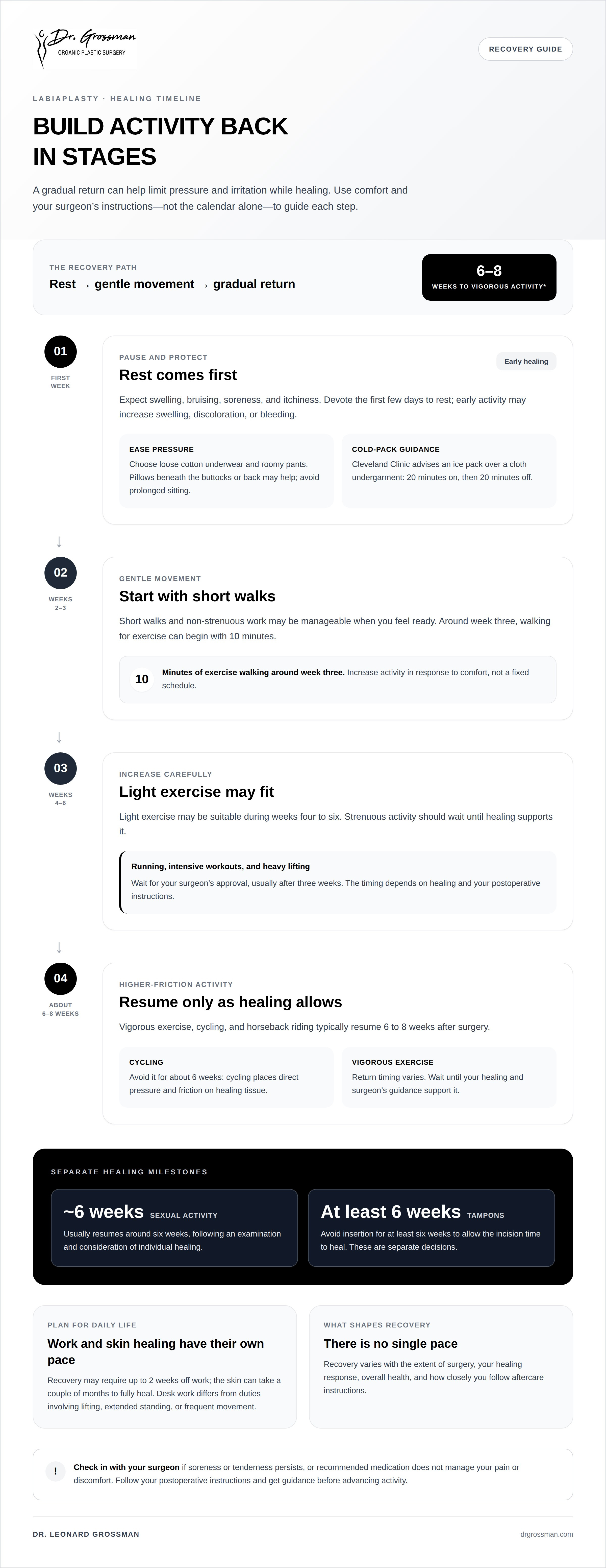
During the first week, expect swelling, bruising, soreness, and itchiness. Short walks may be possible in weeks two and three, followed by light exercise in weeks four to six. Follow-up timing depends on your healing and surgical plan. Contact your surgeon if recommended medication doesn’t manage pain or discomfort.
Swelling, Bruising, and Discoloration
Postoperative swelling, bruising, and discoloration are temporary tissue responses around the genital surgical area; their pattern helps patients understand the changing appearance during recovery. Swelling often peaks 3 to 5 days after surgery, while mild to moderate swelling, bruising, and discomfort may last at least two weeks. Uneven swelling can appear more pronounced on one side, then usually settles by 3 to 6 months. Tissue handling and suture size can also influence visible discoloration.
Early Discomfort and Pain
Early discomfort includes soreness, tenderness, itching, or sensitivity as surgical tissue heals; knowing this pattern helps patients plan rest and relief. Most people have mild pain or tenderness for a few days, although first-week soreness and itchiness can come and go. A nerve block may leave the area numb for up to 48 hours. Use pain relief recommended for your recovery plan, and contact your surgeon if it doesn’t manage your pain or discomfort.
First-Week Rest and Swelling Control
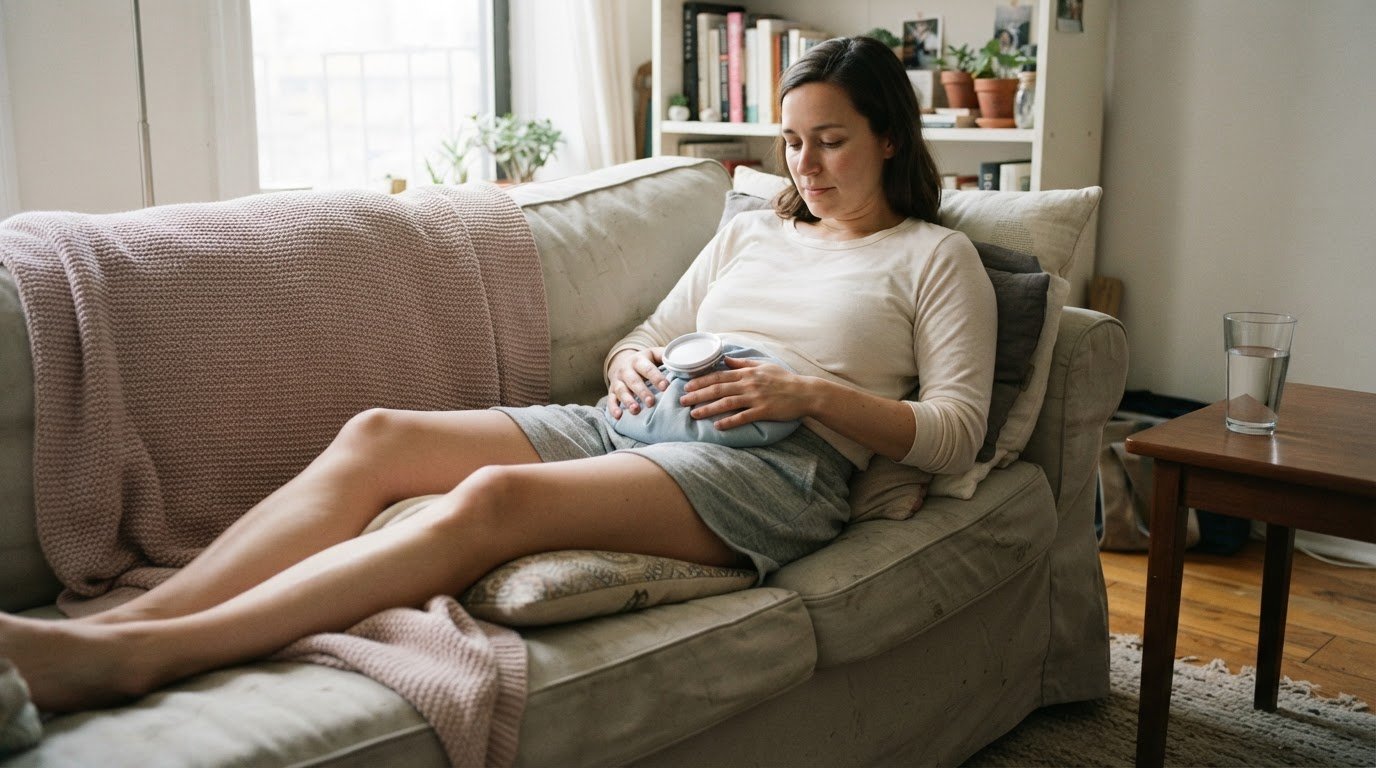
First-week rest and swelling control means limiting pressure and friction while genital tissue settles; these choices can reduce irritation during recovery. Devote the first few days to rest, since early activity may increase swelling, discoloration, or bleeding. Cleveland Clinic advises placing an ice pack over a cloth undergarment for 20 minutes on and 20 minutes off. Loose cotton underwear, roomy pants, pillows beneath the buttocks or back, and avoiding prolonged sitting can also ease pressure.
Exercise After Labiaplasty: When Can You Resume Working Out?
Labiaplasty costs depend on the individual case, with the price provided after a quote request. Insurance coverage depends on the policy and reason for surgery, so it differs from patient to patient. Ask about coverage before making financial plans, since policies may treat elective cosmetic care and medically indicated treatment differently.
Activity should build gradually rather than jump straight back to a normal workout. During weeks two and three, short walks and non-strenuous work may be manageable when you feel ready. Around week three, walking for exercise can begin with 10 minutes. Running, intensive workouts, and heavy lifting should wait for your surgeon’s approval, usually after three weeks.
Recovery may require up to 2 weeks off work, and the skin can take a couple of months to fully heal. Job demands matter: returning to desk work differs from a role involving lifting, extended standing, or frequent movement. Follow postoperative instructions and increase activities in response to comfort, not a calendar alone. Planning time away can help avoid rushing back into physically demanding duties.
Vigorous exercise, cycling, and horseback riding typically resume 6 to 8 weeks after surgery. Cycling places direct pressure and friction on healing tissue, so avoid it for about 6 weeks. Light exercise may be suitable during weeks four to six, but strenuous activity should wait until healing supports it. These distinctions help protect the surgical area from irritation and renewed swelling.
Sexual activity usually resumes around 6 weeks after surgery, following an examination and consideration of individual healing. Tampon instructions also matter: avoid insertion for at least six weeks, allowing the incision time to heal. Intimate activity and tampon use are separate decisions, so one being comfortable doesn’t automatically mean the other is appropriate. If soreness or tenderness persists, pause and discuss the next step with your surgeon.
If you’re considering labiaplasty, individual recovery planning can help connect activity expectations with your procedure and daily routine.
The cost is determined after a quote request. Insurance coverage varies by policy and by whether the procedure is cosmetic or medically indicated.
Over-the-counter and prescription pain medication
After labiaplasty, discomfort is often manageable with over-the-counter medicine, such as acetaminophen, or a prescribed pain reliever for a day or so. Some patients use Tylenol and/or ibuprofen during recovery, following their surgeon’s instructions. The right treatment depends on the operative plan, health history, and medication guidance, so don’t add or combine medicines without approval. Pain relief supports comfort, but it doesn’t replace incision care or follow-up.
A cold compress or ice pack can help ease pain and swelling after surgery. Use the approach recommended for your care plan, and place a cloth barrier between the cold pack and skin. Avoid pressing directly on healing tissue around the labia minora. This can support comfort during early recovery, while excessive pressure or prolonged cold exposure may irritate the area. Follow the specific instructions for your procedure.
Keep the incision area clean according to your postoperative instructions, and pat it dry rather than rubbing after washing. Don’t apply scar creams or skin-healing ointments unless your surgeon approves them. Swelling can temporarily affect genital sensation, so changes in sensitivity may occur during recovery. If recommended medication doesn’t control your discomfort, contact your surgeon for guidance on the next step.
Warning signs of infection or other complications require prompt medical advice. Pain or discomfort that remains poorly managed with recommended medication is also a reason to contact your surgeon. Medication alone can’t determine whether a healing concern needs assessment. Describe when the pain began, whether it is changing, and which prescribed or over-the-counter treatment you’ve taken. Clear details help the surgical team assess your symptoms and advise you on appropriate care.
Factors that affect recovery duration
Recovery depends on more than the cosmetic procedure itself. Healing response, age, overall health, surgical technique, the extent of tissue work, and adherence to aftercare instructions all influence the timeline. These factors interact: more extensive surgery affects more tissue, while activity that strains the incision can add irritation during healing. A practical way to understand labiaplasty recovery and healing is as a progression shaped by connected factors, not a fixed calendar.
The incision and the body’s healing response help explain why visible recovery and deeper tissue healing don’t always match. Swelling can continue to refine after the surface begins healing, and labiaplasty scars may mature and fade for 6 to 12 months. Final results typically take 6 months to emerge; scars can take up to a year to become nearly unnoticeable. Scar creams or ointments should be used only with the surgeon’s approval.
Aftercare matters because everyday choices can increase or reduce friction and pressure. Loose clothing, for example, can limit rubbing, while strenuous exercise before approval may stress healing tissue. Following your postoperative instructions helps protect the incision as activity increases. The extent of surgery matters, too: patients having more tissue treated may need a different pace than those having a more limited procedure.
Overall health and individual healing response shape how quickly tenderness and swelling settle. Age can also play a role, with younger women tending to heal faster than older women. Still, age alone doesn’t determine an individual’s recovery. For labiaplasty recovery and healing, follow your surgeon’s guidance rather than comparing your timeline with someone else’s. Discuss concerns or unexpected changes in progress with your surgeon.
Discuss your recovery timeline to understand how the planned procedure and aftercare relate to healing.
Dr. Leonard Grossman: Labiaplasty
Dr. Leonard Grossman offers labiaplasty for patients considering a surgical change to the labia. After learning about recovery, scarring, and activity restrictions, a discussion with him can help you understand how the procedure relates to your goals and what healing may involve. The extent of treatment and your health can shape both the surgical plan and recovery expectations, so these topics belong in a personal conversation before deciding.
If you’re weighing whether labiaplasty is right for you, discuss your concerns, desired outcome, and recovery questions with Dr. Grossman. Contact Dr. Leonard Grossman to talk about labiaplasty.
Take a Thoughtful Next Step
Before deciding, take time to define what matters most: the change you’re considering, your comfort with recovery, and the support you’d want while healing. Bring those priorities into a personal discussion instead of trying to match your timeline to someone else’s. Understanding labiaplasty recovery and healing can help you frame questions around your needs. You can also discuss what the procedure is intended to address and how planning might fit your work and home responsibilities.
Your goals and concerns deserve an unrushed conversation. Dr. Leonard Grossman offers labiaplasty, and a discussion can help you consider whether it aligns with your needs. You don’t need every decision settled before reaching out; begin with the questions that feel most important to you. Contact Dr. Leonard Grossman to discuss your goals and concerns. Taking an informed next step can help you move forward with greater clarity and confidence.
Frequently Asked Questions
What guidance can your surgeon provide to help minimize visible scarring after labiaplasty?
Your surgeon can explain incision care and when scar products are appropriate. Use scar creams or healing ointments only with the surgeon’s approval, since applying products before the area is ready may interfere with care. Scars continue to mature over time, sometimes taking 6 to 12 months to fade. Follow-up discussions can help you understand whether the appearance is progressing as expected.
Can I use tampons after a labiaplasty?
Wait at least six weeks after surgery before inserting tampons, unless your surgeon gives different instructions based on your healing. Insertion can put pressure or friction near healing tissue, so don’t use a tampon just because bleeding or tenderness has eased. Ask about your recovery at follow-up, especially if discomfort continues or you’re unsure whether the surgical area has healed enough.
Can a labiaplasty affect sensation?
Yes, temporary changes in vulvar sensation can occur during recovery, often related to swelling and nerve irritation. Sensitivity may feel different as the area heals. Note changes that concern you and raise them during follow-up. A change in sensation doesn’t by itself explain what’s happening in your specific case; your surgeon can assess it alongside the procedure and your healing progress.
How does your surgeon guide you in preparing for labiaplasty?
Your surgeon will guide preparation by discussing the planned procedure, your health, and the aftercare that supports recovery. The extent of surgery and your individual healing response help shape expectations, including how you’ll manage work, activity, and follow-up. Bring questions about medications, daily responsibilities, and recovery support to the discussion so you understand the plan before surgery.
How much pain, swelling, bruising, and bleeding is normal after labiaplasty?
Mild pain or tenderness commonly lasts a few days, while swelling, bruising, and discomfort may continue for at least two weeks. The first week can include soreness and itchiness, and early activity may increase swelling, discoloration, or bleeding. Contact your surgeon if recommended medication doesn’t manage pain or discomfort. Your surgeon can assess symptoms that feel severe, worsen, or concern you.
How should your surgeon advise you to clean and care for the surgical area after labiaplasty?
Clean the vulvar area gently with lukewarm water and mild, fragrance-free soap, then pat it dry rather than rubbing. A shower is usually possible the day after surgery, but follow your surgeon’s specific instructions. Avoid applying creams or ointments unless approved. Gentle washing and careful drying reduce unnecessary friction around the incision and keep routine care simple during early healing.