Skip to content


A labiaplasty consultation is a conversation about your concerns, goals, health history, and what surgery may involve. Knowing what to expect during a labiaplasty consultation can help you prepare and speak openly about what affects your comfort or confidence. The surgeon will also examine the area you identify as a concern and discuss whether surgery may be appropriate.
It’s natural to feel uncertain about the examination, possible results, or recovery. This guide explains how to prepare, what the surgeon may ask and assess, and how to discuss surgical approaches, healing, and realistic expectations. Knowing what the appointment may cover can help you focus on the questions and priorities that matter to you.
Key Takeaways
- Prepare to explain how your concerns affect daily comfort and what you hope surgery may address.
- Your surgeon will review relevant health and treatment history, then focus the examination on the area you identify.
- Discuss surgical approaches, recovery needs, possible risks, and how results develop over time before making a decision.
- Ask questions about appearance or physical discomfort so the consultation can help shape a plan around your needs.
Discussing daily-life concerns and surgical expectations
To understand what to expect during a labiaplasty consultation, describe why you’re considering surgery and what you hope to change. Explain practical concerns such as irritation, inconvenience, or discomfort during sex. You might mention friction from clothing, exercise, or intercourse. Specific examples help the surgeon understand how symptoms affect daily life and what you want addressed.
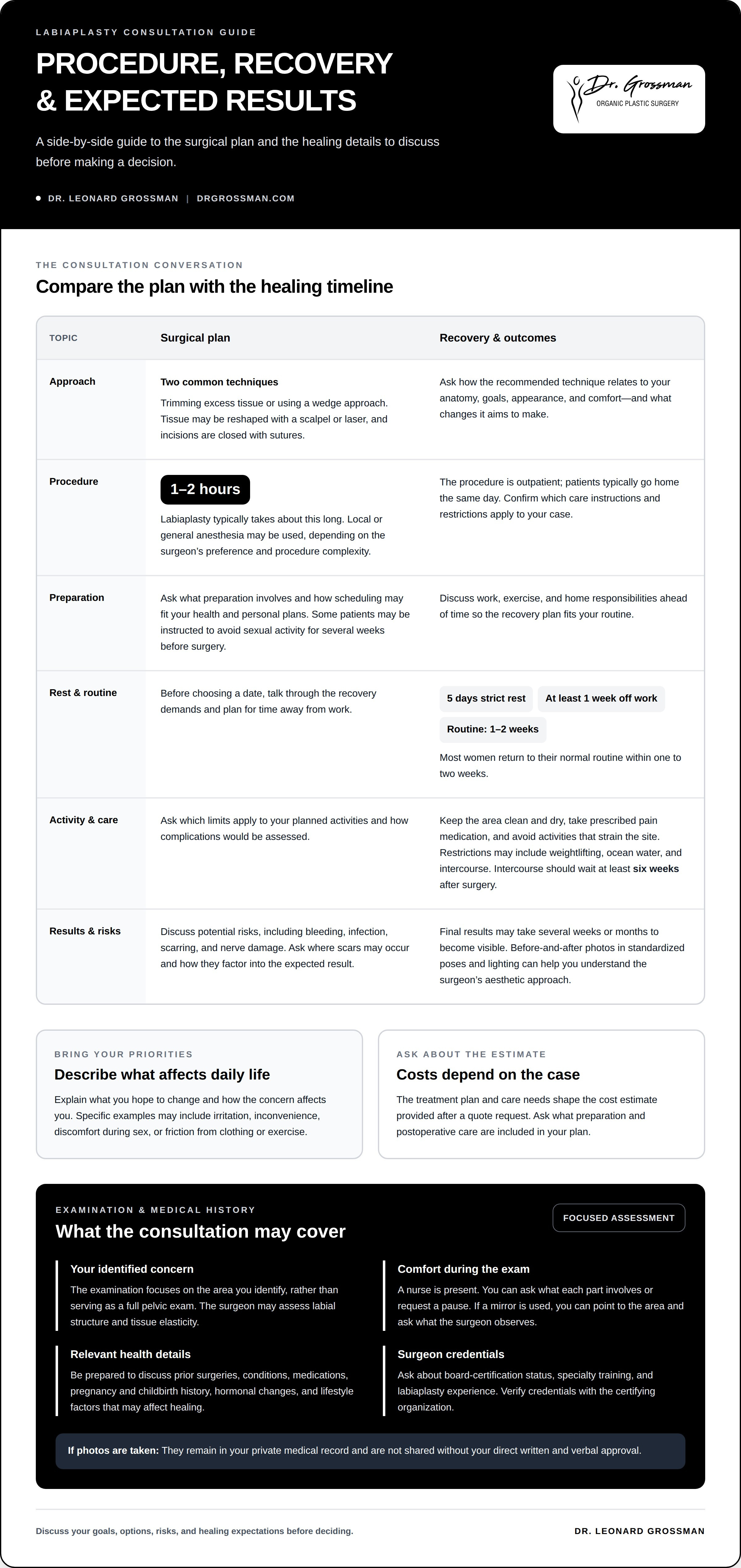
The surgeon can explain possible surgical approaches and how they relate to your anatomy and goals. Common techniques include trimming excess tissue or using a wedge approach. Tissue may be reshaped with a scalpel or laser, and incisions are closed with sutures. Labiaplasty typically takes about one to two hours. Local or general anesthesia may be used, depending on the surgeon’s preference and the complexity of the procedure.
Ask what preparation involves and how scheduling may fit your health and personal plans. Some patients may be instructed to avoid sexual activity for several weeks before surgery. Discuss any instructions that could affect your routine. The cost depends on the individual case; the treatment plan and care needs shape the estimate provided after a quote request.
Discuss recovery before choosing a surgery date. Plan for five days of strict rest and at least a week away from work. Postoperative instructions may include keeping the area clean and dry, taking prescribed pain medication, and avoiding activities that strain the site. Avoid weightlifting, ocean water, and intercourse for a few weeks; intercourse should wait at least six weeks after surgery.
For a clearer sense of what to expect during a labiaplasty consultation, ask about potential risks, including bleeding, infection, scarring, and nerve damage. Discuss how complications are assessed before surgery and which restrictions apply to your planned activities. Understanding both the intended changes and the demands of healing can help you make an informed decision.
Initial consultation and physical examination
To understand what to expect during a labiaplasty consultation, consider how the surgeon connects your concerns with the physical examination. The surgeon reviews relevant health details, then examines the anatomy you identify as troubling. Ask about board-certification status, specialty training, and labiaplasty experience, and verify credentials with the certifying organization.
Labial Examination and Skin Elasticity
The surgeon examines the labia and considers tissue elasticity, or how the skin stretches and returns to its resting shape. This assessment helps the surgeon understand the tissue and anatomy involved. Point out the specific area that concerns you so you can connect the examination findings with your goals and the surgical approach under consideration.
Focused Examination and Mirror Use
The examination focuses on the anatomy you identify, rather than serving as a full pelvic exam. The surgeon examines the labia to assess their structure and consider an appropriate technique. If a mirror is used, you can point to the area you mean and ask what the surgeon observes. This can make the discussion of your concerns more specific.
Nurse Presence During the Examination
A nurse is present during the examination to help ease anxiety. You can ask what each part of the assessment involves or request a pause if needed. Clear communication keeps the visit focused on your concern and gives you room to discuss the process comfortably.
Questions about what to expect during labiaplasty consultation may also include medical history, such as prior surgeries, conditions, medications, pregnancy and childbirth history, hormonal changes, and lifestyle factors that may affect healing. If photos are taken, they remain in your private medical record and aren’t shared without your direct written and verbal approval. Understanding these details can help you discuss the findings and your options. A focused conversation can help you understand labiaplasty consultation options.
Discussion of options, recovery, and expected results
The discussion of options connects your goals with the surgical approach the plastic surgeon recommends. Ask how the proposed technique addresses the tissue you discussed, what changes it aims to make, and how it may affect appearance and comfort. A clear explanation helps you weigh the procedure’s benefits and limitations before deciding. It also gives you space to raise concerns and feel informed rather than rushed.
Recovery planning is part of the same conversation. Labiaplasty is an outpatient procedure, and patients typically go home the same day. Devote the first few days after surgery to rest; most women return to their normal routine within one to two weeks. Discuss how your daily activities fit that timeline, including work, exercise, and tasks that put pressure on the area.
Ask the surgeon to explain postoperative care, including keeping the site clean and dry, prescribed pain medication, and restrictions on activities that strain the area. Avoid sexual intercourse for at least six weeks after surgery. Planning around this restriction, along with your work and home responsibilities, can make recovery more manageable. Use the consultation to clarify which instructions apply to your routine.
Results take time to develop. Final results may not be visible until several weeks or months after surgery, so ask how healing may change your appearance over time. Scarring is also a reasonable topic: ask where scars may occur and how they factor into the expected result. Before-and-after photos can help you understand a surgeon’s aesthetic approach. Look for images taken in standardized poses and lighting to make comparisons more meaningful. These details can support a practical conversation and help you feel confident about your decision.
Patients may need to take a few days off work; planning at least a week off can accommodate 5 days of strict rest and downtime.
Questions about appearance and physical discomfort
Labia vary in size, thickness, and shape, and these differences can fall within the normal range. During your appointment, describe the appearance or physical discomfort that concerns you, such as tissue rubbing against clothing or irritation during exercise. Clear examples help the surgeon understand your priorities and assess whether treatment may address them.
Discuss symptoms as well as appearance. Explain when discomfort occurs, how it affects daily activities, and whether it changes over time. Changes in labial appearance over time can be useful context to share with the surgeon. This information helps shape an individual treatment plan rather than relying on appearance alone.
Ask how the surgeon will assess whether surgery is appropriate, what alternatives or restrictions may apply, and which risks are relevant to your situation. You can also ask which symptoms after surgery, including swelling, bruising, or discomfort, may require follow-up. The answers should connect your concerns with the proposed approach and explain the instructions relevant to your care.
In the United States, informed consent involves discussing the procedure and its risks before making a decision; age eligibility depends on applicable consent requirements and individual circumstances. Consultation photos are kept in the private medical record and aren’t shared without your direct written and verbal approval. Ask how photographs support treatment planning and how privacy is maintained during your appointment.
Bring questions about the specific change you hope to see, how symptoms influence the plan, and what the examination can determine. If you’re ready to discuss your concerns and treatment goals, schedule a labiaplasty consultation.
Write down your concern in your own words and ask the surgeon to explain how it relates to your goals. Which symptoms should you describe? What would you like clarified about appearance? Questions about symptoms help determine an individual treatment plan, so focus on the concerns you want considered. Labia vary in size, thickness, and shape, and such variations fall within the normal spectrum. You can ask how this informs the discussion of your concerns.
Dr. Leonard Grossman: Labiaplasty
Dr. Leonard Grossman offers labiaplasty for patients considering changes to the labia. If physical discomfort or concerns about appearance are leading you to explore surgery, a consultation can help you discuss your goals, review the examination findings, and understand the surgical options and recovery involved. Use the appointment to raise questions about technique, risks, and healing so you can make an informed decision at your own pace.
Choosing whether to proceed is personal. What you learn during the consultation can help you consider how surgery relates to your concerns and what recovery would require in your daily life. To discuss labiaplasty with Dr. Leonard Grossman, contact his practice to arrange a consultation.
Take the Next Step at Your Own Pace
Understanding what to expect during a labiaplasty consultation can help you approach the decision with greater clarity. Consider which questions remain important, including how your goals relate to the available surgical options. You don’t need every answer before speaking with a surgeon. A thoughtful discussion can help you decide whether to proceed, take more time, or explore a different path.
Your comfort with the conversation matters. Share what brought you to the appointment, ask for clear explanations, and take time to consider what you learn. The choice to pursue surgery is personal, and your priorities should guide it.
To discuss your concerns and whether labiaplasty may address them, contact Dr. Leonard Grossman. Taking an informed next step can help you move forward with greater confidence.
Frequently Asked Questions
What questions should I ask a labiaplasty surgeon?
Ask how the surgeon would match the technique to your anatomy, what change is realistic, and which risks or restrictions matter in your case. You can also ask how before-and-after photos are assessed, whether the images use consistent poses and lighting, and what follow-up care involves. These questions clarify the surgeon’s approach and the practical commitments surgery may require.
What medical history and medications will the surgeon review?
Expect the surgeon to review prior surgeries, medical conditions, current medications, pregnancy and childbirth history, hormonal changes, and lifestyle factors that may affect healing. Bring an up-to-date medication list and be ready to explain relevant changes, such as a new prescription or previous procedure. Sharing these details helps the surgeon consider your health context alongside the concerns you want addressed.
How does a surgeon assess candidacy for labiaplasty?
A surgeon considers your concerns, goals, medical background, and examination findings together. The consultation helps determine whether your symptoms and anatomy align with a surgical option and whether your expectations fit what the procedure can address. Labial size and shape vary naturally, so appearance alone doesn’t establish a need for surgery. Both your priorities and the clinical assessment matter.
What are the risks, complications, and recovery expectations?
Potential complications include bleeding, infection, scarring, and nerve damage. Swelling, bruising, and discomfort may also occur after surgery. Labiaplasty is an outpatient procedure, and patients go home the same day. Many return to their normal routine within one to two weeks, while intercourse should wait at least six weeks. Final appearance may take weeks or months to emerge; follow your surgeon’s care instructions during healing.