Skip to content
What if the most effective way to restore your youthful vitality wasn’t found in a synthetic vial, but within your own body’s natural reserves? You might feel frustrated by the “over-filled” look of traditional fillers or the exhausting cycle of maintenance they require. It’s common to feel a sense of hesitation toward foreign implants, especially when you’re seeking a result that feels like a true reflection of yourself. Fat transfer surgery offers a different path, one that honors your body’s biological wisdom by relocating your own living cells to where they’re needed most.
We understand that you want to feel empowered and nourished, not just “fixed.” This guide shows you how autologous fat grafting provides a permanent, biocompatible solution for restoring volume to the face, breasts, and body. You’ll learn how this integrative approach supports your body’s natural healing intelligence to create subtle, lasting rejuvenation. We’ll explore the latest trends for 2026, including the use of “nano fat” for skin health and how this procedure helps restore volume after significant weight loss. This overview ensures you have the knowledge to make the best choice for your whole-body wellness.
Key Takeaways
- Understand how fat transfer surgery acts as a dual-benefit procedure, gently contouring donor areas while restoring volume with your own living tissue.
- Learn about the biological process of neovascularization and how supporting your body’s blood supply ensures the long-term survival of transferred cells.
- Contrast the bio-identical nature of autologous grafting with synthetic fillers to determine which approach aligns best with your long-term health.
- Identify the essential steps to prepare your body’s internal environment, ensuring your natural intelligence is primed for a successful, integrative experience.
- Discover a philosophy of rejuvenation that avoids an artificial appearance by working in harmony with your unique physiological blueprint.
What is Fat Transfer Surgery? A Natural Approach to Volume
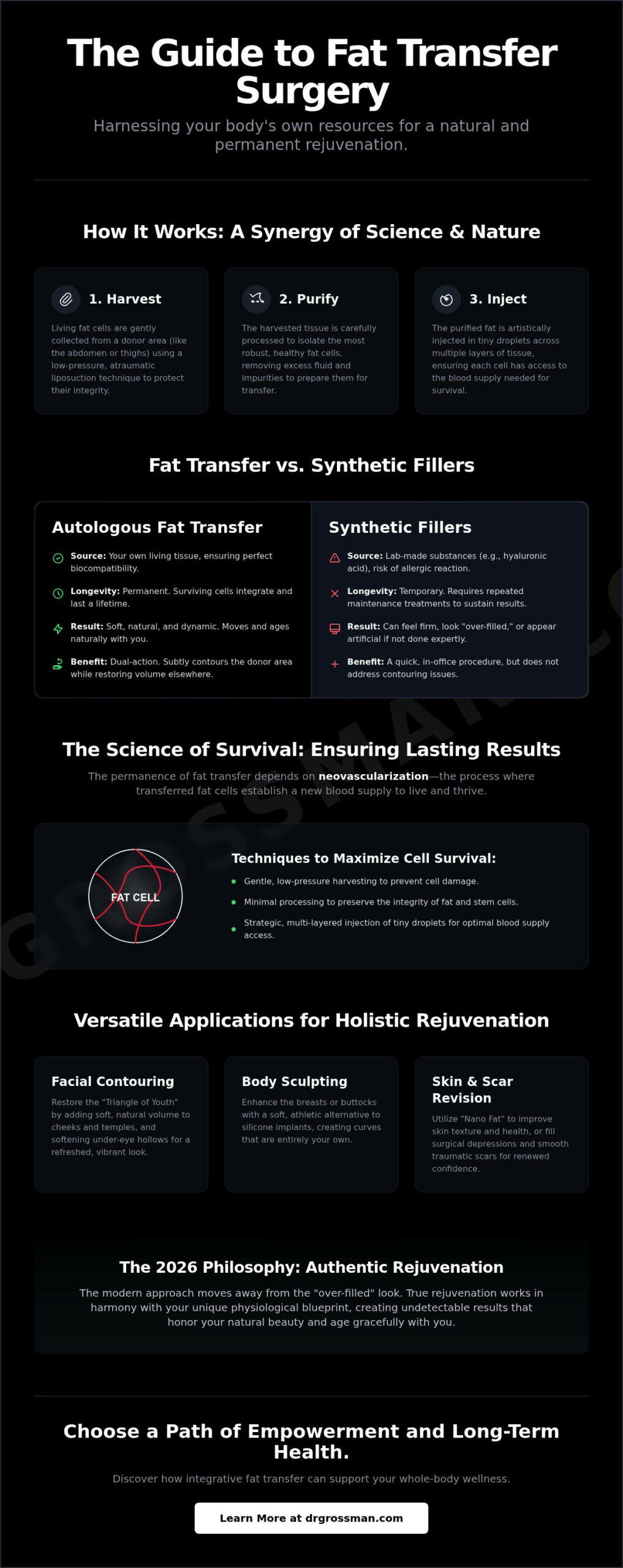
At its heart, fat transfer surgery represents a beautiful synergy between modern medicine and your body’s inherent ability to heal and restore itself. Also known as autologous fat grafting, this procedure involves the gentle harvesting of living adipose tissue from an area where it is abundant, such as the abdomen or thighs, and carefully relocating it to areas that have lost volume over time. Because this process utilizes your own biological material, it bypasses the risks of allergic reactions or rejection often associated with synthetic implants. You can find a detailed fat grafting overview that outlines how this technique has evolved from a reconstructive necessity into a cornerstone of integrative aesthetic care.
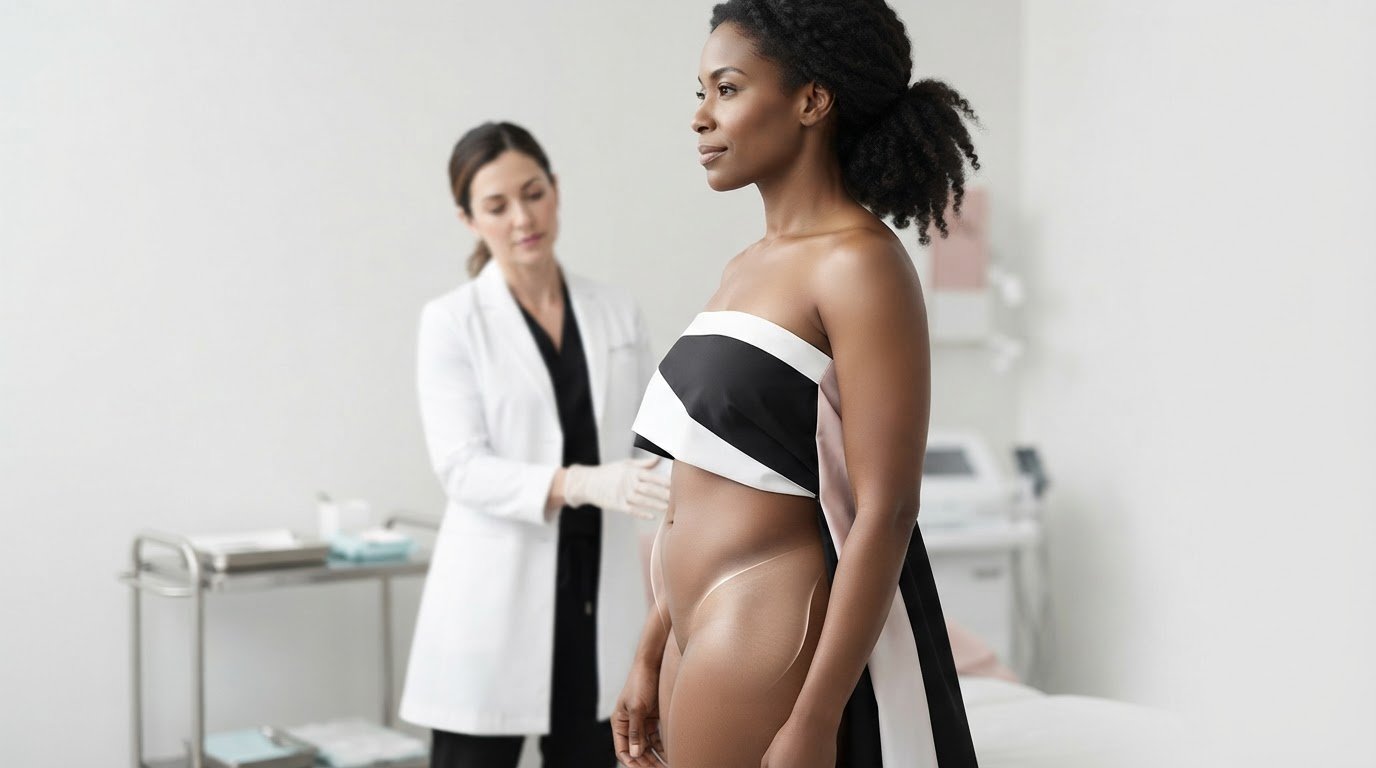
One of the most rewarding aspects of this approach is the “two-in-one” benefit it provides for your silhouette. By using liposuction to collect the donor cells, we can subtly contour areas of stubborn fat while simultaneously rejuvenating the face, breasts, or body. This isn’t just about adding volume; it’s about optimizing your natural proportions and supporting the body’s natural healing intelligence to create a result that feels entirely like you. It’s a methodical way to recycle your own vitality to enhance your overall well-being.
The Core Philosophy: Why ‘Natural’ Matters in 2026
In 2026, the aesthetic world has seen a profound shift away from the “over-filled” or obviously “plastic” look. Patients today are seeking a more authentic, undetectable rejuvenation that honors their unique features. Fat transfer surgery excels here because the living cells integrate seamlessly into your existing tissue. Unlike synthetic fillers that may shift or feel firm, transferred fat moves and ages naturally with you. This is the essence of regenerative aesthetics. We aren’t just masking a problem but using your body’s own resources to nourish and protect your vital appearance.
Common Treatment Areas for Fat Grafting
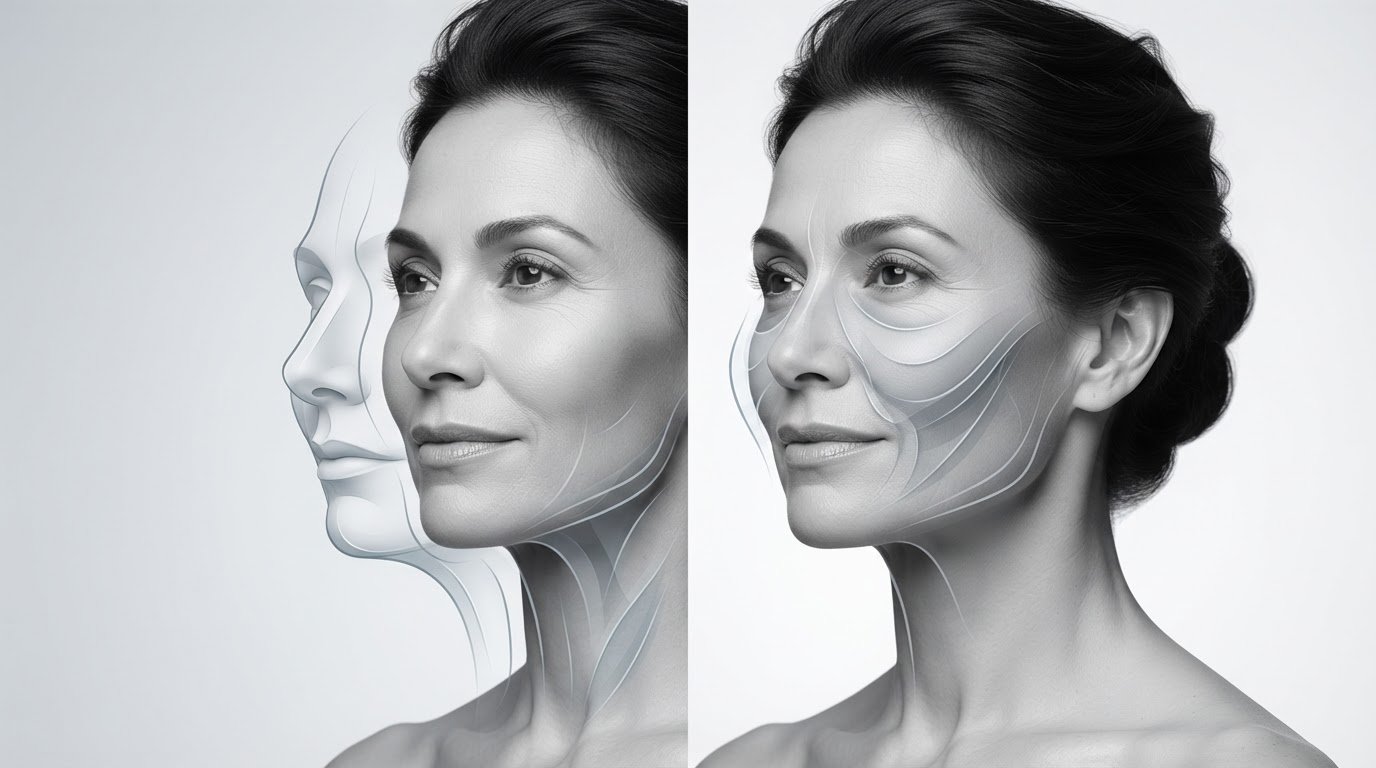
The versatility of this procedure allows us to address a wide range of concerns with a single, holistic plan. In facial rejuvenation, we can restore the “triangle of youth” by adding soft volume to the cheeks and temples, or by softening under-eye hollows. For those seeking naturally full, permanent results around the mouth, fat grafting to lips offers a beautiful alternative to synthetic fillers that moves and feels entirely like you. For body contouring, we offer fat grafting to the breasts or buttocks, providing a soft and athletic alternative to silicone. This technique is also powerful for filling in surgical depressions or smoothing out traumatic scars, helping to restore both function and confidence. By choosing to work with your own tissue, you’re choosing a path of empowerment and long-term health.
The Science of Survivability: How We Ensure Long-Term Results
The question I hear most often from patients is quite simple: “Will the fat actually stay?” It’s a valid concern, especially if you’ve spent years investing in temporary dermal fillers that seem to disappear just as you’ve grown fond of your results. Unlike synthetic substances, fat transfer surgery involves the relocation of living, breathing cells. For these cells to thrive in their new home, they must establish a vital connection to your body’s circulatory system. This biological integration, known as neovascularization, is the key to ensuring your rejuvenation is not just a fleeting change, but a permanent part of your anatomy.
To support this natural healing intelligence, we prioritize an “atraumatic” harvesting technique. This means we use low-pressure suction and specialized cannulas to collect the fat with extreme gentleness. If the cells are damaged during the harvest, they cannot survive the journey. By treating your tissue with the reverence it deserves, we protect the integrity of the cell membranes. Success also depends on how the fat is placed. Instead of injecting large “pools” of fat, which can’t access a blood supply, we use a multi-layered injection technique. We deposit tiny droplets across various tissue planes, ensuring each cell is close to a nourishing blood vessel. This methodical approach is a cornerstone of professional cosmetic fat transfer standards.
Factors Influencing Fat Graft Retention
Not all fat is created equal. We look for robust donor sites, often the abdomen or inner thighs, where the adipose tissue is metabolically stable and rich in regenerative potential. Once harvested, the fat must be purified to remove excess oil, blood, and lidocaine. This step ensures that only the healthiest, most viable cells are re-implanted. By maintaining a “living tissue” mindset throughout the procedure, we optimize the environment for these cells to “take” and flourish long-term.
The Timeline of Your Results
It’s helpful to view your recovery as a journey of settling and integration. While you’ll see an immediate boost in volume, a portion of the initial fullness is actually temporary swelling. Over the first 3 to 6 months, your body naturally processes any cells that didn’t successfully graft, leaving behind only the living tissue that has developed its own blood supply. Once you reach this milestone, the results are considered permanent. Because these are your own cells, they will behave like the rest of your body; staying weight-stable helps maintain your beautiful new contours. If you want to understand exactly what to expect during healing, our day by day fat transfer to face recovery time guide maps out each phase of integration so you can nourish your system and optimize fat survival. If you’re ready to explore how this biological relocation can work for you, an integrative surgical consultation can provide the clarity you need.
Fat Transfer vs. Synthetic Fillers: Comparing Longevity and Biocompatibility
Choosing between synthetic dermal fillers and fat transfer surgery is often a choice between a temporary convenience and a life-long investment in your wellness. While fillers offer an immediate path to volume, they are fundamentally foreign substances introduced into your delicate ecosystem. In contrast, using your own adipose tissue is a bio-identical solution that honors your body’s natural composition—a core principle within the field of Cosmetic and Reconstructive Plastic Surgery. Because fat is living tissue, it integrates with your existing anatomy, allowing for expressions that look and feel authentic. It moves when you smile and softens when you rest, avoiding the “frozen” or “over-filled” appearance that can sometimes occur with synthetic gels. It’s about more than just aesthetics; it’s about how your face feels to the touch and how it responds to the nuances of your personality.
There is also a practical, economic dimension to this decision. If you consider a ten-year horizon, the cost of maintaining synthetic fillers every 6 to 18 months can far exceed the one-time investment of a surgical procedure. Dermal fillers require constant upkeep to maintain their effect, which can be both time-consuming and financially taxing over the long term. By choosing a permanent solution, you’re not just saving time; you’re providing your body with a stable foundation that doesn’t require constant chemical intervention. This shift from “maintenance” to “restoration” is a key part of an integrative approach to beauty. Patients experiencing “filler fatigue” around the mouth, for example, often find that fat grafting to lips provides the permanent, natural-feeling volume they’ve been seeking without the cycle of repeat appointments.
Longevity and Maintenance Requirements
The cycle of repeat injections can lead to what we call “filler fatigue.” Over time, the repeated introduction of synthetic volume can subtly distend the skin, requiring even more product to achieve the same look. We define permanent volume as the gold standard for age-reversal because it respects the skin’s elasticity. With fat transfer, most patients achieve their desired outcome in just one or two sessions, eliminating the need for a lifetime of appointments to “chase” the results of a fading product.
Biocompatibility and Safety Profiles
Safety is a cornerstone of our integrative philosophy. Using your own cells eliminates the risk of late-onset inflammatory nodules, which are rare but possible with some synthetics. Additionally, your fat contains regenerative stem cells that actively nourish the overlying skin, often improving its texture and glow. These cells support the body’s natural healing intelligence, optimizing the health of the skin from the inside out. This creates a holistic improvement that synthetics simply cannot replicate.
| Feature | Dermal Fillers | Fat Transfer Surgery |
|---|---|---|
| Primary Material | Synthetic Gels (e.g., Hyaluronic Acid) | Your Own Living Cells |
| Result Duration | 6 to 18 Months | Permanent (after integration) |
| Biocompatibility | Foreign Substance | Bio-identical |
| Recovery Time | Minimal (Hours to Days) | Moderate (1 to 2 Weeks) |
Candidacy and Preparation: Supporting Your Body’s Natural Intelligence
Preparing for fat transfer surgery is a collaborative effort between your surgeon and your body’s own natural healing intelligence. We don’t view surgery as an isolated event, but as a pivotal moment in your whole-body wellness journey. To ensure the highest survival rate for your transferred cells, we must optimize your internal environment long before the procedure begins. This integrative mindset shifts the focus from simply “getting a procedure” to “cultivating a result.” By nourishing your system from the inside out, you provide the best possible foundation for your new tissue to thrive.
Your body is a complex ecosystem. When we move living cells from one area to another, we’re asking your system to accept and support those cells immediately. This requires a robust circulatory system and a balanced inflammatory response. If your body is already under stress from poor nutrition or lifestyle habits, its ability to divert resources to the new grafts may be compromised. Success is found in the details of your preparation.
Are You a Good Candidate for Fat Grafting?
The ideal candidate is someone who possesses sufficient donor fat to meet their aesthetic goals. Whether we’re harvesting from the abdomen, flanks, or thighs, there must be enough “extra” tissue to facilitate the transfer. Beyond physical reserves, we look for stability. Your weight should be steady, as significant fluctuations can alter the volume of the grafted cells later. Emotional readiness is equally vital. It’s helpful to understand that fat transfer is often a journey of refinement, where the body gradually integrates the new tissue over several months. We seek patients who appreciate this natural progression toward subtle, lasting beauty.
The Grossman Preparation Protocol
Success starts with blood flow. Smoking is the primary enemy of cell survivability because it constricts the tiny vessels your new fat cells rely on for oxygen and nutrients. We ask patients to pause all nicotine use to protect the bioavailability of oxygen in the bloodstream. Our protocol emphasizes specific nutritional support to prime your tissues for repair:
- Vitamin C and Zinc: These are essential for collagen synthesis and maintaining tissue integrity.
- Healthy Fats: Omega-3 fatty acids help manage systemic inflammation and support cell membrane health.
- Hydration: Maintaining cellular fluid balance is crucial for a smooth liposuction harvest and recovery.
- Amino Acids: Protein provides the building blocks for the neovascularization process that keeps the fat alive.
Creating a calm, low-stress environment for your recovery is the final piece of the puzzle. High cortisol levels can trigger systemic inflammation, which may hinder the delicate “take” process of the grafts. By prioritizing rest and proper nourishment, you give your body the best chance to protect and optimize its new contours. If you’re ready to begin this holistic transformation, you can schedule your integrative consultation to discuss your unique physiological needs.
The Dr. Leonard Grossman Difference: An Integrative Surgical Experience
Selecting a surgeon is an act of trust that requires a professional who honors your biological integrity. Dr. Leonard Grossman has spent over 30 years pioneering techniques that prioritize high-survival rates and seamless tissue integration. His philosophy of “Natural Rejuvenation” is built on the foundation of working with the body’s existing systems, never against them. This integrative mindset ensures that every fat transfer surgery he performs is tailored to the patient’s unique physiological blueprint, fostering an environment where your own cells can thrive in their new location. By viewing each patient through a lens of total body wellness, he ensures that aesthetic improvements harmonize with your overall health and vitality.
We believe that the most successful outcomes are those that look entirely “un-operated” and authentic. Dr. Leonard Grossman avoids the aggressive, high-pressure atmosphere often found in traditional cosmetic centers. Instead, he provides a calm, methodical environment where you can absorb the science of your procedure before making an informed decision. This educational style empowers you to take agency in your own care, replacing surgical anxiety with a sense of hopeful anticipation. It is a patient-centered approach that emphasizes long-term prevention and stability over quick, temporary fixes.
Artistry Meets Clinical Authority
Dr. Leonard Grossman approaches fat grafting as a form of biological sculpting rather than a simple injection of volume. He doesn’t just “fill” a space; he restores the essential balance and symmetry of the face, breasts, and body. His extensive history with complex cases allows him to anticipate how fat will integrate across different tissue layers, ensuring a result that feels soft to the touch and moves naturally during expression. This level of precision is the result of decades spent researching how lifestyle and nutrition impact the longevity of surgical results. He uses your own tissue to artfully redefine your contours, ensuring your results age gracefully alongside you.
Your Path to Permanent Rejuvenation
Your first visit is a comprehensive holistic assessment that goes far beyond a simple physical exam. Dr. Leonard Grossman takes the time to understand your health history, nutritional status, and aesthetic goals to create a personalized whole-body plan. This transparent communication ensures you understand the biological “why” behind every step of the Grossman protocol. If you are ready to transition from searching for answers to experiencing a personalized path to restoration, we invite you to take the next step toward your goals. Schedule your holistic fat transfer consultation with Dr. Leonard Grossman to begin your journey toward lasting, natural beauty.
Embracing Your Natural Potential for Lasting Rejuvenation
The shift from temporary maintenance to permanent restoration marks a significant milestone in your self-care journey. We’ve discussed how the bio-identical nature of autologous grafting provides a level of texture and movement that synthetic alternatives simply cannot replicate. By focusing on the science of survivability and an integrative approach to preparation, you’re not just seeking a temporary fix; you’re making a permanent investment in your silhouette and your long-term wellness.
Dr. Leonard Grossman brings over 30 years of pioneering plastic surgery experience to every consultation. He specializes in creating natural, “un-operated” aesthetic results that respect your individual features while supporting your body’s natural healing intelligence. His methodical, patient-centered care ensures that your journey through fat transfer surgery is as reassuring as it is transformative. This integrative approach to surgical wellness and recovery means your system is nourished and protected at every stage of the process.
If you’re ready to move toward a more authentic version of yourself, we’re here to guide you with wisdom and clinical authority. Book Your Private Consultation to Discuss Natural Fat Transfer today. Your path to revitalized, natural volume begins with a single, empowered choice.
Frequently Asked Questions
How long does fat transfer surgery last?
Fat transfer surgery provides a permanent solution once the living cells successfully integrate into the target area. During the first 3 to 6 months, your body establishes a new blood supply to nourish the grafts through a process called neovascularization. Any fat that survives this initial “take” period becomes a permanent part of your anatomy. Unlike synthetic fillers that require repeat sessions every 6 to 18 months, this procedure offers a long-term restoration that ages naturally with you.
Is fat transfer safer than getting breast implants?
Many patients prefer fat grafting because it utilizes their own bio-identical tissue, which eliminates the risk of allergic reactions or implant-related complications. Because no foreign body is introduced, you don’t need to worry about ruptures or the long-term maintenance associated with silicone or saline devices. This integrative approach supports your body’s natural healing intelligence, though it is best suited for those seeking a subtle and athletic enhancement rather than a dramatic increase in size.
Where is the fat usually taken from during the procedure?
We typically harvest donor fat from areas where it is metabolically stable and abundant. Common donor sites include the abdomen, inner or outer thighs, and the “love handles” or flanks. Using gentle liposuction, we carefully collect these cells to ensure they remain viable for transfer. This process offers a dual benefit; we can subtly contour a stubborn donor area while simultaneously providing the living material needed to rejuvenate your face, breasts, or body.
What is the typical recovery time for fat transfer to the face?
Most patients can expect a social recovery period of approximately one to two weeks. While you can return to light daily activities quickly, initial swelling and minor bruising are natural parts of the healing process as your body integrates the new tissue. For a detailed breakdown of what to expect at each stage, our day by day fat transfer to face recovery time guide provides an integrative roadmap to help you plan your healing with confidence. We recommend a calm, low-stress environment during this time to minimize systemic inflammation. By the end of the second week, most visible signs have subsided, allowing your refreshed and nourished appearance to emerge.
Can fat transfer surgery fix under-eye hollows permanently?
Yes, this procedure is an excellent way to address under-eye hollows and dark circles by restoring lost volume with your own living cells. Unlike temporary fillers that can sometimes cause a bluish tint under thin skin, fat provides a natural, opaque layer of support. Once the transferred cells establish a blood supply, the correction is permanent. This approach nourishes the delicate periorbital area from within, providing a soft and rested look that synthetics cannot replicate.
Will the transferred fat disappear if I lose weight later?
The transferred cells behave exactly like the fat in other parts of your body. If you experience significant weight loss, these cells may shrink, just as they would in their original donor site. To protect the longevity of your results, we recommend maintaining a stable weight after your fat transfer surgery. Because the fat is a living part of your anatomy, it will respond to your body’s metabolic changes, highlighting the importance of a balanced and healthy lifestyle.
Is fat grafting painful compared to other cosmetic surgeries?
Most patients describe the sensation as a moderate soreness or aching similar to a vigorous workout, rather than sharp pain. The donor site, where liposuction is performed, is often the area that feels most tender during the first few days. We use specialized, atraumatic techniques to minimize tissue disruption and support a gentle recovery. This methodical approach ensures your comfort while protecting the vitality of the transferred cells for the best possible outcome.
How many sessions of fat transfer will I need to see final results?
Most patients achieve their desired rejuvenation in a single session. However, because the body naturally absorbs a portion of the transferred fat during the first few months, a second refinement session is occasionally scheduled to optimize the final contour. We take a patient-centered approach, carefully monitoring how your tissue integrates before deciding if more volume is needed. This ensures a balanced, natural look that avoids the over-filled appearance of synthetic alternatives.