Skip to content
Did you know that the most frequently cited statistic regarding BBL safety is nearly a decade out of date? While many sources still highlight a mortality rate of 1 in 3,000, modern clinical data from 2026 reveals a much more encouraging reality for patients who prioritize expert care. Understanding the risks of Brazilian butt lift requires looking past the sensationalized headlines and into the actual science of subcutaneous fat grafting. It’s completely natural to feel a sense of anxiety when social media trends clash with clinical warnings, especially when you’re seeking to enhance your vitality and confidence.
We believe that your journey toward aesthetic harmony should never come at the expense of your total body wellness. This guide will help you navigate the clinical realities of the procedure and explain how an integrative, expert-led approach puts your safety first. You’ll gain a clear understanding of anatomical risks, the vital role of intraoperative ultrasound guidance, and how a multifaceted recovery plan supports your body’s natural healing intelligence. By the end, you’ll have the knowledge needed to choose a path that honors both your aesthetic goals and your long-term health.
Key Takeaways
- Learn how modern subcutaneous techniques have significantly reduced the risks of Brazilian butt lift by avoiding the gluteal muscle entirely.
- Understand the clinical reality of pulmonary fat embolisms and why anatomical precision is your surgeon’s most powerful safety tool.
- Differentiate between normal post-operative healing and complications like fat necrosis to ensure your results stay natural and vibrant.
- Identify the essential qualifications for a surgeon that go beyond board certification to include deep expertise in advanced fat grafting.
- Discover how an integrative approach supports your body’s natural healing intelligence for a safer procedure and a more comfortable recovery.
Why the Brazilian Butt Lift (BBL) Carries Unique Surgical Risks
The Brazilian Butt Lift has transformed from a niche aesthetic procedure into a global phenomenon. Its popularity is driven by the desire for natural, curvaceous contours, yet this growth has been shadowed by a history of safety concerns. It’s understandable if you feel a sense of hesitation; for years, the risks of Brazilian butt lift were among the highest in elective surgery. Validating this anxiety is the first step toward empowerment. By understanding the clinical history, we can appreciate why modern, integrative protocols are so vital for your vitality.
At its core, a successful procedure depends on anatomical safety. This concept isn’t just about the final look; it’s about how the new volume integrates with your existing tissues. By respecting the natural boundaries of the body, we protect vital functions while achieving the natural-looking results you desire.
The Evolution of BBL Safety Standards
In the late 2010s, a dedicated task force identified a critical flaw in traditional techniques. The primary danger stemmed from injecting fat too deeply into the gluteal muscle. This realization led to a seismic shift in the industry. Today, in 2026, the standard of care has moved entirely toward subcutaneous injection. This means fat is placed only in the layer just beneath the skin, avoiding the deep vascular “danger zones” entirely. These higher standards ensure that we support the body’s natural healing intelligence rather than overwhelming it with aggressive, outdated methods.
BBL vs. Other Fat Grafting Procedures
While fat grafting to the buttocks shares some principles with facial or breast rejuvenation, the gluteal region presents unique physiological challenges. Buttock augmentation with autologous fat requires significantly larger volumes of tissue than a delicate facial filler. This increased volume demands a sophisticated understanding of the area’s complex vascularity. The gluteal region is home to large, deep veins that lead directly to the heart and lungs. Unlike the relatively stable vascular beds of the face, the buttocks require a meticulous, layered approach to ensure the grafted fat thrives without compromising systemic health. Understanding the unique risks of Brazilian butt lift helps you appreciate why a specialized, expert-led approach is non-negotiable for your long-term wellness.
Pulmonary Fat Embolism: Understanding the #1 Safety Concern
Pulmonary Fat Embolism (PFE) is a critical medical emergency where fat droplets inadvertently enter the venous system and travel to the heart and lungs. While we’ve discussed how safety standards have evolved, PFE remains the most significant of the risks of Brazilian butt lift. This complication occurs when fat is injected into the “danger zone,” which includes the gluteal muscle and the space beneath it. This area is prohibited for fat grafting because of its dense network of large vessels.
The physiological journey of an embolus is swift. If a vessel is compromised, the pressure of the injection can force fat into the bloodstream. These particles travel through the vena cava to the right side of the heart and eventually lodge in the pulmonary arteries. This blockage prevents the lungs from oxygenating the blood, which can lead to systemic failure. Historically, this risk led to an alarming rate of mortality, once estimated as high as 1 in 3,000 procedures. To mitigate this, modern surgeons use large-bore, blunt-tipped cannulas. These instruments are designed to push vessels aside rather than piercing them, which supports the body’s structural integrity during the transfer.
The Role of Gluteal Anatomy in PFE
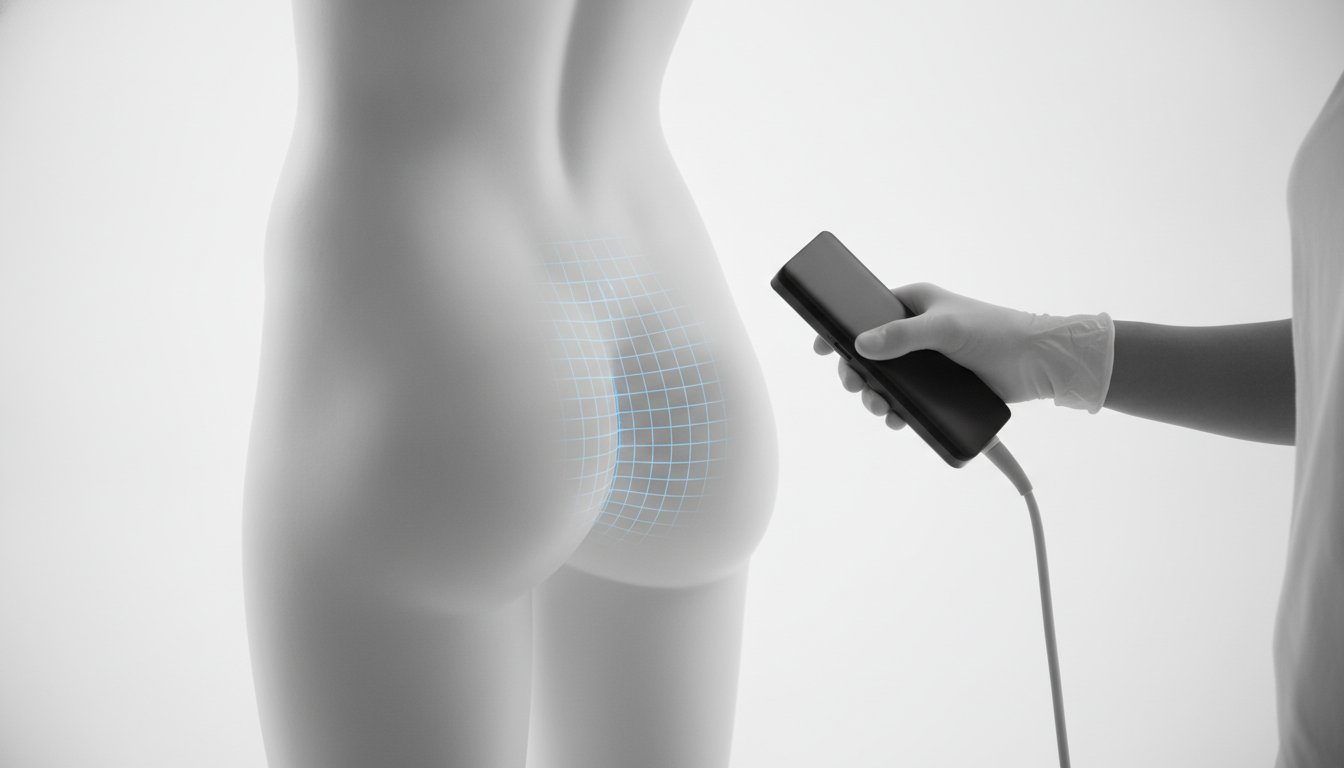
The gluteal veins are located deep within the muscle, often in very close proximity to the fibers. When a surgeon performs “blind” injections without visualization, the risk of accidental muscle penetration increases. In 2026, the standard of care has shifted toward the use of real-time intraoperative ultrasound. This allows the surgeon to see the exact plane of the cannula, ensuring the fat stays in the safe, subcutaneous space above the muscle. If you’re exploring your options, it’s wise to speak with an expert who prioritizes these advanced safety protocols to protect your vitality.
Symptoms and Emergency Protocols
Immediate signs of an embolism often appear during surgery or shortly after. These include a sudden drop in oxygen levels, rapid heart rate, or respiratory distress. Because these events require rapid intervention, the procedure must take place in an accredited surgical facility. Such centers are equipped with the necessary technology to manage respiratory emergencies. It’s also vital that your surgeon maintains active hospital privileges. This ensures that, in the rare event of a complication, you have immediate access to a full range of acute medical services. This comprehensive approach to safety provides the peace of mind necessary for a successful transformation.
Managing Common Post-Operative Complications and Side Effects
Recovery is a delicate dialogue between your body and your surgeon’s skill. While bruising and swelling are expected responses to surgery, understanding the genuine risks of Brazilian butt lift helps you monitor your progress with confidence. Your body’s natural healing intelligence is remarkably capable of resolving minor inflammation, but it’s vital to distinguish these normal signs of repair from complications that require clinical intervention. By viewing recovery as a period of nurturing rather than just “waiting,” you empower your body to achieve the best possible result.
The first stage of the procedure involves liposuction to harvest donor fat. This harvesting phase carries its own set of considerations, including temporary skin numbness or contour irregularities at the donor site. An integrative approach ensures the harvest area is treated with the same meticulous care as the buttocks, maintaining your total body vitality throughout the healing journey.
Infection and Seroma Prevention
Sterile technique is our foundation, but your post-operative environment is equally important. A seroma is a collection of fluid that feels like a soft, fluctuating wave under the skin. While normal swelling is generalized, a seroma is a localized pocket. We use precision-fitted compression garments to support the tissues and minimize the space where fluid can collect. If we identify a risk of fluid buildup, an integrative care plan may include prophylactic antibiotics to protect your system and support your immune health during the early stages of tissue integration.
Fat Necrosis and Oil Cysts
Sometimes, transferred fat doesn’t establish a sufficient blood supply. When these cells aren’t properly nourished, they may fail to “take,” leading to a condition called fat necrosis. This can result in firm, palpable lumps or oil cysts that feel like small marbles. To minimize this, we focus on gentle fat processing and avoid over-packing the recipient site, ensuring each graft has the best chance for survival. If lumps do occur, they often resolve as the body’s internal cleanup crew metabolizes the tissue over several months. Maintaining a focus on whole-body health supports this natural resolution, protecting the smooth and natural contours of your final result.

How to Choose a Surgeon Who Prioritizes Patient Safety
Selecting a surgeon is the most critical decision you’ll make for your long-term vitality and peace of mind. While board certification is a necessary baseline, it shouldn’t be the only criteria for your choice. You’re looking for a pioneering expert who has spent decades refining the delicate art of fat grafting. A surgeon’s specific safety record and their commitment to anatomical precision are far more important than a polished social media presence or a low price point. It’s vital to be wary of “high-volume” clinics that treat patients like numbers on an assembly line. When a surgeon rushes through multiple procedures in a single day, fatigue can set in, which significantly increases the risks of Brazilian butt lift.
True expertise is found in a practitioner who views your body as a whole system. They’ll prioritize natural volume restoration through meticulous, subcutaneous injection techniques rather than aggressive, high-pressure methods. This patient-centered approach ensures that your body’s natural healing intelligence is supported throughout the entire process. If you’re ready to partner with a practitioner who values your safety above all else, we invite you to schedule a consultation with Dr. Grossman to discuss your goals.
Essential Questions for Your Consultation
During your consultation, don’t hesitate to ask detailed technical questions. You deserve to know exactly how your surgeon protects your body’s vital functions. Use this list to guide your conversation:
- Do you use real-time intraoperative ultrasound to visualize the injection plane?
- What specific steps do you take to ensure fat is only placed in the subcutaneous space?
- Can you describe the size and type of cannulas used during the grafting phase?
- How many of these specific procedures do you perform in a single day?
- What are the specific credentials of the professional administering my anesthesia?
It’s also wise to verify a surgeon’s standing with their state medical board to ensure there are no history of disciplinary actions. Asking about the anesthesiologist is equally important; you want a board-certified professional who is experienced in managing the specific physiological needs of a fat grafting patient.
The Importance of an Accredited Surgical Facility
The environment where your surgery takes place is a pillar of your safety. Accredited facilities, such as those recognized by the AAAASF or the Joint Commission, meet rigorous standards for emergency equipment and sterile protocols. These certifications aren’t just paperwork; they’re a commitment to maintaining vital functions during every moment of your care. Choosing an accredited setting is linked to lower infection rates and ensures that the facility is prepared for any rare respiratory emergency. This level of oversight is essential for managing the risks of Brazilian butt lift and providing the high standard of care you deserve.
The Grossman Approach: Integrative Safety and Natural Results
Safety in aesthetic surgery is often framed as a battle against complications, but we believe in a more harmonious philosophy. By supporting the body’s natural healing intelligence, we transform the surgical experience from a mechanical event into a holistic journey toward vitality. This integrative approach means we don’t just look at the buttocks in isolation; we view your entire system as the foundation for a successful outcome. When your body is in a state of optimal wellness, it’s far better equipped to manage the physiological demands of tissue transfer, naturally mitigating the risks of Brazilian butt lift.
Our commitment to natural rejuvenation centers on the use of your own autologous tissue. There’s a profound elegance in using what your body has already created to restore volume and shape. This method honors your biological blueprint, ensuring that the results look and feel like an authentic extension of yourself. We prioritize long-term prevention over the aggressive, high-volume “quick fixes” that often lead to complications. By choosing a measured and meticulous path, we protect your health while achieving a result that stands the test of time.
Nourishing the Graft: The Role of Nutrition
The success of a fat transfer depends heavily on the “take” of the transferred cells. For these cells to survive, they must be nourished by a new blood supply almost immediately. We focus on reducing oxidative stress through specific wellness protocols that enhance the body’s internal environment. By optimizing your intake of key nutrients and supporting systemic health, we improve the bioavailability of the building blocks your tissues need to repair. This integrative preparation begins weeks before your procedure and continues through your recovery, ensuring every cell is supported as it integrates into its new home.
A Compassionate Path to Transformation
We believe that a mentor-like relationship between the practitioner and the patient is essential for a safe transformation. This bond allows us to demystify the surgical process and replace anxiety with a sense of agency. During our time together, we’ll discuss the importance of realistic expectations. While it’s tempting to seek dramatic changes, a focus on “natural” volume ensures that the skin and underlying vessels aren’t over-stressed. This conservative, safety-first mindset is the hallmark of a seasoned expert who genuinely cares about your quality of life. If you’re ready to explore a health-forward approach to your aesthetic goals, we encourage you to schedule a consultation with Dr. Grossman to discuss your safe body contouring options.
Empowering Your Journey Toward Aesthetic Harmony
Your path to a more confident silhouette is a profound journey that deserves a foundation of absolute safety. We’ve explored how modern clinical standards and real-time visualization have transformed the risks of Brazilian butt lift into a manageable reality for the informed patient. By prioritizing the subcutaneous plane and supporting your body’s natural healing intelligence, you can achieve results that are as safe as they are beautiful. True transformation isn’t just about a physical change; it’s about nurturing your total body wellness throughout the entire process.
Choosing a pioneering expert with decades of clinical authority ensures that your care is guided by wisdom and anatomical precision. If you’re ready to embrace an integrative whole-body health philosophy that puts your vitality first, we’re here to help you navigate your options with clarity and compassion. You don’t have to settle for aggressive techniques when a natural, health-forward alternative exists. To begin your personalized path toward natural rejuvenation, Request an Integrative Consultation with Dr. Grossman. We look forward to supporting your vision for a vibrant, healthy future.
Frequently Asked Questions
Is a Brazilian Butt Lift the most dangerous plastic surgery?
Historically, the procedure was labeled as high-risk due to outdated intramuscular injection techniques. However, for 2026, it’s no longer considered the most dangerous when performed by experts using modern safety protocols. By avoiding the gluteal muscle entirely and injecting only into the subcutaneous space, the most severe complications are largely preventable. Safety today is a reflection of the surgeon’s anatomical precision and commitment to the latest clinical standards.
What is the actual mortality rate for BBL in 2026?
The mortality rate has improved dramatically from the often-cited 2017 figure of 1 in 3,000. Recent data from the World Association of Gluteal Surgeons indicates the rate has dropped to approximately 1 in 23,818. This significant improvement is due to the industry-wide shift toward subcutaneous-only grafting. When surgeons follow these strict guidelines, the documented fatality rate for pulmonary fat emboli has reached zero in multi-year clinical surveys.
How can I tell if my surgeon is using a safe BBL technique?
You can identify a safe approach by asking if your surgeon utilizes real-time intraoperative ultrasound guidance. This technology allows the practitioner to visualize the cannula and ensure fat is never placed near the deep gluteal veins. A safe technique also involves the use of large-bore, blunt-tipped cannulas that protect the body’s structural integrity. Your surgeon should be able to explain exactly how they avoid the “danger zone” of the muscle.
What are the early warning signs of a fat embolism after surgery?
Early warning signs of a fat embolism typically manifest as sudden respiratory changes or cardiovascular distress. You should monitor for shortness of breath, a rapid heart rate, or a noticeable drop in oxygen saturation levels during the immediate post-operative period. These symptoms are clinical emergencies that require rapid intervention. Because these events are rare but serious, it’s essential that your procedure is performed in an accredited facility with immediate access to emergency protocols.
Can BBL risks be eliminated entirely with ultrasound guidance?
While no surgical procedure can claim zero risk, ultrasound guidance significantly minimizes the most severe risks of Brazilian butt lift. This tool provides the visual confirmation needed to remain in the safe, subcutaneous plane. However, other considerations like infection or seroma still require careful management. An integrative approach combines this advanced technology with a comprehensive wellness plan to support the body’s natural healing intelligence and ensure the best possible outcome.
How does an integrative approach help reduce surgical risks?
An integrative approach reduces risk by preparing your entire system for the demands of surgery. By focusing on whole-body health, including optimal nutrition and reducing oxidative stress, we support the “take” of the transferred fat cells. This philosophy emphasizes long-term vitality over quick fixes. When your body’s natural healing intelligence is nourished, it can more effectively manage inflammation and repair tissues, leading to a smoother recovery and more natural results.
Is it safer to get buttock implants instead of a BBL?
Buttock implants are not necessarily safer; they simply carry a different risk profile. Implants involve foreign materials that the body may reject, leading to capsular contracture or shifting over time. In contrast, fat grafting uses your own autologous tissue, which integrates naturally with your existing anatomy. For many patients, the use of their own tissue is a more harmonious solution that avoids the long-term complications often associated with synthetic implants.
How long should I wait before I know I am in the clear for complications?
The window for major complications varies by type. The risk for a pulmonary fat embolism is highest during or immediately after the procedure. However, you should monitor your healing for several months to ensure the transferred fat has successfully integrated. Most surgeons consider a patient to be “in the clear” regarding the aesthetic “take” of the fat after about three to six months. During this time, maintaining your vitality through proper nutrition is vital.