Skip to content
If you are considering a natural enhancement, you might assume the best liposuction areas for breast fat transfer are simply the spots where you have the most unwanted volume. However, the longevity of your results depends less on the quantity of fat harvested and far more on the biological richness of the tissue itself. Choosing the right location is a delicate balance of art and science that determines whether those new cells will thrive in their new home.
It’s completely natural to feel a sense of anxiety about your new volume disappearing or to worry that certain donor sites might leave behind visible reminders of the procedure. You want a result that feels like a permanent part of your silhouette. We understand these concerns and believe that a successful outcome starts with identifying donor sites based on adipose density and stem cell concentration rather than just excess inches.
In this guide, we’ll discover which donor sites provide the highest quality fat for long-term breast enhancement and how an integrative approach ensures maximum retention. You’ll learn how Dr. Grossman’s focus on whole-body health supports your body’s natural healing intelligence. We’ll also explain how specific harvesting techniques can provide you with both a beautifully contoured donor site and the natural, lasting volume you desire.
Key Takeaways
- Discover how fat grafting provides a dual benefit by sculpting unwanted areas while naturally restoring breast volume through your own living tissue.
- Identify the best liposuction areas for breast fat transfer by focusing on tissue density and stem cell richness to ensure long-term, natural-looking results.
- Learn how an integrative approach supports your body’s natural healing intelligence to optimize the survival and retention of transferred fat cells.
- Understand why gentle, low-pressure harvesting techniques are vital for maintaining the bioavailability and health of your grafts during the procedure.
- Explore the importance of the six-week “Graft Feeding” phase and how to nourish your system to protect and support your new silhouette.
The Synergy of Liposuction and Breast Fat Transfer
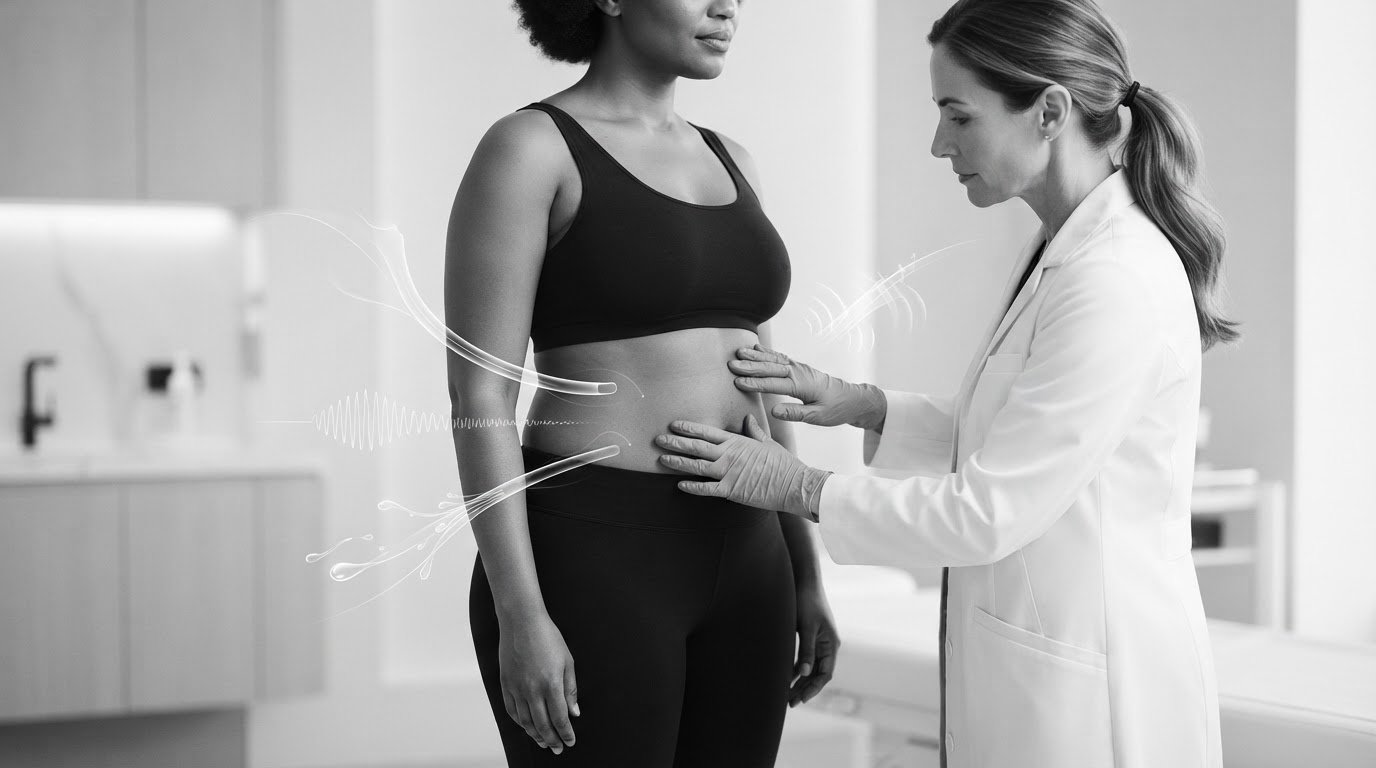
Fat grafting to the breasts is more than a simple cosmetic change; it’s a biological transformation that works in harmony with your body. The procedure is a two-stage journey that begins with the careful harvesting of your own cells through liposuction and concludes with the precise grafting of that tissue into the breast. This dual benefit allows you to refine your silhouette by removing fat from areas where it’s unwanted while simultaneously enhancing your natural curves. Identifying the best liposuction areas for breast fat transfer is the vital first step in ensuring that the harvested tissue is of the highest possible quality for your results.
Unlike synthetic implants, which the body may perceive as foreign objects, autologous fat is living tissue. It moves naturally with your movements, warms to your body temperature, and ages gracefully alongside your existing anatomy. While implants remain static and may require future replacements, fat becomes a permanent part of your physical makeup. The success of this procedure hinges entirely on fat viability. If the cells don’t survive the transfer process, the volume won’t last, which is why the health of the donor site is so significant.
Why Use Autologous Fat for Breast Augmentation?
Choosing your own tissue offers a level of biological synergy that synthetic materials simply cannot match. Autologous fat integrates seamlessly with the existing breast parenchyma, which is the functional tissue of the breast. This creates a soft, natural feel that’s indistinguishable from your original anatomy. Because you’re using your own cells, you eliminate the risks of “implant illness” or the painful tightening known as capsular contracture. It’s a gentle way to support your body’s natural form without introducing external stressors or foreign materials into your system.
The Role of Adipose-Derived Stem Cells (ADSCs)
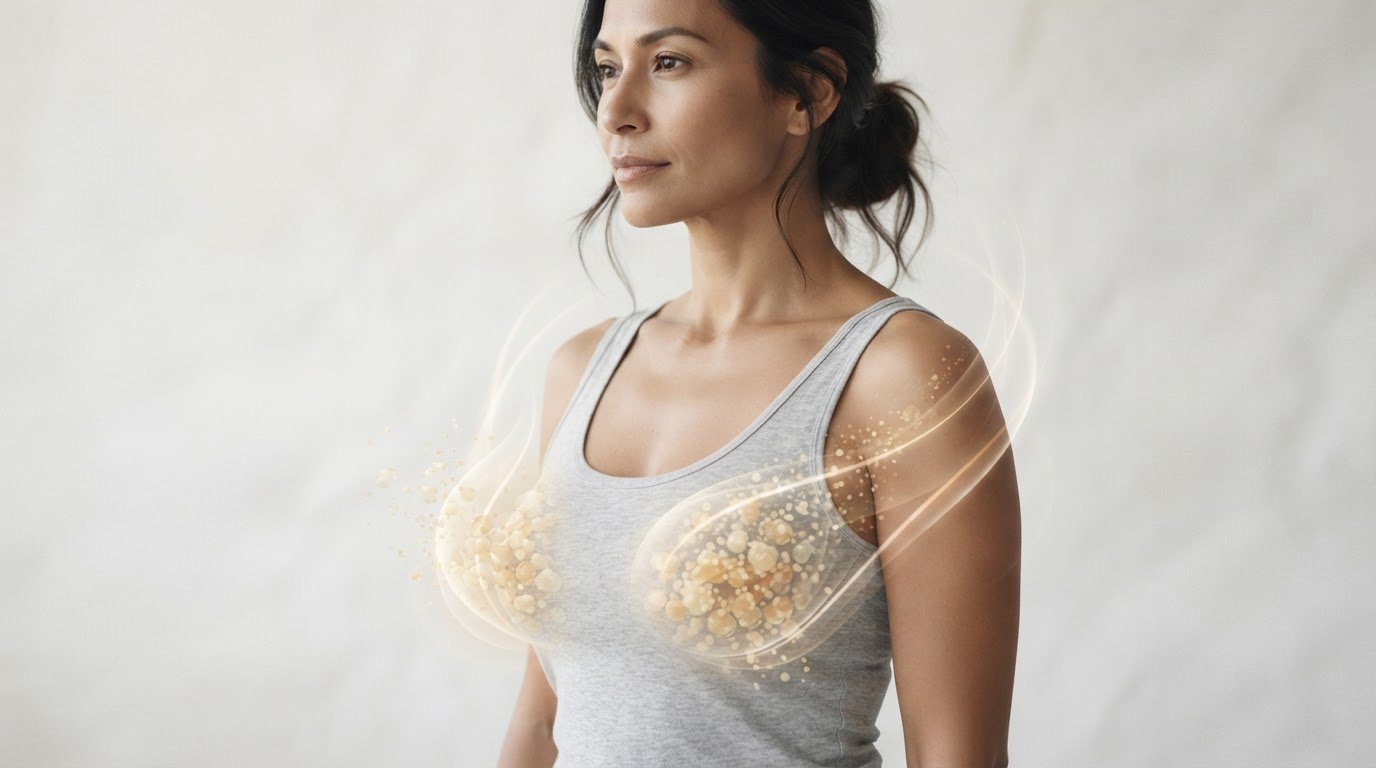
The secret to a successful and lasting transfer lies in Adipose-Derived Stem Cells, or ADSCs. These remarkable cells act as the biological architects of your new volume. Once grafted, they help create a new blood supply through a process called neovascularization, which is essential for the fat’s survival. These stem cells also nourish the overlying skin, often improving its texture and elasticity from the inside out. It’s important to understand the “take” rate; not every cell will survive the journey. However, by selecting the best liposuction areas for breast fat transfer and using gentle harvesting techniques, we can support the body’s natural healing intelligence and help these cells thrive in their new environment.
Evaluating Donor Sites: Why Fat Quality Varies
It is a common misconception that all body fat is biologically identical. In reality, the adipose tissue in your body varies significantly in its texture, composition, and potential for survival after a transfer. When we identify the best liposuction areas for breast fat transfer, we look beyond the simple availability of excess volume. We prioritize areas with high vascularity, as a rich blood supply ensures that the harvested cells are robust and nutrient-dense. This creates a natural hierarchy of donor sites where the biological quality of the tissue takes precedence over the sheer quantity of fat available.
The health of your harvested fat cells determines how well they will integrate with your existing breast tissue. If the donor site is poorly vascularized or contains damaged cells, the “take” rate will be lower, leading to less predictable results. By selecting sites with high cell viability, we support your body’s natural healing intelligence and set the stage for long-term volume restoration. This methodical selection process is a cornerstone of a successful, natural-looking enhancement.
Fibrous vs. Non-Fibrous Fat Deposits
Fat deposits are generally categorized as either fibrous or soft. Areas like the back and flanks often contain “tougher” fibrous fat. While this tissue can offer more structural support in some procedures, it is frequently harder to purify and may not provide the supple, delicate texture desired for the breasts. Conversely, the “softer” fat found in the thighs or the inner knee is much more malleable. This non-fibrous fat is often the gold standard for achieving a natural “tear-drop” shape. It integrates smoothly into the breast parenchyma, providing a soft feel that mirrors your natural anatomy without the firmness associated with more fibrous donor sites.
The Impact of Hormonal Stability on Donor Fat
Not all fat responds to your body’s internal signals in the same way. The abdomen, for example, is often highly sensitive to hormonal shifts and weight fluctuations. If you use fat from an area that expands and contracts easily with every lifestyle change, your breast volume may become less predictable over time. We prefer stable donor sites, such as the outer thighs, to ensure your results remain consistent. This is where integrative metabolic health becomes essential. By supporting your body’s internal balance through proper nutrition and wellness, we optimize the longevity of the graft. Understanding these physiological nuances is part of the integrative approach to fat grafting that ensures your silhouette remains beautiful, balanced, and enduring.
Top 4 Liposuction Areas for Optimal Breast Grafting
Identifying the best liposuction areas for breast fat transfer requires a deep understanding of your body’s unique landscape. While many areas store fat, we look for sites that offer the highest cell viability and the most harmonious aesthetic result. Identifying the best liposuction areas for breast fat transfer ensures that the harvested tissue is robust enough to survive the journey to its new location. For patients who are naturally lean, this selection process becomes even more critical, as we must find pockets of healthy tissue without compromising your natural proportions. Each donor site offers distinct advantages for both the breast’s final feel and your overall body contour.
1. The Abdomen and Flanks (The “Gold Standard”)
The abdomen is often the first choice because it typically provides the highest volume of easily accessible fat. This area allows for a dual transformation, giving you a flatter, more sculpted midsection that mimics a “tummy tuck” look without the need for major surgery. Abdominal fat is highly vascularized, supporting better graft survival. Recovery here is generally steady, with the use of a compression garment to support the body’s natural healing intelligence as the skin adapts to its new, sleeker shape.
2. The Inner and Outer Thighs
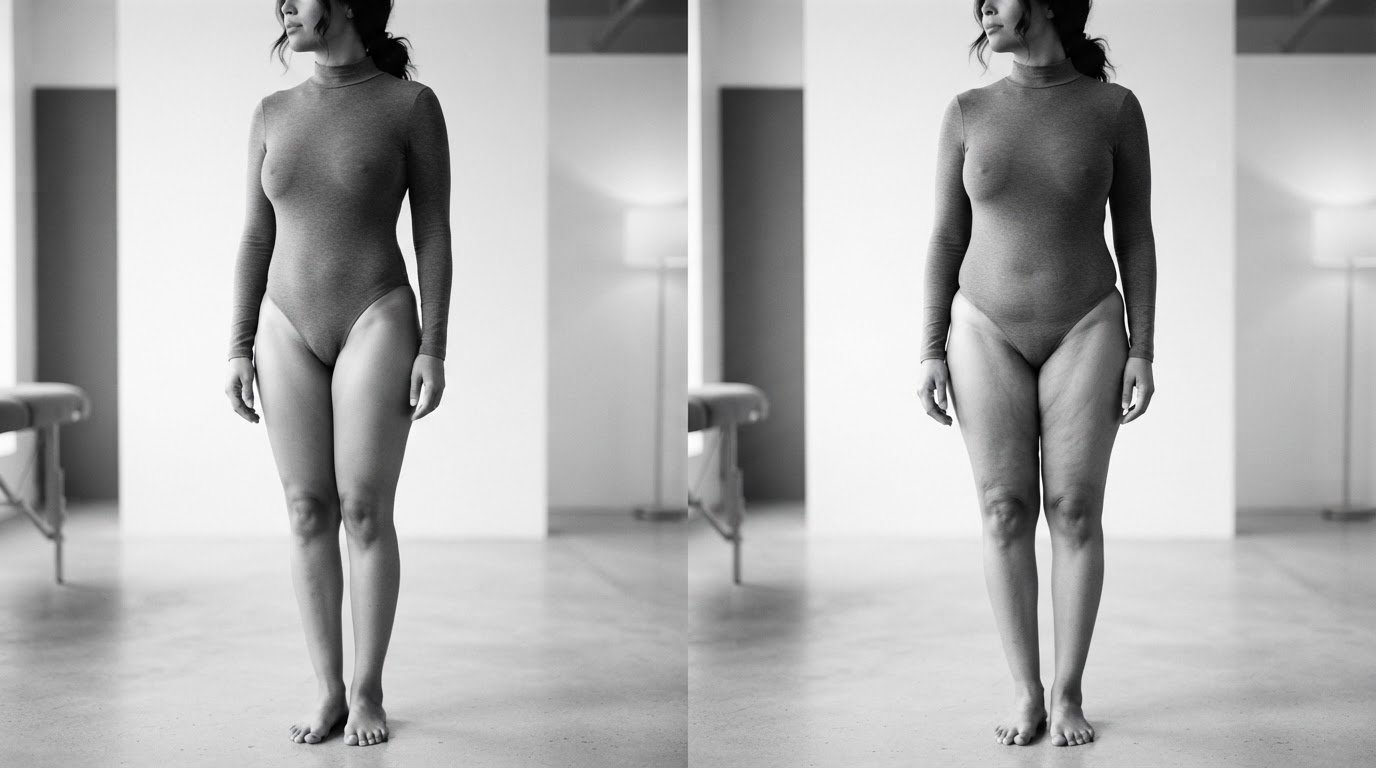
Many practitioners consider thigh fat the “best” for achieving a soft, natural breast texture. The tissue in this region is less fibrous than fat from the back, allowing it to integrate smoothly with existing breast parenchyma. The outer thighs, or saddlebags, are particularly prized for their high concentration of stem cells, which help the graft thrive in its new home. Sculpting these areas also provides the aesthetic benefit of a “thigh gap” or a more streamlined lateral leg contour, enhancing your silhouette from the waist down.
3. The “Banana Roll” and Lower Buttocks
For patients facing the “thin patient dilemma,” the banana roll, which is the small area of fat just below the buttock crease, is a vital resource. Even in very lean individuals, this pocket often remains, providing enough high-quality fat for a subtle enhancement. Harvesting from this area requires a seasoned expert’s precision to avoid buttock ptosis, or sagging. When done correctly, it provides excellent fat yield while maintaining the youthful lift and structural integrity of the buttocks.
4. The Upper Back and “Bra Roll”
The back fat found in the upper back and “bra roll” is slightly firmer and more structural. This makes it an excellent choice for patients who desire more definition or a bit more structural or “firm” volume in their breast enhancement. While this tissue is more fibrous, it’s very resilient and holds its shape well. Smoothing this area also smooths the silhouette for better-fitting clothing, creating a sleek look from every angle while repurposing stubborn deposits into a beautiful, natural enhancement.

The Integrative Approach: Preparing Your Body for Success
Your body isn’t a passive canvas; it’s an active participant in your transformation. While we meticulously identify the best liposuction areas for breast fat transfer to ensure high cell viability, the long-term survival of those cells depends on a partnership between surgical precision and your body’s natural healing intelligence. This integrative approach views the procedure not as a single event, but as the beginning of a biological journey where we must nourish and protect the living tissue as it settles into its new environment.
The first six weeks after your procedure are known as the “Graft Feeding” phase. During this critical window, the transferred fat cells are in a state of transition, waiting for the body to establish a new blood supply through neovascularization. If the internal environment is stressed or nutrient-deficient, the cells may not survive. To support this delicate process, we must eliminate factors that constrict blood flow. Nicotine is perhaps the most significant threat; it starves the grafts of oxygen and can lead to fat necrosis. Likewise, extreme dieting during this period can signal the body to metabolize the very fat we just carefully placed.
Before your surgery, we recommend a simple optimization checklist to prepare your system:
- Cease all nicotine use at least four weeks prior to and six weeks after surgery to protect micro-circulation.
- Maintain a stable weight to ensure the donor fat is metabolically consistent.
- Optimize your micronutrient intake, focusing on vitamins that support tissue repair and collagen synthesis.
- Hydrate deeply to maintain the bioavailability of nutrients in your bloodstream.
Nutritional Support for Fat Retention
What you consume directly impacts the integrity of your new grafts. We emphasize the role of healthy fats, particularly Omega-3 fatty acids, which help maintain flexible and robust cell membranes. These “good” fats provide the building blocks your body needs to support the transferred tissue. Proper hydration is equally essential, as it facilitates the neovascularization process, allowing new blood vessels to reach and nourish the grafts more efficiently. By focusing on whole-body health, you’re not just recovering from a procedure; you’re creating a fertile environment for your results to thrive.
Post-Operative “Dos and Don’ts”
Protecting the physical integrity of the grafts is just as vital as nutritional support. You must avoid any direct pressure on the breasts, which means “sleeping on your grafts” or wearing underwire bras is strictly off-limits for several weeks. Pressure can crush the delicate new blood vessels before they’ve fully formed. We also implement a “No Dieting” rule. In fact, a slight caloric surplus during the first month can provide the extra energy your body needs to integrate the living tissue. For a more detailed look at the recovery timeline, you can explore our Fat Grafting Recovery Guide. By following these steps, you empower your body to maintain its vital functions and support your new silhouette. If you’re ready to begin this journey, we invite you to consult with our team to develop your personalized integrative plan.
Why Expertise in Fat Viability Matters
Achieving a beautiful result involves more than just selecting the best liposuction areas for breast fat transfer; it requires an expert hand to preserve the life within the tissue. Fat grafting is a highly technique-dependent surgery where every movement during the harvesting phase impacts the final outcome. We use gentle, low-pressure liposuction to ensure that the delicate adipose cells remain intact. High-pressure systems can rupture cell membranes, rendering the fat non-viable before it even reaches its destination. By prioritizing the biological integrity of the cells, we support your body’s natural healing intelligence from the very start of the procedure.
Once the fat is harvested, the purification process begins. This step is essential for removing excess oils, blood, and anesthetic fluids that could trigger inflammation or interfere with the “take” rate. Only the most robust, viable cells are selected for grafting. A skilled surgeon acts as both a sculptor and a biologist, understanding how to place these cells in a way that encourages a new blood supply to form. This methodical approach ensures that the volume we restore today remains a vibrant, living part of your body for years to come.
The Grossman Method: A Legacy of Natural Results
Dr. Leonard Grossman brings decades of experience to the field of natural volume restoration, offering a unique perspective gained from his pioneering work in fat grafting and TUBA procedures. His integrative philosophy means that we treat you as a whole person, not just a surgical case. We understand that your body’s ability to nourish new grafts is tied to your overall wellness. Our Breast Augmentation Options are never one-size-fits-all; they are carefully customized to your unique anatomy and health history. Whether you are looking for a subtle lift or significant volume restoration, we focus on techniques that respect your body’s boundaries and enhance its natural beauty.
Consultation: Your First Step to Natural Volume
The journey to a new silhouette begins with a thorough evaluation of your donor sites. During your consultation, we’ll examine the density and health of your adipose tissue to identify the best liposuction areas for breast fat transfer in your specific case. This is also the time to determine if you’re a candidate for fat grafting or if other paths better suit your goals. We’ll discuss your lifestyle, nutritional habits, and expectations to ensure you feel empowered and informed. We believe in providing a sense of agency through education rather than high-pressure sales. If you’re ready to explore a natural, integrative approach to enhancement, we invite you to schedule your consultation with Dr. Leonard Grossman today.
Embrace Your Natural Transformation
Restoring breast volume through your own living tissue is a profound way to honor your body’s natural form. By identifying the best liposuction areas for breast fat transfer, you ensure that the harvested cells are biologically prepared to thrive in their new home. This process is not just about aesthetics; it’s an integrative partnership that relies on your body’s natural healing intelligence and the precision of an expert hand. We’ve seen how choosing sites based on density and stem cell richness leads to more predictable, lasting results.
As a pioneer in autologous fat grafting, Dr. Leonard Grossman utilizes non-aggressive techniques to protect cell viability while providing nationally recognized, natural-looking results. Whether we harvest from the abdomen, thighs, or specialized areas like the banana roll, our goal is to support your whole-body health throughout the recovery journey. We invite you to explore how this multifaceted, integrative approach can empower you to reach your goals.
Begin your journey to natural breast enhancement, Schedule a Consultation with Dr. Grossman.
You deserve a silhouette that feels like a permanent, authentic part of you. We’re here to guide you toward a result that reflects your inner vitality and health with compassion and clinical expertise.
Frequently Asked Questions
Can I get a breast fat transfer if I am very thin?
Yes, thin patients can often find success by harvesting from multiple donor sites. We look for hidden pockets in areas like the inner thighs or the “banana roll” beneath the buttocks. Identifying the best liposuction areas for breast fat transfer in lean individuals requires a precise evaluation of tissue density to ensure we gather enough high-quality fat for a beautiful, natural result.
How much of the transferred fat actually stays permanently?
A significant majority of the transferred fat that survives the initial six-week “Graft Feeding” phase remains permanently. Once these living cells establish a new blood supply, they integrate into your breast tissue for life. We use an integrative approach to nourish your system, which helps your body’s healing intelligence protect and maintain as many of these cells as possible.
Will the liposuction areas look lumpy or uneven after harvesting?
No, the donor sites should remain smooth if harvested with a gentle, non-aggressive technique. We use specialized, small cannulas and a methodical approach to ensure an even, contoured result. Wearing your compression garment as directed is essential, as it helps the skin adhere gracefully to the new underlying shape while your body heals and optimizes its silhouette.
Is fat transfer safer than traditional breast implants?
Fat transfer is often considered a gentler alternative because it uses your own living tissue rather than a synthetic foreign object. This eliminates the risk of “implant illness” or painful capsular contracture. By using autologous fat, we support your whole-body health and minimize the inflammatory response. It’s a way to enhance your form while respecting your body’s natural biological boundaries.
How many cup sizes can I expect to gain from a fat transfer?
Most patients can expect a modest, natural increase, typically around one cup size per session. Because the procedure depends on the “take” rate of living tissue, we cannot safely inject unlimited volume at once. If you desire a more significant gain, a second session can be planned once the first graft has fully integrated and the tissue is healthy and stable.
What happens to the transferred fat if I lose weight in the future?
Transferred fat cells continue to live and breathe just like the tissue in your donor sites. If you lose weight, these cells will naturally shrink, just as they would have in the best liposuction areas for breast fat transfer. Maintaining a stable, healthy weight is the most effective way to protect the longevity and volume of your enhancement over the long term.
Does liposuction for fat transfer leave visible scars?
Liposuction for fat transfer involves tiny incisions that typically leave minimal, freckle-like marks. These entry points are usually only a few millimeters wide and are placed in discreet, hidden locations. Over time, these marks fade significantly as your body’s natural healing intelligence repairs the skin. We use non-aggressive techniques to ensure the skin remains as clear and smooth as possible.
How soon after breastfeeding can I have a breast fat transfer?
You should wait at least three to six months after you’ve completely finished breastfeeding. This allows your breast tissue and hormones to stabilize, ensuring a more predictable and lasting result. It also gives your body time to replenish its vital nutrients and return to a state of balance, creating a healthier environment for the new fat grafts to take hold.