Skip to content


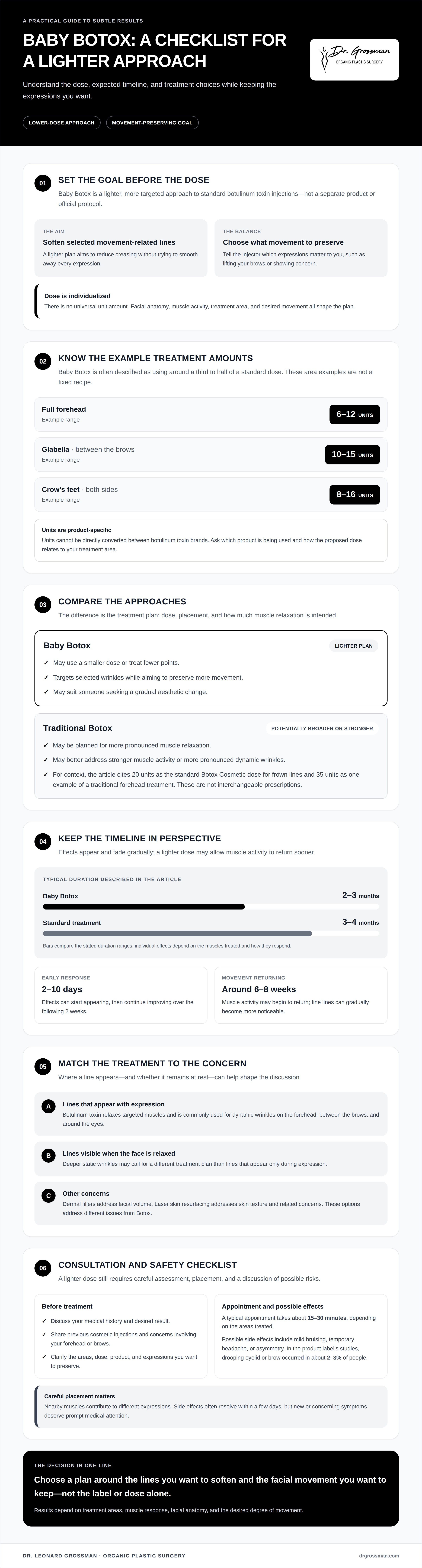
A smaller dose can soften lines without aiming to smooth away every expression. Baby Botox for subtle results typically uses less product than traditional Botox and lasts about 2 to 3 months, compared with 3 to 4 months for standard treatment. The goal is a refreshed look with facial movement preserved, though the effect depends on which muscles are treated and how they respond.
It makes sense to want a softer result while still looking like yourself. This article explains how baby Botox differs from traditional Botox, what to expect from its duration, and how targeted treatment can support natural facial expression. The American Academy of Dermatology explains that treating selected muscles should allow natural expressions. A lighter approach may suit some goals, while deeper lines or different priorities may call for another plan.
Key Takeaways
- There’s no universal unit amount for baby Botox; the treated area, muscle activity, and desired degree of movement all shape the approach.
- Consider whether your lines appear mainly with facial movement or remain visible at rest, since deeper static wrinkles may call for a different treatment plan.
- As the effect gradually fades, muscle activity can become more noticeable again, so think about whether a lighter, shorter-lasting result fits your preferences.
- Natural-looking results depend on selecting treatment areas and doses that align with the expressions you want to preserve.
What Makes Baby Botox Different from Traditional Botox?
Baby Botox describes a lighter, more targeted approach, often using around a third to half of a standard dose. The aim is to soften movement-related lines without an overly frozen appearance.
Baby Botox Terminology and Treatment Approaches
“Baby Botox” describes a lower-dose approach to botulinum toxin injections, not a separate product or official protocol. There’s no universal unit amount, so a qualified injector should assess facial movement, discuss your goals, and explain the proposed areas and dose. Ask how the plan aims to soften specific lines while preserving the expressions you want to keep.
A typical appointment takes about 15 to 30 minutes, depending on the areas treated. Before injections, discuss your medical history and desired result; the provider can explain the treatment plan and what to expect afterward.
Injection Amounts and Facial Treatment Areas
Baby Botox is commonly used for dynamic wrinkles on the forehead, between the brows, and around the eyes. Example ranges include 6 to 12 units for the full forehead, 10 to 15 units for the glabella, and 8 to 16 units for crow’s feet on both sides. These are examples, not a fixed recipe for every face.
Standard and baby Botox approaches can differ in the amount of product used. The right amount depends on the facial muscles treated and how much movement a patient wants to retain, not on the label alone.
Other treatments address different concerns. Dermal fillers add facial volume, while laser skin resurfacing addresses skin texture and related concerns. A treatment plan may consider these options alongside Botox, matching each method to the concern it addresses rather than assuming more treatments will create a better result.
How Baby Botox differs from traditional Botox
Baby Botox isn’t a different medication; it describes an approach to standard botulinum toxin injections. The distinction is the treatment plan: an injector may use a smaller dose or treat fewer points to soften selected wrinkles while preserving more movement. Traditional Botox may involve a broader or stronger plan when the goal is more pronounced muscle relaxation.
There’s no official unit amount for baby Botox. For context, 20 units is the standard Botox Cosmetic dose for frown lines between the brows, while 35 units is one example of a traditional forehead treatment. These figures aren’t interchangeable prescriptions. The patient’s muscle strength, facial anatomy, and desired degree of movement shape the dose and placement.
Units are specific to each botulinum toxin product, so they can’t be directly converted between brands. Ask which product is being used and how the proposed dose relates to the treatment area. Discuss whether you want to soften lines at rest, reduce creasing during expressions, or create a more noticeable reduction in movement. Those goals help clarify whether a lighter approach fits.
Baby Botox may suit someone seeking a gradual aesthetic change, while standard-dose treatment may better address stronger muscle activity or more pronounced dynamic wrinkles. Neither approach treats every type of line in the same way. For example, a wrinkle that remains visible when the face is relaxed may need a different plan than one that appears only with expression. A Botox treatment assessment can help align dose, placement, and goals before injections. Ask how the proposed plan supports movement in areas important to your everyday expressions.
Duration of cosmetic botulinum toxin effects
Baby Botox effects may wear off sooner than standard cosmetic Botox effects. A lighter dose may allow muscle activity to return sooner, so fine lines can gradually become more noticeable. The change isn’t usually sudden: movement may begin returning around 6 to 8 weeks after treatment, while the softened appearance fades over time.
Results also develop in stages. Effects can start appearing within 2 to 10 days and continue improving over the following 2 weeks. During a forehead treatment, for example, the final degree of movement reduction may not be clear immediately. Allowing time for the injections to settle helps distinguish the eventual result from the early response.
Possible side effects include mild bruising, a temporary headache, or asymmetry. In the product label’s studies, drooping eyelid or brow occurred in about 2 to 3% of people. Incorrect injection technique or an adverse reaction can also lead to complications. If side effects occur, they often resolve within a few days, though new or concerning symptoms deserve prompt medical attention.
A consultation should cover your medical history, treatment areas, and the expressions you want to preserve. Tell the injector about previous cosmetic injections and any concerns involving your forehead or brows. Precise placement matters because nearby muscles contribute to different expressions. Treatment intended to soften frown lines should account for surrounding movement. A smaller dose does not remove the need for careful technique or a discussion of possible risks.
Botulinum toxin relaxes targeted muscles, but it doesn’t stop all facial aging. If volume loss is also a concern, dermal fillers address a different aesthetic issue and may be considered separately. Choose based on whether your priority is movement-related lines, facial volume, or both, rather than treatment duration alone.
Can you keep natural facial expression?
Yes. A carefully planned treatment can soften selected lines while preserving movement in other facial muscles. The result depends on which muscles are treated and how much relaxation the plan aims to create.
Goals for Subtle Results
Subtle results mean easing selected expression-related lines without trying to erase every sign of movement. If you’re considering baby Botox for subtle results, identify the expressions you want to retain, such as lifting your brows or showing concern.
Share those priorities during a consultation. Someone who values animated brows may prefer a lighter approach in that area than someone focused on reducing strong frown movement. Specific goals help shape treatment around your natural expressions.
How Botox Works on Facial Muscles
Botulinum toxin temporarily reduces contraction in the muscles where it’s injected. As targeted muscles relax, the skin above them folds less during expressions, which can soften dynamic lines.
For example, injections between the brows can reduce the muscle movement involved in frowning. The effect is localized, not a switch that turns off every facial muscle. Thoughtful placement matters because nearby muscles support distinct movements, from raising the eyebrows to smiling.
Natural Facial Expression and Movement
The American Academy of Dermatology explains that treating selected muscles should allow natural facial expressions. With baby Botox for subtle results, the intention is to address chosen movement while keeping other areas expressive.
Consider how you use your face in everyday communication. Someone who relies on expressive brows may prioritize different movement than someone more concerned about frown lines. Discussing those preferences helps clarify the balance of softening and motion that feels right for you.
To explore an approach shaped around your expression goals, discuss Botox injections and facial movement with a qualified professional.
Dr. Leonard Grossman: Botox Injections
Dr. Leonard Grossman offers Botox injections for people considering a softer approach to expression-related lines. If you’re weighing baby Botox against a standard treatment, discuss your aesthetic goals and the facial movement you want to retain to clarify which approach suits your priorities.
Botox addresses muscle-related lines; it doesn’t restore facial volume. If volume loss is also a concern, that’s separate from choosing an injection dose. Discuss the specific areas you’d like treated and what a natural-looking result means to you.
Contact Dr. Leonard Grossman to discuss Botox Injections and your goals.
Make Your Next Step About Your Goals
Choosing baby Botox for subtle results starts with deciding what you want to preserve, not only which lines you want softened. Consider how your expressions feel in everyday moments, then bring those priorities into a treatment discussion. A clear goal helps keep the conversation focused on an approach that feels personal and considered.
If facial volume is also part of your goals, that’s separate from muscle movement. Dr. Leonard Grossman offers fat grafting to the face, breasts, and buttocks. These procedures address different areas and goals, so they’re distinct from Botox injections.
For a thoughtful next step, contact Dr. Leonard Grossman to discuss your priorities and the options relevant to them. You can move forward with a clearer sense of what feels right for you.
Frequently Asked Questions
Botox in your 20s: is it too early?
Age alone doesn’t determine whether Botox is appropriate. Botox Cosmetic is FDA-approved for adults aged 18 and older, but that doesn’t make treatment necessary for every adult. Consider whether expression-related lines concern you and what change you want. If your skin smooths when your face rests, that differs from a line that remains visible without movement.
Can I have more added later?
Additional injections can be discussed after the initial treatment’s effect has settled. The key question is whether the remaining movement or lines match your original goal, not whether your face can be made smoother. Assessing the treated area, your expressions, and any unevenness helps guide the conversation. More product can increase muscle relaxation, changing the result rather than simply completing a dose.
Does a lower dose give the same result for less?
No. A lower dose creates a different level of muscle relaxation, so it shouldn’t be assumed to produce the same effect as standard dosing. Dose size also doesn’t determine the appointment cost. The price depends on the case and is provided after a quote request; factors include the treatment areas and planned approach.
Does preventative Botox work?
Botox can soften dynamic lines by reducing movement in targeted muscles while its effects are active. That’s different from preventing every future wrinkle or stopping facial aging. The American Society of Plastic Surgeons explains that Botox doesn’t stop all aging. Consider whether your concern is a line formed during an expression, rather than seeking treatment to prevent every possible skin change.
Does starting early prevent future wrinkles?
Starting early doesn’t prevent all future wrinkles. Botox can temporarily reduce repeated muscle movement, but facial aging continues and lines can have different causes. Think of early treatment as a choice about current expression-related lines, not a guarantee against later changes. Your goals and the lines you actually notice matter more than starting at a particular age.
How does Botox affect the skin?
Botox affects the muscles beneath the skin rather than directly resurfacing the skin or adding volume. By relaxing selected muscles, it can reduce folding during expressions, such as forehead creasing when you raise your brows. It doesn’t work like a filler for facial volume or a resurfacing treatment for texture, so the right option depends on your concern.