Skip to content

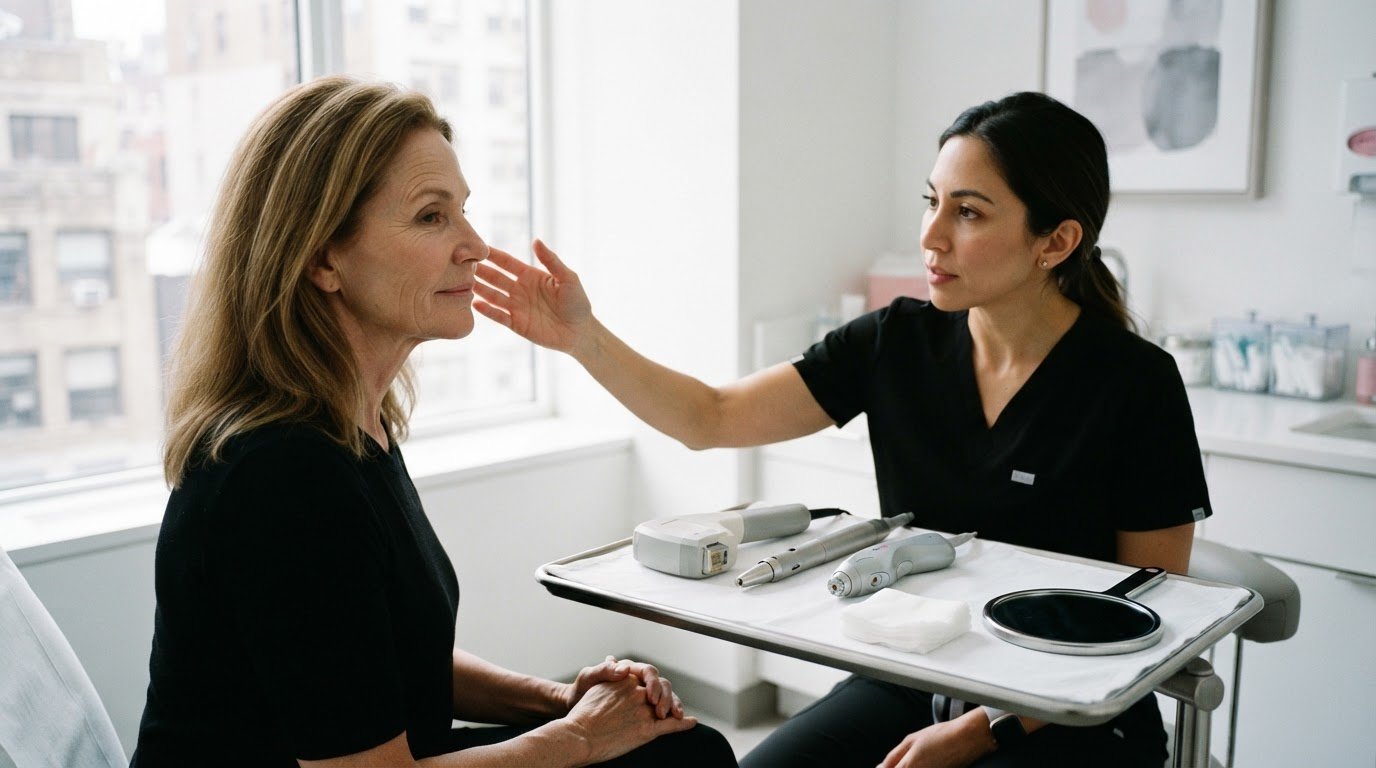
The best laser treatment for wrinkles isn’t always the strongest one. Ablative CO2 resurfacing is often considered for deeper wrinkles, while erbium may suit smaller lines; fractional Fraxel treatments address skin in sections, which can mean a gentler recovery. The right fit depends on wrinkle depth and how much healing time you can accommodate.
It’s understandable to focus on visible results, but recovery is part of the decision too. CO2 resurfacing typically involves 7-14 days of downtime, erbium healing often takes 5-7 days, and Fraxel Dual commonly brings redness and peeling for 3-7 days. For some people, the best laser treatment for wrinkles is the option whose recovery fits their schedule as well as their skin concerns.
This guide explains how CO2, erbium, and Fraxel differ, including what each approach targets and what recovery may involve. You’ll also see how fractional and non-ablative options compare. Understanding these distinctions can help you identify the best laser treatment for wrinkles for your goals, while weighing treatment depth against downtime.
Key Takeaways
- Match treatment intensity to wrinkle depth: deeper lines may call for ablative resurfacing, while lighter concerns may suit a less intensive approach.
- Compare CO2, erbium, and Fraxel by both the skin they target and the recovery each typically involves.
- Fractional treatments leave surrounding skin intact, supporting healing while treating selected areas of the skin.
- Use your healing-time needs and skin concerns to narrow the options before considering laser resurfacing with Dr. Leonard Grossman.
Fractionated and nonfractionated CO2 treatments
For wrinkles, fractional CO2 can address deeper lines while treating selected areas; full-field CO2 treats the skin more broadly. Ablative resurfacing removes the damaged outer skin layer and heats underlying tissue, while non-ablative lasers heat deeper layers without disrupting the surface.
Fractional CO2 is used for deep wrinkles, lines, uneven pigmentation, and acne scars. It creates treatment zones while leaving surrounding tissue intact, supporting faster healing than treating the full surface. It may require multiple sessions, and risks include infection, burns, or lasting light or dark spots.
Full-field treatment covers a broader facial area, so intensity and recovery are key considerations. A full-face CO2 treatment at the strongest setting may take about an hour. Fractional treatment concentrates energy in portions of the skin, making it a different approach to resurfacing and texture concerns.
Fractional lasers can also target pigmentation and scars. For example, fractional CO2 is used for acne scars, while non-ablative fractional treatment works below the surface and usually requires 3-5 sessions. These options differ in how much skin they disrupt and how many appointments they may involve.
| Option | Skin coverage | Main consideration |
|---|---|---|
| Fractional CO2 | Selected zones | Deep wrinkles, pigmentation, and acne scars |
| Full-field CO2 | Broader surface | More extensive resurfacing |
| Non-ablative fractional | Deeper layers, surface intact | Usually 3-5 sessions |
| Fractora radiofrequency microneedling | Different energy approach | Not a CO2 laser treatment |
Fractora is radiofrequency microneedling, not fractional CO2. It belongs in a comparison because both names may arise when considering facial texture or tightening, but the energy source and treatment method differ. The CO2 facts above don’t establish equivalent uses or recovery for Fractora.
Choose by matching the treatment area and wrinkle depth to the recovery you can accommodate. If pigmentation or acne scars are also concerns, include them in the comparison; CO2 treatment can carry risks such as infection, burns, and lasting pigment changes.
Choosing a laser based on wrinkle depth and recovery time
Match treatment depth to the wrinkle and the recovery you can plan for. Erbium is used for smaller wrinkles and lines, while ablative CO2 may address deeper wrinkles and sun damage. Non-ablative lasers heat deeper layers without removing the surface, often allowing a shorter recovery.
Recovery helps narrow the options. Erbium resurfacing typically heals in 5-7 days; redness or swelling after non-ablative laser treatment often subsides within a few days. CO2 resurfacing typically involves 7-14 days of downtime, so consider work, events, and aftercare before choosing a procedure.
Skin concerns matter as much as wrinkle depth. Age spots, pigmentation, acne scars, and uneven texture can all affect the treatment plan. Fractional lasers target portions of the skin, while full-field resurfacing treats a broader surface. For frown lines or crow’s feet caused by facial movement, Botox is generally used first; laser treatment may address any crease that remains.
Botox, dermal fillers, chemical peels, and lasers address different concerns, so their results are not interchangeable. Botox is generally used first for movement-related lines, while laser treatment may help with a crease that remains. Fillers and peels are separate options with their own approaches. A consultation considers your concern, the skin layers involved, and the recovery you can accommodate.
The cost of laser wrinkle treatment in the United States depends on the case and is given after a quote request; factors include the treatment type, area, and planned sessions. No single price applies across CO2, erbium, and non-ablative procedures.
Skin tone is another factor when choosing a treatment. If you have darker skin, consult a dermatologist experienced with your skin type, because some lasers can cause hyperpigmentation. A focused consultation can assess skin tone, scarring, sun damage, wrinkle depth, and recovery needs before determining an appropriate laser approach.
- Choose CO2 for deeper concerns when longer recovery fits your schedule.
- Consider erbium for smaller lines and a healing period often around one week.
- Discuss skin tone and pigmentation risk before selecting a laser procedure.

Ablative CO2 and erbium lasers for deeper wrinkles
Ablative lasers remove outer skin layers and heat underlying tissue, stimulating collagen production and new skin growth. CO2 and erbium:YAG differ in wavelength, typical targets, and healing patterns.
Ablative CO2 Lasers
Ablative CO2 resurfacing uses infrared light at a wavelength of 10,600 nm. It removes the outer skin layer and heats the dermis, supporting collagen remodeling and new skin growth. This approach can address deep wrinkles, extensive sun damage, acne scars, and uneven texture. Compared with erbium, CO2 is used for deeper concerns, but it carries risks including infection, scarring, and lasting pigment changes.
Erbium and Erbium:YAG Treatments
Erbium:YAG, also called Er:YAG, operates at 2940 nm for skin resurfacing. Erbium treatment is recommended for smaller wrinkles and lines, making it a different option from CO2 for deeper concerns. Skin often heals in one week, though more than one treatment may be needed for the desired result. Fine lines and the expected healing period are useful topics for a cosmetic dermatology consultation.
Both are ablative procedures, but their wavelength and treatment targets help distinguish them. CO2 may suit deeper wrinkles, while erbium can be considered for smaller lines. A fractional laser treats portions of the skin at a time, leaving surrounding tissue intact to support faster healing. Fractional delivery is a treatment pattern, not a separate wavelength.
For acne scars, CO2 is used to address scarred skin and uneven texture. The depth and extent of scarring matter because they influence how much resurfacing is needed. A consultation can also consider pigmentation and sun damage, since CO2 treatment may cause permanent light or dark spots.
Compare the treatment goal with recovery expectations before choosing. If the concern is a deep wrinkle, CO2 may be relevant; for smaller lines, erbium may be considered. The treatment plan should account for healing and the possibility of multiple erbium sessions.
Fraxel recovery and collagen development
Recovery after Fraxel is often shorter than after more aggressive resurfacing, but redness and peeling still require planning. Collagen remodeling continues beyond the visible healing phase, so skin changes develop over time.
Treatment Results and Recovery Time
Fraxel Dual commonly causes redness and peeling for 3-7 days. Pinkness and swelling often last two or three days, while dry skin may flake for about a week. The skin can look sunburned for a couple of days. These are different stages of recovery, not a single measure of downtime, and their timing can vary with treatment intensity.
Fractional CO2 has a longer healing course. Swelling, redness, and itching typically diminish in five to seven days, but the skin may take one month to heal. Redness can take three months to fade completely. Visible recovery and ongoing skin changes therefore follow different timelines.
Downtime and Healing
After fractional CO2, use broad-spectrum sunscreen with an SPF of 30 or higher during healing, as NYU Langone advises. Avoid sun exposure, choose gentle skin care, and keep the skin hydrated. These steps support recovery while the treated surface heals.
After Fraxel, expect temporary redness, swelling, and flaking rather than skin that looks unchanged right away. Plan for the days when peeling or a sunburn-like appearance may be visible. Collagen remodeling after laser treatment can continue for up to one year, so the early recovery period does not show the full process.
Compare the planned downtime with the depth of resurfacing: fractional CO2 involves a longer healing course, while Fraxel symptoms often settle sooner. For tailored guidance on recovery and treatment timing, explore treatment planning options.
Dr. Leonard Grossman: Laser Skin Resurfacing
Dr. Leonard Grossman offers Laser Skin Resurfacing for people considering treatment for wrinkles, uneven texture, or sun-related skin changes. The comparison above can help you identify what matters most: wrinkle depth, other skin concerns, and the recovery you can accommodate.
A consultation provides an opportunity to discuss those priorities and consider a resurfacing approach suited to your goals. CO2, erbium, and fractional treatments differ in how they treat the skin, so the choice should reflect both the concern and the healing process you’re prepared for. If you’re weighing those options, contact Dr. Leonard Grossman to discuss Laser Skin Resurfacing.
Choose a next step that fits your goals
Choosing the best laser treatment for wrinkles means weighing your skin concerns, desired treatment depth, and recovery needs together. Consider what you want to address and what you need to understand before deciding. A focused conversation can help align those priorities with a treatment plan.
Dr. Leonard Grossman offers Laser Skin Resurfacing, as well as Fat Grafting to the Face, Fat Grafting to the Breasts, and Fat Grafting to the Buttocks. For wrinkle concerns, Laser Skin Resurfacing is the relevant next step to discuss. The best laser treatment for wrinkles depends on your goals and the treatment options that suit them.
Bring your questions about treatment approach, healing, and how your skin concerns shape the decision. Contact Dr. Leonard Grossman to discuss whether the best laser treatment for wrinkles aligns with your goals and explore a considered path forward.
Frequently Asked Questions
Who Should Consider Ablative Lasers?
Ablative lasers may suit people concerned about deeper wrinkles, extensive sun damage, or acne scars who can plan for a more involved recovery. The treatment removes outer skin and heats the dermis, so the decision should account for both the concern being treated and risks such as infection, scarring, or lasting pigment changes. Skin tone matters too, since some lasers can cause hyperpigmentation.
First, what is laser resurfacing?
Laser resurfacing uses light energy to treat concerns such as wrinkles, uneven texture, and sun damage. Ablative methods remove outer skin and heat underlying tissue, while non-ablative methods heat deeper layers without disrupting the surface. Fractional treatment targets portions of the skin rather than the entire area, so the approach depends on the concern and intended treatment depth.
What are the advantages of Erbium lasers?
Erbium lasers provide an ablative resurfacing option for smaller wrinkles and lines. Erbium:YAG operates at a wavelength of 2940 nm, and treated skin often heals in about one week. The approach may require more than one treatment to reach the desired result. This makes the planned treatment course worth discussing alongside the specific lines or texture concerns being addressed.
Is fractional CO2 or Er:YAG laser better for wrinkles?
Fractional CO2 may be the more relevant option for deep wrinkles, while Er:YAG is recommended for smaller wrinkles and lines. They aren’t direct equivalents: “fractional” describes treating portions of the skin, while Er:YAG identifies an erbium laser type. Compare wrinkle depth, treatment area, healing needs, and whether fractional delivery suits the skin concern.
How many laser sessions are needed and how long do results last?
The number of sessions depends on the laser and treatment goal. Fractional CO2 usually requires multiple sessions, and erbium may require more than one; one or two CO2 treatments may provide benefits a series of lighter treatments cannot. NYU Langone says results from laser therapy for aging skin may last as long as 10 years, though treatment type affects the course.
What is the recovery time after laser skin resurfacing?
Recovery varies by procedure: CO2 resurfacing typically involves 7-14 days of downtime, erbium healing often takes 5-7 days, and Fraxel Dual commonly causes redness and peeling for 3-7 days. After fractional CO2, NYU Langone advises broad-spectrum sunscreen with an SPF of 30 or higher during healing. Avoid sun exposure and use gentle skin care as the skin recovers.