Skip to content
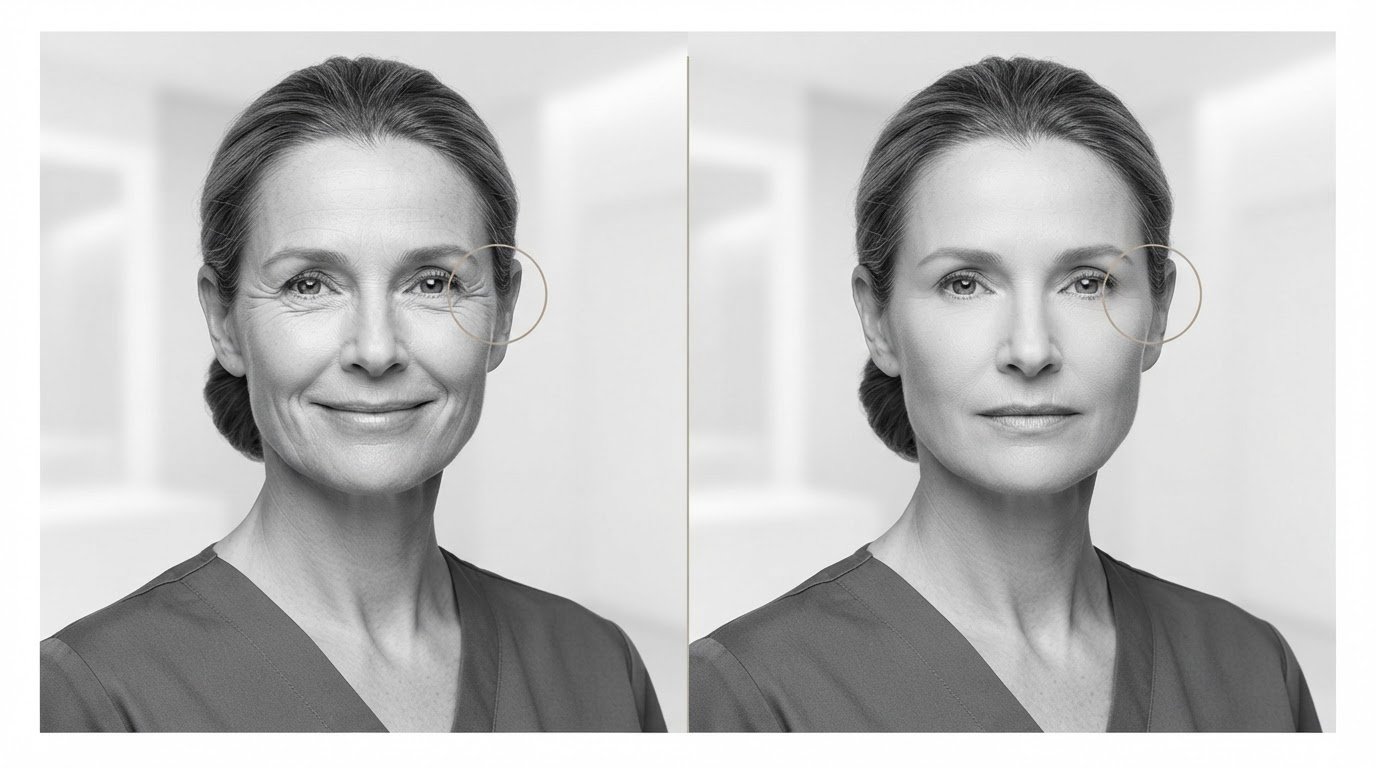
Could an “after” photo show a change in lighting or expression rather than the effect you’re hoping for? That’s a reasonable question when reviewing botox for crow’s feet before and after examples. Fine lines around the eyes can look different when you smile, when your face is at rest, or when a photo is taken from another angle. A striking comparison is not automatically a reliable prediction of your own result.
Before-and-after photos can be a useful starting point, but they can’t show exactly how your face will respond or whether a particular change will feel natural to you. This guide explains what to look for, how to compare images fairly, and what photos can’t tell you. It also covers ways to set realistic expectations and topics to discuss with a plastic surgeon before choosing Botox for crow’s feet. Keep your own features and preferences at the center of the conversation.
Key Takeaways
- Crow’s feet are lines at the outer corners of the eyes. Treatment photos show examples, not guaranteed outcomes.
- When reviewing botox for crow’s feet before and after photos, compare the treatment area, facial expression, image conditions, and caption details.
- Focus on visible changes around the outer eyes. A photo can’t establish how your face will respond or what plan would suit you.
- Describe the changes you’re considering and what a natural-looking result means to you during an individualized consultation.
- Dr. Leonard Grossman is a board-certified plastic surgeon. His documented education and training provide context for a personal discussion about Botox Cosmetic.
Botox for Crow’s Feet Before and After: What the Photos Can Show
What can a before-and-after photo really tell you about Botox for crow’s feet? It shows how the outer-eye area appears in two captured moments, but it can’t guarantee that your result will look the same. Crow’s feet are lines at the outer corners of the eyes. Their visibility can change with facial expression and photo conditions, so a useful comparison needs more than two pictures placed side by side.
A photo is a visual example of a possible outcome under particular conditions. An individualized prediction would take your own features and goals into account. A gallery image can help you identify the kind of change shown, but it can’t establish what treatment plan would suit you or forecast your personal response.
What to notice around the outer corners of the eyes
Focus on the area the comparison is meant to show: the lines extending from the outer corners of the eyes. Notice whether they appear more or less visible, rather than assuming they have disappeared. Results and facial features vary, and a photograph captures one moment, not every expression or setting.
Expression matters. Lines may look more pronounced in a broad smile than in a relaxed face. Camera position, lighting, and framing also affect how clearly fine lines show. If one image is a close-up and the other is taken from farther away, or one is brightly lit while the other is shadowed, the difference may reflect the photos as well as the treatment.
Why captions and image context matter
Captions help explain what you’re viewing. Look for the treatment area, whether the images are presented as a before-and-after sequence, and how much time elapsed between them, if those details are provided. Without context, it’s difficult to know whether the images are comparable or what they’re meant to demonstrate.
- Treatment area: Check that the example focuses on the outer-eye area, not another part of the face.
- Expression: Notice whether the person is smiling, squinting, or relaxed in both images.
- Image conditions: Compare camera position, lighting, distance, and framing.
- Caption context: See whether the images are identified as a patient example, a general illustration, or promotional material.
A documented patient example presents a specific person’s images as a record of their experience. A general illustration or promotional image may serve a different purpose, so don’t treat it as an individual treatment record unless the caption says so. Even with clear labels and closely matched photos, one person’s comparison is an example, not a template.
Use botox for crow’s feet before and after photos to form focused questions about visible changes, not to set a fixed expectation. The closer the images match in expression and presentation, the easier they are to interpret. Your own goals and treatment discussion are personal.
How Botox for Crow’s Feet Changes the Appearance of Expression Lines
For crow’s feet, the visible goal of Botox is generally a softer appearance of lines at the outer corners of the eyes, not necessarily their complete removal. When comparing photos, look at whether those lines seem less noticeable in the after image, while recognizing that natural facial movement and some visible lines may remain. Don’t use a photo of the eye area to draw conclusions about changes to the forehead, frown lines, or other facial regions.
Botox Cosmetic is one treatment option discussed for crow’s feet. For a broader overview of crow’s feet and treatment approaches, see Mount Sinai’s information on crow’s feet treatment. Interpret images in the context provided: they illustrate an example, not a promised result or a complete account of someone’s treatment.
Dynamic expression lines versus a still photograph
A smiling or squinting face can make lines around the eyes appear more pronounced than a relaxed expression. A still photo freezes one expression, so it can’t show how the area looks through a full range of facial movement. If both images show a similar expression, compare those moments first. That provides a more useful visual reference than contrasting a smile with a relaxed face.
When the expressions don’t match, interpret the difference cautiously. A change in expression alone can alter the visibility of lines, independently of treatment. The image can still help you understand what that example looks like, but it won’t establish why your own lines appear or what approach may suit you.
Why results can look different from person to person
Facial features and treatment experiences differ, so one person’s images can’t predict another person’s outcome. The distinction is important: before-and-after photos can illustrate an example, but they can’t forecast your individual result. Even thoughtfully matched photos show one person under particular conditions, not a template for everyone.
As you review botox for crow’s feet before and after examples, separate what you can observe from what you might be assuming. You may see that the outer-eye lines look softer in a particular image. You can’t use that image alone to determine whether your expression, goals, or treatment plan would be similar. The images are illustrative, not a promise.
Bring specific questions to an individualized discussion. You might describe the change you’d like to explore, such as a softer appearance around the outer eyes, and explain what a natural look means to you. You can read more about a personal Botox discussion with Dr. Grossman as part of considering your goals and expectations.
How to Compare Crow’s Feet Botox Before-and-After Photos Fairly
A gallery is easier to interpret when you apply the same checks to each comparison rather than judging unrelated images side by side. Start with the area shown, then consider expression, photo conditions, and caption context. This four-step approach helps you describe what you can actually see without assuming treatment details or results that the photos don’t establish.
- Check the treatment area. Confirm that the example focuses on the outer corners of the eyes. A gallery may include several facial areas or treatments involving different neuromodulators. Don’t use changes elsewhere in the face to judge what a crow’s feet comparison shows.
- Match the expression. Look for a similar expression in both images, such as smiling in each or appearing relaxed in each. If one shows a broad smile and the other a neutral face, the difference in line visibility may partly reflect the expression.
- Compare image conditions. Check for a consistent camera angle, distance, crop, and lighting. A close-up under bright, direct light may show details differently from a more distant image in softer light. Makeup, image quality, and retouching can also affect the impression, so consider whether the photographs appear comparable.
- Read the caption context. Look for details about the treatment area, the image sequence, and the timing of any follow-up photo. Age labels or elapsed time can add context when supplied, but don’t assume those details from appearance or infer treatment specifics that the caption doesn’t state.
Check the expression, angle, and lighting
Expression changes what the camera captures. For example, a person smiling in one photo may show more visible lines at the outer eyes than in a second photo with a relaxed expression. Compare like with like wherever possible, including the camera position and how tightly each image is framed. If these conditions differ, note the difference rather than treating the pictures as a direct measure of change.
Read the caption before interpreting the result
A caption gives the images a frame of reference, but it may not answer every question. If it identifies a crow’s feet treatment and states when the follow-up image was taken, you can understand the example more clearly. If it leaves out the product, treatment details, or timing, don’t fill those gaps with guesses. A clear caption helps explain what you’re looking at; it can’t predict how another person will respond.
For botox for crow’s feet before and after comparisons, prioritize images that are similar in treatment area, expression, and presentation. If a gallery mixes unrelated areas or photo conditions, avoid ranking the images against one another. Treat each example as a discussion aid. It can help you describe the visible change you’d like to talk about, but it isn’t evidence that your outcome will be identical.

What to Consider Before Choosing Botox for Crow’s Feet
Before deciding whether Botox for crow’s feet fits your goals, identify the specific change you want to discuss. You might hope for a softer appearance at the outer corners of the eyes while still feeling that your expression looks like you. Share that preference, while keeping in mind that a photo can’t establish an individual treatment plan or guarantee a natural-looking result. Planning calls for a conversation about your goals and relevant health information.
Questions to bring to a treatment discussion
Choose a photo that captures the kind of change you’re considering, then use it to explain what you notice. Ask how the example relates to your goals, what factors shape an individualized plan, and what appearance you might realistically discuss. Share relevant medical history directly with the treating clinician, including information that could affect the treatment conversation.
- Visual goal: Which lines or areas around the outer eyes are you hoping to address?
- Natural expression: What does a natural-looking result mean to you, and what changes would feel unlike you?
- Individual planning: What factors will inform the plan and the expected appearance in your case?
- Health and safety: What medical history or other relevant information should the clinician know, and what risks should you understand?
Botox treatment isn’t risk-free. Product information identifies temporary redness, swelling, or bruising at the injection site as possible side effects, and warns of a rare risk of toxin effects spreading beyond the injection site. Serious symptoms can include muscle weakness, difficulty swallowing, or difficulty breathing. Discuss potential risks and what to do if concerning symptoms occur with the treating clinician.
When before-and-after images are not enough
Images show appearance, but they can’t reveal every treatment detail, explain all the conditions around a photograph, or predict your individual response. Use them as visual inspiration and to clarify questions, not as a substitute for professional assessment or informed decision-making. When considering a surgeon’s qualifications, documented credentials and training can also inform your treatment discussion.
Galleries have both benefits and limits as part of a decision process. They can help you identify a visual preference and make your questions more specific. But comparisons may leave out context, and even a well-captioned example can’t promise that your outcome will match. Bring your goals, concerns, and relevant medical history into a personal discussion.
If you’re considering Botox Cosmetic for crow’s feet, learn more about discussing your Botox goals with Dr. Leonard Grossman, a board-certified plastic surgeon. An individualized conversation can help you consider whether your preferred appearance and expectations align with a treatment plan.
Botox for Crow’s Feet with Dr. Leonard Grossman: From Examples to a Personal Discussion
After reviewing photos, connect what caught your attention with what you want to discuss for yourself. Dr. Leonard Grossman provides Botox Cosmetic as a non-surgical aesthetic service within his cosmetic practice. A personal consultation can move the conversation beyond a gallery example and toward your own goals, questions, and expectations, without treating another person’s images as a forecast.
Dr. Grossman’s documented background
Dr. Grossman is a board-certified plastic surgeon. He earned his medical degree from New York Medical College in 1985, and his documented training includes a plastic surgery residency and fellowships. These credentials provide relevant context as you consider an aesthetic treatment discussion. They don’t promise a particular outcome, and no photograph can replace a conversation about your individual aims.
Taking the next step with realistic expectations
Bring an example you like and explain what you notice about the outer-eye area. Be specific about the appearance you hope to discuss, such as a softer look while retaining an expression that feels natural to you. Dr. Grossman can discuss your goals and treatment in an individualized consultation. The images remain examples, not a guarantee that your result will match.
To make the discussion useful, consider the questions you want answered:
- What visible change am I hoping to explore around the outer corners of my eyes?
- What would a natural-looking appearance mean to me?
- What should I understand about the treatment and possible results before deciding?
- What personal or medical information should I share as part of the discussion?
These questions can help you describe your priorities without needing to interpret every detail in a gallery. If two examples appeal to you for different reasons, explain what you like about each. One may show a change that looks subtle to you, while another may help you describe the expression you want to maintain. The conversation can then focus on those preferences rather than copying a specific photograph.
Remember, botox for crow’s feet before and after images provide visual context, not an individualized prediction. Your preferences, questions, and relevant history belong in the discussion alongside any example you bring. Taking time to consider those points can help you approach a decision with clearer expectations.
To discuss Botox Cosmetic for crow’s feet and your personal goals, request a consultation with Dr. Grossman.
Make Your Next Step a Personal One
Before-and-after photos can help you name what you’re drawn to, but your priorities are what make the next conversation useful. Consider what “natural” means to you. You may want a softer look around the eyes while keeping the expressions that feel like your own. You don’t need to arrive with a perfect answer. A clear question or example is a useful place to begin.
Use botox for crow’s feet before and after images as a prompt for discussion, not as a standard your face must match. In a consultation, you can talk through the appearance you hope to achieve, your questions, and whether Botox Cosmetic aligns with your preferences. Dr. Leonard Grossman is a board-certified plastic surgeon with documented medical education and surgical training, providing relevant context for that individualized conversation.
For a personal discussion about your goals, request a consultation with Dr. Grossman.
Frequently Asked Questions
Can Botox for crow’s feet make the lines disappear completely?
Before-and-after photos can’t promise complete disappearance. A picture records one person’s appearance under particular conditions, and visible changes may differ from person to person. If you’re hoping for a specific degree of softening, describe that goal during a consultation rather than using a gallery image as a standard. The treating clinician can discuss what may be appropriate for your individual situation.
How soon after Botox are crow’s feet before-and-after results usually photographed?
Use the follow-up interval stated in the caption, if one is provided. A photograph alone can’t tell you how long after treatment it was taken, and examples may show different intervals. Don’t infer a universal timing from a gallery. If you’re planning treatment and want to know when to assess changes, discuss timing with the treating clinician in light of your circumstances.
How long do Botox results for crow’s feet last?
A before-and-after pair doesn’t show how long the appearance in the second image lasted. One follow-up photograph captures a particular point in time, not the full course of a result. Longevity can vary, so don’t use another person’s timeline as your own estimate. Discuss expected duration and possible follow-up with the clinician as part of deciding whether treatment fits your goals.
What should I look for in crow’s feet Botox before-and-after pictures?
Check that both pictures focus on the same outer-eye area, then note whether the person’s expression and photo presentation are similar. Captions may clarify the treatment context and follow-up interval. For botox for crow’s feet before and after pictures, these details help you interpret the example, not predict your result. If information is missing, leave it unknown rather than guessing what happened between images.
Can before-and-after photos show whether Botox will look natural?
Photos can show examples of different visible appearances, but they can’t guarantee how a result will look on you or whether it will match your idea of natural. Bring an image you like and explain what appeals to you, such as the degree of visible softening or the expression you want to retain. A personal discussion can help clarify those preferences without treating the photo as a treatment blueprint.
Are online Botox before-and-after photos always comparable?
No. Before drawing conclusions, consider whether the images differ in editing, resolution, makeup, or the time between photographs, as well as in expression and lighting. A polished gallery image may not provide enough information to judge these details. When comparing examples online, focus on pairs with clear captions and similar presentation. Treat any remaining uncertainty as a reason to ask questions, not to assume a specific outcome.
What happens at a consultation about Botox for crow’s feet?
A consultation is an opportunity to explain what you’d like to address and ask questions about treatment. You can bring a photo, point out the details you want to discuss, and share relevant medical history directly with the treating clinician. Use the conversation to clarify expectations and raise concerns before making a decision. Another person’s images can start the discussion, but they don’t determine your plan.