Skip to content
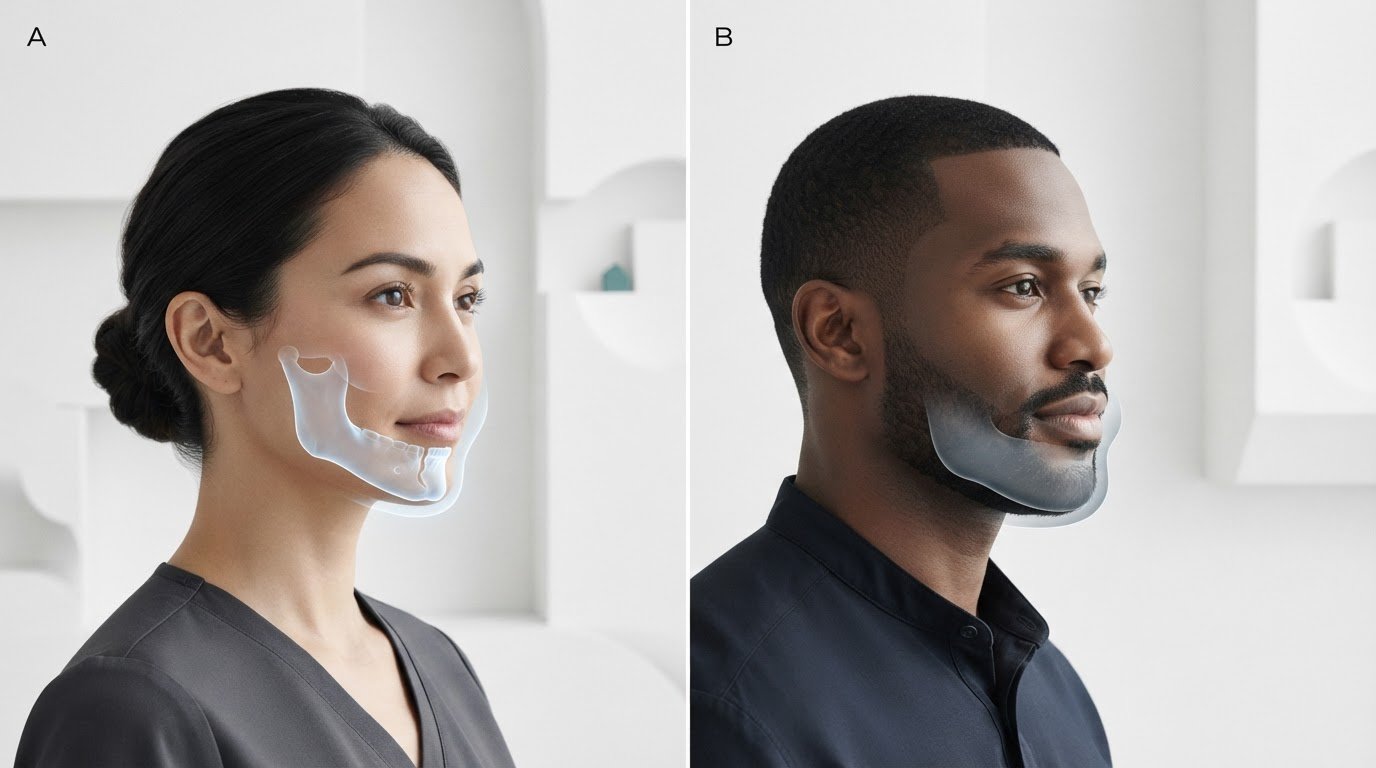
The more involved chin procedure isn’t automatically the better fit. In the comparison of sliding genioplasty vs chin implant, the key question is what kind of change your chin needs: an implant adds volume over the existing bone, while sliding genioplasty repositions the chin bone itself. That difference can shape the surgical approach, recovery considerations, and questions to discuss if your goals change later.
If you’re unsure which approach matches your features, you’re not alone. Questions about permanence, healing, and possible revision are reasonable, but a simple pros-and-cons list can’t account for every person’s facial structure or priorities. This guide explains each procedure in plain language and compares practical considerations without treating either as the right choice for everyone. You’ll also find questions to bring to a chin augmentation consultation, including how to describe your goals and what to share about your medical history, medications, and previous surgeries. With a clearer understanding of the options, you can have a more focused conversation about the change you’re considering.
Key Takeaways
- In the sliding genioplasty vs chin implant comparison, focus first on the type of change: an implant adds volume, while genioplasty repositions part of the chin bone.
- Your facial anatomy and the change you want matter more than a one-size-fits-all rule when weighing the options.
- Compare each approach’s goals, limitations, and recovery considerations to understand the practical trade-offs.
- Before a consultation, describe the change you hope to see and prepare questions about your goals, medical history, medications, and previous surgeries.
- Dr. Leonard Grossman offers chin augmentation, where you can discuss your priorities and the options relevant to your assessment.
Sliding genioplasty vs. chin implant: what is the essential difference?
Both procedures can change chin projection, but they work with different structures. A sliding genioplasty repositions part of your own lower-jaw bone. A chin implant adds a shaped implant over the chin area to increase projection. This distinction helps clarify what kind of change each procedure is designed to make.
In brief, sliding genioplasty moves bone; chin implant surgery adds volume over bone. This is a useful starting point, not a way to choose surgery based on appearance alone. Your chin shape, facial proportions, and goals all inform an individualized assessment. The general overview of Chin augmentation also describes these two broad approaches.
What happens during sliding genioplasty?
In a sliding genioplasty, the surgeon makes a controlled cut in the front portion of the lower jaw, creating a chin segment that can be moved. The segment is repositioned and secured so it can heal in its new position. The surgical plan depends on the individual. The aim is to alter the position of the chin bone rather than simply add material in front of it.
What happens during chin implant surgery?
With chin implant surgery, a shaped implant is placed over the front of the chin bone to add projection. The implant changes the chin’s contour by adding volume rather than moving the underlying bone. The choice of implant and the surgical details depend on professional assessment of your anatomy and goals, so they can differ from person to person.
Imagine a chin that appears less prominent in profile. An implant adds structure at the front of the chin, while genioplasty changes the position of a segment of the jaw itself. This example explains the mechanisms, but it can’t determine which approach suits a particular person. Similar-looking profiles may reflect different anatomy and priorities.
That’s why sliding genioplasty vs chin implant is best treated as a comparison to explore, not a quiz with one universal answer. The procedures differ in what they change, and an individualized assessment can help connect those differences with your facial structure and desired result. During a chin augmentation consultation, describe what you’d like to change in your own words. You don’t need to choose a procedure beforehand; understanding the distinction gives you a clearer foundation for discussing the options.
How the two chin augmentation procedures differ in approach
To compare the procedures clearly, look beyond their shared goal of changing chin projection. The central difference is which structure is altered: an implant changes the outer contour by adding volume, while genioplasty changes the position of the bone that supports that contour. This distinction can help you identify what to ask during planning, but it doesn’t establish which option is right for you.
Which structures does each procedure change?
The chin bone is the front portion of the lower jaw, also called the mandible. Its central region is known anatomically as the mandibular symphysis. A chin implant sits over the front of this bony foundation and changes the outline of the chin by adding volume. In sliding genioplasty, a segment of the chin bone is repositioned, so the change comes from moving the foundation rather than adding an implant.
What are the broad procedural trade-offs?
An implant adds a separate structure to the existing bone; genioplasty changes the bone’s position. This can guide a conversation about whether your goal is primarily to add volume or reposition the chin’s underlying support. It doesn’t mean one procedure is inherently more suitable, more effective, or simpler for everyone.
A brief comparison can’t show how a procedure relates to your individual facial proportions and priorities. An assessment can help connect your goals with your anatomy and explain the proposed plan, potential risks, recovery expectations, and alternatives. Those details are personal, so discuss them directly rather than drawing conclusions from a general online comparison.
As you weigh sliding genioplasty vs chin implant, describe your goal without naming a procedure. You might want more forward projection, or you might be concerned with the position or overall shape of your chin. Being specific about the change you hope to see gives the consultation a practical starting point. A chin augmentation consultation with Dr. Leonard Grossman can help you discuss your goals and the approach relevant to your individual assessment.
Chin implant vs. sliding genioplasty: compare goals, limitations, and recovery
Once you understand how each procedure works, consider what you want to change and what each approach may address. An online comparison can explain general differences, but it can’t account for your facial proportions, surgical history, or personal priorities. A procedure that sounds less involved isn’t automatically the better choice; start the discussion with your goals and an individualized assessment.
What outcomes can each approach aim to change?
Both procedures may be discussed when someone wants to alter chin projection or how the chin relates to the rest of the profile. An implant adds volume at the front of the chin, while genioplasty changes the position of a segment of chin bone. These descriptions explain what each approach changes, not what a particular person will look like afterward.
Choosing between these procedures requires an assessment of the individual’s facial structure and goals. A surgeon can consider the chin in relation to surrounding features and clarify which concerns a proposed plan may address. Don’t assume that a particular chin shape automatically points to one procedure, or that either option will address concerns beyond the area it changes.
- Goal to discuss: If you’re seeking more forward projection, explain what you notice from the front and in profile.
- Area to clarify: Ask whether the proposed change would primarily affect the chin’s outer contour or the position of its bony foundation.
- Limits to understand: Ask what the procedure is not expected to change and how the plan relates to your facial proportions.
How should you think about recovery and long-term considerations?
Recovery depends on the procedure and surgical plan, and individual healing experiences vary. Since an implant procedure and bone repositioning involve different approaches, their recovery instructions and expectations may differ. Rather than relying on a general timeline, ask what healing may involve for you, what follow-up is planned, and whether you may need to adjust your usual activities. The surgeon can explain the relevant risks and limitations of the procedure being considered.
Long-term questions deserve the same care. Ask how the approach is intended to create the change you want, what factors could affect the result over time, and what options might be considered if your needs or preferences change. Words such as “permanent,” “reversible,” or “simple” aren’t complete summaries. Ask what they mean in the context of the procedure and your circumstances.
For a grounded sliding genioplasty vs chin implant conversation, bring a clear description of your priorities rather than arriving committed to a technique. Useful questions include: “Which part of my chin would this plan change?”, “What should I expect during recovery?”, and “What are the meaningful limitations and risks for me?” The answers can help you weigh the trade-offs with your surgeon and decide whether the proposed approach aligns with your goals.

How to prepare for a chin augmentation comparison and consultation
A useful consultation starts with your goals, not a procedure name. You don’t need to decide between an implant and genioplasty before meeting with a surgeon. Describe the change you hope to see, then use the conversation to understand how each approach relates to your anatomy, priorities, and recovery considerations.
- Clarify what you’d like to change. Note what feels out of balance to you and whether your main concern is projection, contour, or how your chin relates to your profile. These are starting points for discussion, not a diagnosis or a decision about surgery.
- Write down your questions. It’s easy to forget concerns during an appointment. Bring a short list covering the proposed approach, possible limitations, recovery expectations, risks, and follow-up.
- Discuss options with an open mind. Ask the surgeon to explain which structures a proposed plan would change and why it may relate to your goals. You can compare the reasoning without committing to a specific procedure.
Questions to ask when comparing approaches
Keep your questions specific to the plan being discussed. Ask what anatomical change each option is intended to make, what it may not address, and what risks are relevant to you. Clarify what recovery may involve, how follow-up is handled, and how the surgeon describes expected results while recognizing that individual outcomes can’t be guaranteed.
You may also want to ask how the recommendation accounts for your facial structure and priorities, and whether there are alternatives worth considering. If you’re evaluating a surgeon’s approach and communication, a guide to choosing a qualified plastic surgeon may help you identify what matters to you. Look for clear explanations and a plan you understand.
How to make your goals clearer
Try describing your concern in everyday language: “I’d like to understand how my chin affects my profile,” or “I’m hoping for a change that feels balanced with my other features.” If you’re unsure how to explain it, say so. The surgeon can ask follow-up questions and discuss what may be realistic for your individual anatomy.
Before-and-after images can show a range of outcomes, but they reflect other people’s features, plans, and circumstances. Use them, if at all, to identify what you like or don’t like, not as a promise of what your result will look like. Bring your concerns into the conversation and ask about the trade-offs.
Understanding sliding genioplasty vs chin implant can help you take part in the discussion, but it doesn’t replace an individualized assessment. Dr. Leonard Grossman offers chin augmentation as a way to discuss chin enhancement in light of your goals. Discuss your chin augmentation goals and the approach that may fit your priorities.
Discuss chin augmentation options with Dr. Leonard Grossman
Understanding the basic comparison can help you frame your questions, but it can’t tell you which approach is appropriate for your features. A chin implant adds volume over the chin, while sliding genioplasty repositions a segment of chin bone. This is useful context for a consultation, not a personal treatment plan or a guarantee of a particular result.
What to expect from an individualized discussion
Dr. Leonard Grossman offers chin augmentation to discuss chin enhancement in the context of your goals and facial features. You can describe the changes you hope to see and learn about the proposed approach. The conversation can also cover relevant benefits, limitations, risks, and recovery expectations, which vary with the plan and the individual.
You don’t need to arrive having selected a procedure. Explain what you notice and what matters most to you, such as how your chin looks in profile or relates to your other features. Dr. Grossman can assess your facial structure, discuss the options relevant to that assessment, and explain how a particular approach may or may not align with your priorities.
Take the next step with clear expectations
A consultation can help you understand the proposed plan, its possible benefits and limitations, and the questions that remain important to you. Ask how the approach is intended to address your goals, what risks apply in your circumstances, and what recovery may involve. You deserve a clear explanation without a promise of an exact outcome.
Facial balance is personal, and the chin is only one part of the overall profile. If you’re also thinking about how the nose and chin relate to each other, that can be part of a broader conversation about rhinoplasty and facial harmony. Share the features you’re considering and the changes you hope to explore, without assuming that one procedure or combination is right for everyone.
The sliding genioplasty vs chin implant comparison is a starting point for a thoughtful, individualized discussion. Dr. Grossman offers chin augmentation, and you can bring your questions and goals to that conversation without deciding on a specific approach in advance. Discuss chin augmentation with Dr. Grossman.
Make your next step a thoughtful conversation
Choosing whether to pursue chin enhancement is a personal decision, and you don’t need to settle every question before discussing it with a surgeon. Use what you’ve learned about sliding genioplasty vs chin implant to identify what matters most: the change you hope to see, the concerns you want addressed, and the information you need to consider your options.
Dr. Leonard Grossman is a board-certified plastic surgeon who offers chin augmentation. A consultation gives you space to discuss your goals and understand the approach, limitations, risks, and recovery considerations relevant to your situation. It’s a chance to ask questions, not a commitment to a particular procedure or result.
If you’re ready to explore your goals with care and clear expectations, discuss chin augmentation with Dr. Grossman. A well-informed next step can help you move forward with greater confidence.
Frequently Asked Questions
Is sliding genioplasty better than a chin implant?
No, one isn’t automatically better for everyone. The better fit depends on your facial structure, the change you want, and the benefits and limitations of each plan. Ask the surgeon to explain how the proposed approach addresses your specific concern and what it may not change. The phrase sliding genioplasty vs chin implant frames a comparison, but an online guide can’t determine your individual suitability.
Can a chin implant be removed or changed later?
A chin implant may be removed or replaced, but that involves another surgical decision, not a guaranteed or simple adjustment. The surgeon needs to assess your individual circumstances and explain the potential benefits, risks, and recovery involved. If you’re considering an implant, ask what circumstances might lead someone to discuss removal or replacement and how those possibilities relate to your goals.
How long does recovery take after sliding genioplasty or a chin implant?
Recovery varies by procedure, surgical plan, and individual. Because an implant and bone repositioning involve different approaches, recovery expectations may also differ. Ask your surgeon what the recovery plan involves for the procedure being considered, how follow-up is handled, and when you may be able to return to your usual activities. General estimates can’t replace instructions based on your circumstances.
What happens if a chin implant does not achieve the desired appearance?
Tell your surgeon what concerns you so they can assess your result and discuss appropriate next steps. Depending on your situation, options may include continued monitoring or discussing a change to the implant, but no particular solution can be assumed in advance. Ask what factors would guide that decision, what risks another procedure may involve, and how timing would be considered. Don’t make changes without professional guidance.
Can sliding genioplasty and a chin implant be combined?
Whether both approaches belong in one treatment plan depends on individual anatomy, goals, and surgical assessment. They address the chin in different ways, so using both shouldn’t be assumed to be necessary or appropriate. If you’re wondering about a combination, explain the distinct changes you hope to achieve and ask the surgeon to discuss the rationale, potential limitations, risks, and recovery implications of the proposed plan.
Does a chin implant change the jawbone?
A chin implant doesn’t reposition the jawbone as sliding genioplasty does. It adds volume to the chin’s outer contour rather than surgically moving a segment of bone. If your concern involves the jaw’s position or how your bite fits together, describe that during an assessment. The surgeon can explain what the proposed chin procedure is intended to address and what falls outside its scope.