Skip to content


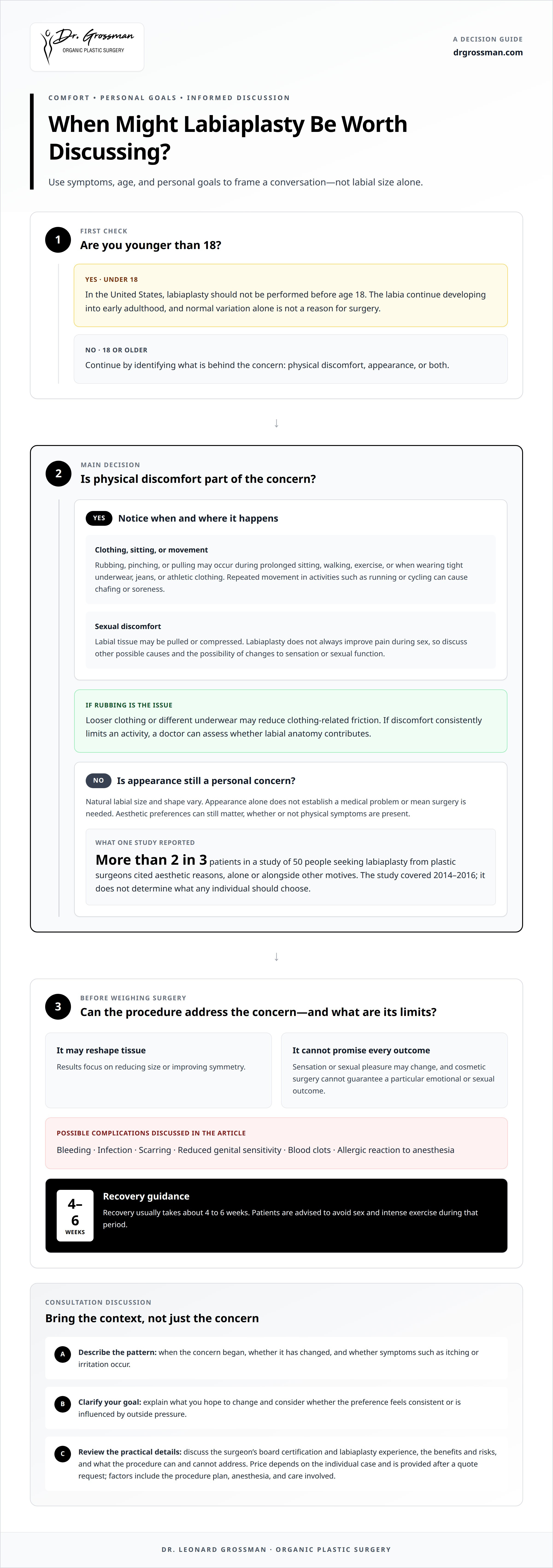
Labiaplasty may be considered for physical discomfort as well as personal appearance concerns. Reasons for getting a labiaplasty can include irritation or pinching during exercise, discomfort in tight clothing, concerns about appearance, or changes in confidence. The procedure reshapes the labia, most often the inner folds around the vaginal opening.
It’s understandable to want clear information before weighing a personal decision like this. Labia naturally vary in size and shape, and variation alone doesn’t mean surgery is needed. This article explains how physical symptoms, concerns dating back to puberty, and aesthetic or emotional motivations may factor into the decision. It also covers what labiaplasty can and can’t address, helping you consider whether a consultation may clarify your options.
Key Takeaways
- Distinguish symptoms that affect daily comfort from natural variation in labial size and shape.
- Consider how longstanding concerns and changes over time may influence your decision.
- Understand how personal and cosmetic motivations can matter alongside physical symptoms.
- Learn what a labiaplasty consultation with Dr. Leonard Grossman can help you explore.
Physical discomfort and irritation
Physical discomfort can occur when enlarged or asymmetrical labia rub, pinch, or pull during movement. These symptoms may be among the reasons for getting a labiaplasty, particularly when they interfere with daily activities.
Discomfort During Daily Activities
Labial tissue may press against clothing or become irritated during prolonged sitting. Tight underwear or jeans, for example, can cause rubbing that makes walking, sitting at a desk, or changing clothes uncomfortable. Persistent discomfort can affect everyday choices, not just exercise. Labia vary naturally, so size alone doesn’t establish a need for surgery.
Chafing During Exercise and Sports
Exercise-related chafing can happen when movement repeatedly rubs labial tissue against skin or clothing. Running, cycling, and other activities involving repeated leg movement may cause pinching or soreness, while tight athletic clothing can add friction. If discomfort consistently limits an activity, a doctor can assess whether labial anatomy contributes. Labiaplasty reshapes tissue, but the decision depends on symptoms and goals.
Discomfort During Sex
Some people experience pain during sex when labial tissue is pulled or compressed. Labiaplasty may be considered if enlarged labia are believed to contribute, but surgery doesn’t always improve pain during sex. A doctor can discuss other possible causes and whether reshaping addresses the concern. Because surgery in this sensitive area can affect sensation, sexual function should be part of the discussion.
Alternatives depend on what causes the discomfort. For clothing-related rubbing, looser clothing or different underwear may reduce friction. Appearance concerns without physical symptoms don’t automatically require surgery.
In the United States, discuss the surgeon’s board certification, experience performing labiaplasty, and the procedure’s benefits and risks. The price depends on the individual case and is provided after a quote request. Factors include the procedure plan, anesthesia, and care involved.
Possible complications include bleeding, infection, scarring, reduced genital sensitivity, blood clots, or an allergic reaction to anesthesia. Recovery usually takes about 4 to 6 weeks; patients are advised to avoid sex and intense exercise during that period. Results focus on reducing size or improving symmetry, while sensation or sexual pleasure may change.
Concerns present since puberty
Some people remember noticing their labia minora, the inner folds around the vaginal opening, during puberty. Labia naturally vary in size and shape, so appearance alone doesn’t indicate a medical problem. A difference that feels noticeable to one person may be ordinary anatomy. Understanding this can help distinguish a personal aesthetic concern from symptoms affecting daily comfort.
Hormonal changes can alter the genitals and labia, and development continues into early adulthood. Appearance may therefore change over time rather than remain as it was during puberty. If a concern has lasted for years, describing when it began and whether it has changed can help a doctor understand the context. Symptoms such as itching or irritation provide useful information beyond appearance.
Hygiene and odor concerns may also affect how someone feels about their vaginal area. Labial folds can be associated with trapped moisture, and some people report difficulty wiping, itching, or persistent odor. These concerns deserve thoughtful discussion, but they don’t establish that labial size is the cause. A doctor can consider the symptoms and anatomy before discussing surgery.
In the United States, labiaplasty should not be performed on girls younger than 18 because the labia continue developing into early adulthood. For teens, development and the reason for the concern matter; surgery is not a response to normal variation alone. At 18 or older, someone can discuss the procedure with a qualified doctor, including their symptoms, expectations, and the risks of surgery.
Appearance can remain a meaningful concern even without physical symptoms. Some adults seek an aesthetic change because they feel self-conscious in clothing or intimate situations; others are comfortable with their natural variation. Neither response makes one appearance more correct. A useful discussion distinguishes a personal, consistent goal from pressure to match an idealized image, then considers what surgery can change.
Emotional and cosmetic motivations
Some people consider labiaplasty because they want a different genital appearance, even without discomfort. In a study of 50 patients who sought labiaplasty from plastic surgeons between 2014 and 2016, more than two of every three cited aesthetic reasons, alone or alongside other motives. That finding shows cosmetic preferences can be part of the decision, but it doesn’t define what any individual should choose.
Personal goals may include feeling more at ease in a swimsuit, yoga pants, or intimate situations. Others may want greater symmetry or a less prominent appearance in clothing. These preferences deserve respectful discussion, not judgment. The key is to distinguish a change someone genuinely wants from a choice driven by pressure from a partner, social media, or an idealized image of genital anatomy.
A consultation with a certified plastic surgeon provides an opportunity to describe your goals and understand what surgery involves. Explain what you hope to change, such as asymmetry, and whether that preference has remained consistent. Plastic surgeons can discuss the procedure’s limits, risks, and likely changes to the genital area. Clear expectations matter because cosmetic surgery cannot guarantee a particular emotional or sexual outcome.
Consider how you might feel if surgery changed your appearance but didn’t resolve broader self-consciousness. This can help distinguish a focused aesthetic preference from distress related to relationships or body image. Surgery in the genital area can disrupt nerve and blood-vessel connections, potentially affecting future sexual pleasure. Weighing this risk alongside your reasons supports a more informed choice than focusing on appearance alone.
Medical and physical reasons for labiaplasty
Medical considerations extend beyond appearance when labial tissue interferes with everyday body functions. Enlarged labia minora can affect the urine stream and make urination difficult, while friction or trapped moisture may contribute to irritation. These symptoms need assessment because labia vary widely in size, and different shapes can be normal without causing problems.
Some people report recurring urinary tract infections alongside moisture, sweat, urine, or vaginal discharge caught in labial folds. This association doesn’t establish that the labia cause every infection. A clinician can consider symptoms and anatomy together rather than assuming cosmetic surgery will prevent future infections. Difficulty wiping, itching, or odor can also be described during the evaluation.
Labial changes may occur after childbirth, as vaginal delivery can cause trauma to the labia. A tear or lasting tissue change may lead someone to consider reshaping, especially if it affects comfort or function. Labiaplasty usually focuses on the labia minora, though reshaping may sometimes involve the labia majora. The plan depends on the tissue involved and the concern being addressed.
Symptoms matter more than appearance alone. In a cited survey of labiaplasty patients, most experienced at least four symptoms before surgery. This doesn’t mean four symptoms are required or that surgery is appropriate whenever symptoms occur. It does illustrate why describing specific effects, such as difficulty urinating, recurring irritation, or changes after childbirth, helps frame a medical discussion.
Normal anatomy doesn’t need correction simply because the labia are prominent or asymmetrical. The useful question is whether a specific physical problem relates to the tissue and whether reshaping could address that concern. Labiaplasty is surgery, so potential benefits must be weighed against risks, including infection, scarring, or reduced sensitivity. To discuss whether labial symptoms may be addressed through labiaplasty with Dr. Leonard Grossman, consider a consultation focused on your symptoms and goals.
Dr. Leonard Grossman: Labiaplasty
Dr. Leonard Grossman offers labiaplasty for people considering changes to labial size or shape. If physical symptoms, longstanding concerns, or a personal aesthetic goal have prompted you to explore surgery, a consultation can help you discuss what you hope to address and understand the procedure’s potential benefits and risks. The conversation can also clarify whether your goals focus on comfort, appearance, or both, and what questions matter most to you before deciding.
Labiaplasty is a personal decision, not a requirement for normal anatomical variation. Taking time to weigh your reasons and expectations can help you decide whether surgery fits your needs. To discuss labiaplasty with Dr. Leonard Grossman, contact the practice.
Make Your Next Step About Your Priorities
Your reasons for getting a labiaplasty are personal. Consider what you want a professional conversation to clarify, such as how a change could affect comfort, appearance, or confidence, and what questions remain. There’s no need to reduce a complex decision to one motivation. Being clear about what matters most can make a consultation more useful.
Think about what a satisfactory outcome means to you and which concerns you want addressed before considering surgery. A thoughtful discussion can connect your goals with the procedure, its limits, and the considerations involved. The decision remains yours, guided by your priorities and the information you receive.
For a personal conversation about labiaplasty, contact Dr. Leonard Grossman. Taking an informed next step can help you move forward with greater clarity and confidence.
Frequently Asked Questions
What is labiaplasty?
Labiaplasty reduces or reshapes the labia, usually the labia minora, the inner folds around the vaginal opening. In some cases, the labia majora may also be reshaped. The procedure changes external tissue, not the vaginal canal. People consider it for physical symptoms or personal appearance goals. An assessment can clarify which areas are involved and what changes are being considered.
Will insurance cover it?
Insurance usually doesn’t cover labiaplasty performed for cosmetic reasons, though some plans may help when the procedure is medically necessary. Coverage depends on the policy and how the reason for surgery is assessed. Before making plans, review your benefits and ask your insurer what documentation it requires. A medical concern alone doesn’t establish that a particular plan will provide coverage.
Can labiaplasty help with urinary tract infections?
Labiaplasty may reduce UTI risk when infections are attributed to moisture or bacteria trapped in labial folds, but it isn’t a general treatment for UTIs. Recurring infections need medical assessment to identify their cause and appropriate care. If urinary symptoms occur alongside labial irritation or difficulty with hygiene, describe both concerns during an appointment so they can be considered together.
Does it hurt?
Some discomfort or tenderness can occur after labiaplasty, and soreness, bruising, or swelling may be part of healing. The amount and duration vary. Pain during sex before surgery is a separate concern, and labiaplasty doesn’t always resolve it. Discuss pain control, healing expectations, and existing sensitivity concerns with the surgeon before deciding, so you understand what the procedure and recovery may involve.
What causes a labium to become oversized?
There isn’t one single explanation for labial size. Labia naturally vary, and hormonal changes can alter genital tissue. Childbirth can also cause trauma or lasting changes in shape. These variations don’t automatically indicate a health problem. If a noticeable change comes with new discomfort, irritation, or other symptoms, tell a medical professional when it began and how it affects you.
What are common medical and personal reasons for getting a labiaplasty?
Common reasons for getting a labiaplasty include recurring irritation, difficulty urinating or wiping, and changes after childbirth. Some people also consider surgery to address a personal appearance preference, even without physical symptoms. Reasons differ from person to person. A useful decision begins by identifying the specific concern, how it affects daily life, and what change the person hopes surgery might bring.