Skip to content

The contour you see right after liposuction isn’t the final result. If you’re wondering what to expect during liposuction recovery, healing generally takes four to six weeks, while swelling and bruising can take longer to settle. The early changes are part of recovery, not a reliable preview of your final shape.
It’s natural to focus on the treated area and notice every change. Swelling, bruising, soreness, and fluid draining from small incisions can be part of healing. Compression garments support the area as it recovers. Your recovery pace depends on the treatment area and how your body heals.
This guide explains how compression garments fit into recovery, what to expect from swelling and bruising, and when results may become clearer. It also covers loose skin: it may firm over time, though some people may need surgery to tighten it. Knowing what changes to expect can help you give healing time and understand when to discuss concerns with your surgeon.
Key Takeaways
- Wear compression garments as directed, since they support the treated area while it heals.
- Swelling and bruising change over time, so early appearance isn’t the best measure of your final contour.
- Results emerge gradually, and your surgeon’s clearance guides when to return to exercise.
- Loose skin may firm as healing progresses; understanding what influences skin retraction can help you consider next steps.
Compression garments
Recovery varies by liposuction technique and treatment area. The amount and location treated influence garment needs, while your surgeon’s instructions shape your recovery plan.
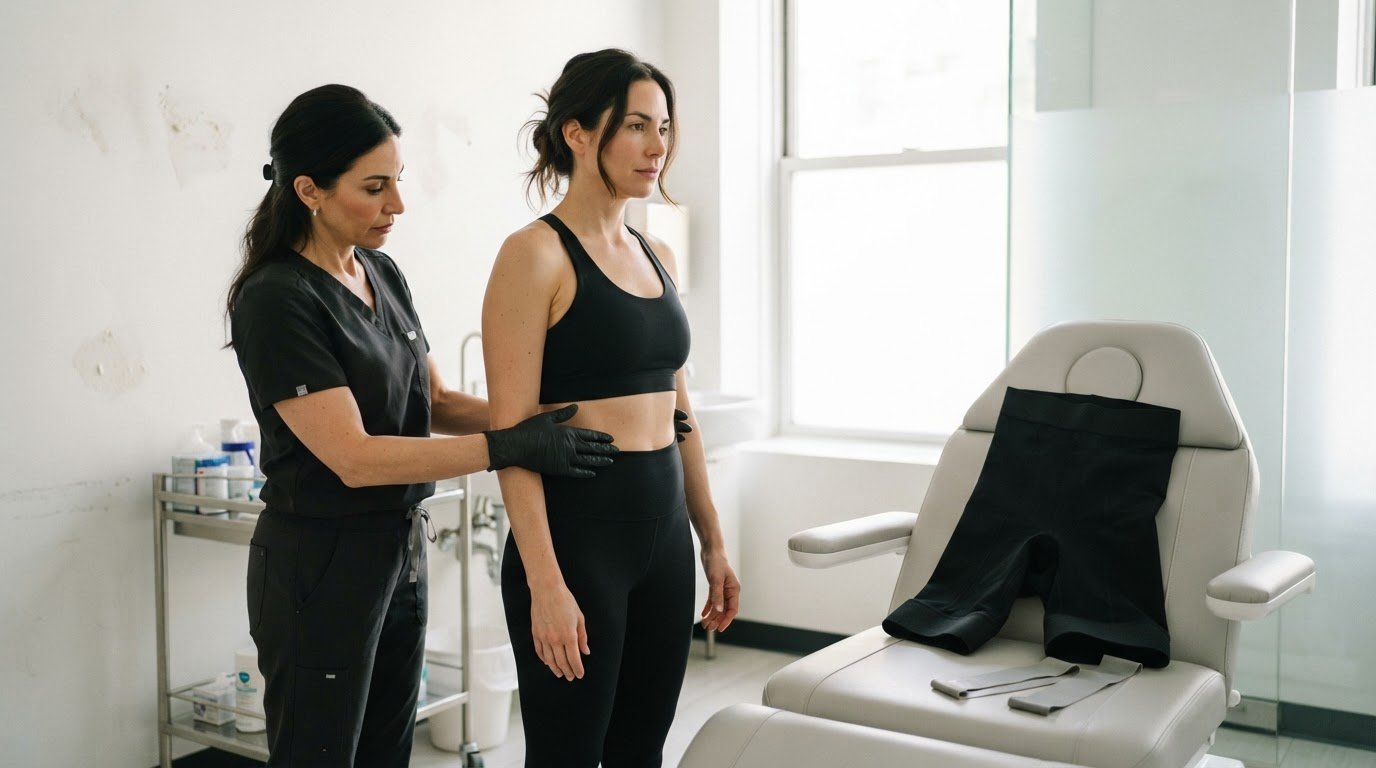
Compression garments apply gentle, even pressure over treated areas as they heal. Many patients begin with full-time wear during the first 1-2 weeks after the procedure, then continue as instructed. Garments often remain part of recovery through week four, unless the surgeon gives different instructions. Wear yours as directed to support swelling reduction and help the treated contour settle. Don’t change the schedule based only on how the area looks or feels; swelling can make early changes difficult to judge. Your garment should fit the plan for your treated area and activities.
Garments and Swelling Recovery
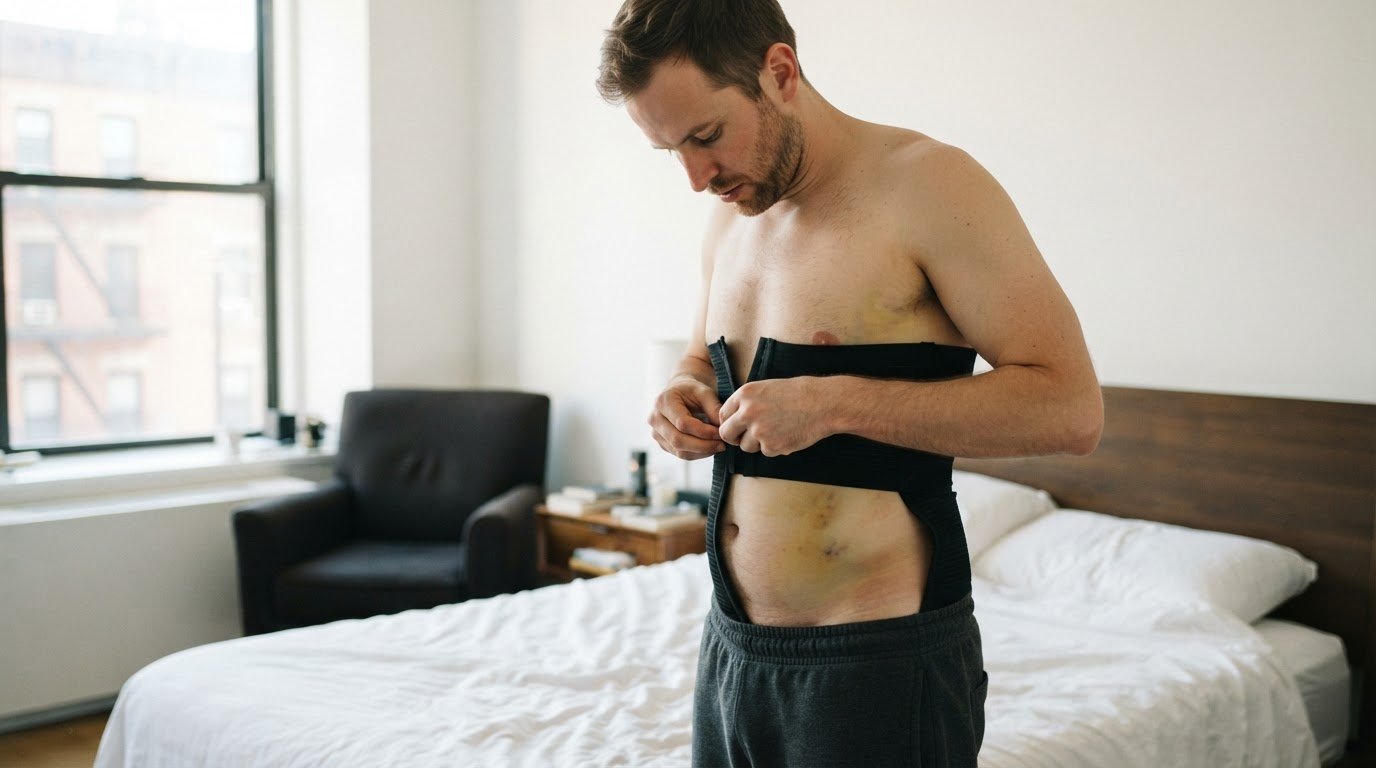
A compression garment applies steady pressure to the treated tissue, helping manage swelling and support the area’s contour during healing. Swelling can obscure changes in shape, so wearing the garment is part of recovery, not a sign that results are final. Follow your surgeon’s instructions, including how long to wear it each day. Consistent use supports recovery while tissues settle.
Support Hose and Compression Garments
Support hose are a form of compression worn on the legs, rather than a garment shaped for another treated area. After liposuction on the calves or ankles, patients may need support hose for about 6 weeks. The location matters: hose provide compression where those areas need it. Follow your surgeon’s instructions about wearing them and resuming activities, since the recommended schedule can differ from other garment plans.
Surgical drains may be placed at treatment sites to prevent fluid from collecting around incisions. Fluid may also drain from incisions for several days, changing from bloody to clear within a few days. Make sure garment edges do not disrupt incision care, and follow the instructions for managing drains. If you need to move the garment to care for the area, use the steps your surgical team provided, then put it back as directed. This helps you care for the treated area without guessing.
Swelling and bruising
Swelling, bruising, and soreness are common during early liposuction recovery. Their timing helps explain why the treated area’s appearance changes after surgery.
There is no single U.S. price for liposuction; cost depends on the treatment plan and is provided after a quote request. Insurance coverage depends on the policy and whether the procedure is considered medically necessary or cosmetic.
Bruising, Redness, and Swelling
Bruising is discoloration beneath the skin, while swelling reflects fluid and inflammation in the treated tissues. Both can make the contour look different from the expected result. Bruising and swelling may last at least 10 to 14 days, and residual swelling can persist for a few months. Increasing redness, warmth, pain, or swelling needs prompt medical attention, especially around incisions.
Immediate Swelling and Bruising
During the first few days after surgery, moderate soreness and visible swelling or bruising are expected. These effects may peak during the first week, then gradually ease. Rest and limit strenuous activities early in recovery. Watch for changes around the incisions, too: fever, pus, or worsening pain, warmth, redness, or swelling are reasons to seek immediate medical care.
Swelling and Bruising as Results Emerge
As bruising fades and swelling decreases, the treated area’s shape becomes easier to assess. Most visible swelling improves over the first 4 to 6 weeks, though mild firmness or swelling may last several months. Final results may become visible after one to three months, while the contour can continue refining for 3 to 6 months. Early appearance isn’t the endpoint.
Discomfort often improves during the week or two after surgery. Sudden chest pain, severe trouble breathing, or coughing up blood requires emergency services. Continued bleeding that soaks a bandage after 10 minutes of firm pressure also calls for immediate medical care. A changing weight can affect results as remaining fat cells grow, so recovery and long-term contour are distinct considerations.

When will I see the results of liposuction?
As swelling settles, the results become clearer, and exercise should return gradually. Liposuction recovery can take four to six weeks, while the treated contour may continue to refine beyond that period.
You may shower 24 to 48 hours after surgery if your doctor approves, then pat incisions dry. Many people with nonphysical jobs return to work within 7 to 14 days. Have someone drive you home after surgery; don’t drive while anesthesia or pain medication affects you. Resume exercise only after your surgeon clears you.
Start with short, gentle walks. Walking soon after the procedure supports circulation and offers light movement without strenuous effort. During the first few weeks, keep activity light; low-impact exercise may resume during the third or fourth week after surgery. Heavy lifting and high-impact workouts generally require clearance around 4 to 6 weeks or later.
Returning to exercise is about healing, not just comfort. Increase activity gradually, and stop if it causes more discomfort. Follow your surgeon’s clearance for each step back to workouts, especially activities that engage the treated area. You may be able to resume some daily routines after a few days of rest, but that does not mean strenuous exercise is appropriate yet.
Unless your doctor advises otherwise, eat a normal diet and drink plenty of fluids. Good nutrition supports healing, so preparing meals before surgery can make recovery easier. Avoid nicotine and alcohol because they can interfere with healing. Take prescribed antibiotics as directed and complete the course; ask your surgical team before changing any medication instructions.
Maintaining a stable weight helps preserve your contour over time. Liposuction removes some fat cells in the treated area, but remaining cells can still grow as your weight changes. Once cleared for regular exercise, combine consistent movement with balanced eating instead of relying on a short-term routine. A gradual return to activity supports recovery and helps make healthy habits sustainable.
Loose skin after liposuction
Liposuction changes the amount of fat beneath the skin, but it does not guarantee that the skin will tighten to match the new contour. Some patients notice loose skin in the treated area, particularly where skin has less elasticity. Loose skin may firm over time as tissues heal, so the early appearance may not show the eventual result.
Skin elasticity is an important factor. Age can affect firmness: people over 65 may have skin that is less firm or has lost some elasticity. The treated area and how much the skin needs to retract also shape what happens afterward. These factors help explain why two patients can have different skin responses after similar procedures.
Give healing time before judging your contour. Bruising and swelling can temporarily change how the skin sits over the treated area. As these effects settle, you can better see whether the skin is gradually firming or remains loose. Follow the recovery and medication instructions for your procedure, and tell your surgical team about any new or worsening symptoms.
If loose skin persists, a plastic surgeon can assess it and discuss appropriate options. Some patients may need surgery to tighten loose skin, since liposuction alone does not address every concern about skin firmness. The discussion should account for the treatment area, skin quality, healing progress, and desired contour. Someone whose skin firms over time may have different needs from someone with persistent excess skin.
The key takeaway: allow the healing process to unfold, then assess the skin rather than judging it during early bruising or swelling. If loose skin remains a concern, discuss your liposuction goals and skin concerns with a plastic surgeon to understand what may suit your needs.
Dr. Leonard Grossman: Liposuction
Dr. Leonard Grossman offers liposuction for patients considering changes to localized body contours. After learning what recovery can involve, a conversation about your goals can help clarify whether the procedure fits your priorities and what questions to discuss before deciding.
If loose skin concerns you, include it in your discussion with your surgeon. Liposuction removes fat from treated areas, while skin may firm over time or remain loose. Understanding the difference can help you set realistic expectations for contour and healing. Dr. Grossman also offers fat grafting to the face, breasts, and buttocks for patients considering those procedures.
Contact Dr. Leonard Grossman to discuss your liposuction goals and recovery questions.
Make Your Next Decision With Clarity
Understanding liposuction recovery and what to expect can help you approach surgery with thoughtful questions and realistic priorities. Your next step is to discuss how your desired contour, procedure, and healing needs fit together. Bring up any concerns about loose skin, daily activities, or the changes you hope to see so they can be part of the conversation.
Dr. Leonard Grossman also offers Fat Grafting to the Breasts, Fat Grafting to the Face, and Fat Grafting to the Buttocks. These are distinct options for people considering fat transfer to those areas, not substitutes for discussing liposuction recovery and goals.
Contact Dr. Leonard Grossman to discuss your goals and next steps. An informed conversation can help you move forward with greater confidence and care.
Frequently Asked Questions
What happens after the liposuction?
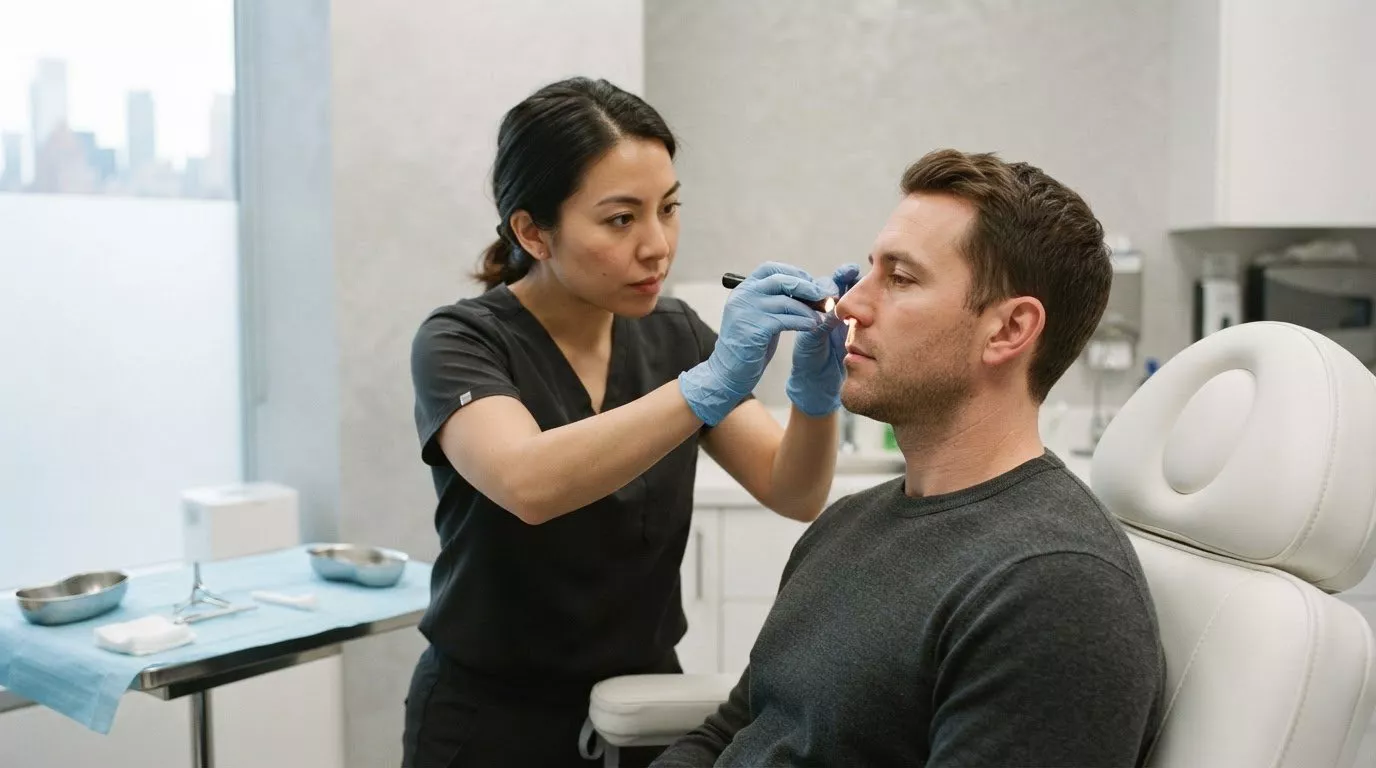
Liposuction recovery unfolds in stages, not overnight. Understanding what to expect as recovery progresses can help you distinguish routine changes from concerns. Early healing may involve soreness and fluid draining from incision sites; small drains may be placed to limit fluid collection. Follow-up visits let your surgical team assess incision changes and review your care plan. Contact them promptly if symptoms worsen.
Will I have scars?
Liposuction uses small incisions, placed in inconspicuous areas whenever possible. Each incision can leave a mark, but its appearance depends on where it was made and how your skin heals. Follow the incision-care instructions you receive, and avoid picking at healing areas. If you are concerned about a scar after healing, discuss it at a follow-up instead of applying unapproved products.
Are There Any Risks Associated with Liposuction?
Yes. Like any surgery, liposuction involves risks. Distinguish expected bruising or soreness from symptoms that need urgent attention. Fever, pus, or increasing pain, warmth, redness, or swelling around an incision call for immediate medical care. Sudden chest pain, severe trouble breathing, or coughing up blood require emergency services. Continued bleeding that soaks a bandage after firm pressure also needs immediate care.
How Long Does It Take to Heal After Liposuction?
Initial recovery commonly takes four to six weeks, but healing continues after you return to daily routines. Mild swelling or firmness can remain for several months, and the treated contour may continue to refine during that time. The treatment area, amount removed, and your body’s healing response all affect what to expect during liposuction recovery. Follow-up visits help assess your progress.
How can I help promote healing and good results?
Support recovery with nourishing meals, adequate fluids, and a gradual return to movement. Preparing meals before surgery can help if cooking feels difficult afterward. Avoid nicotine and alcohol during recovery because they can interfere with healing. Take prescribed antibiotics exactly as directed and complete the course. Over the long term, maintaining a stable weight matters because remaining fat cells can grow as weight changes.
How can you care for yourself at home?
Arrange for a responsible adult to drive you home and stay with you for the first 24 hours after surgery. If your doctor approves showering, pat incisions dry afterward; avoid baths for the first 2 weeks or until cleared. Keep prescribed medicines on schedule, drink water or broth, and take gentle walks as advised. Ask your surgical team before changing wound care or medication instructions.