Skip to content

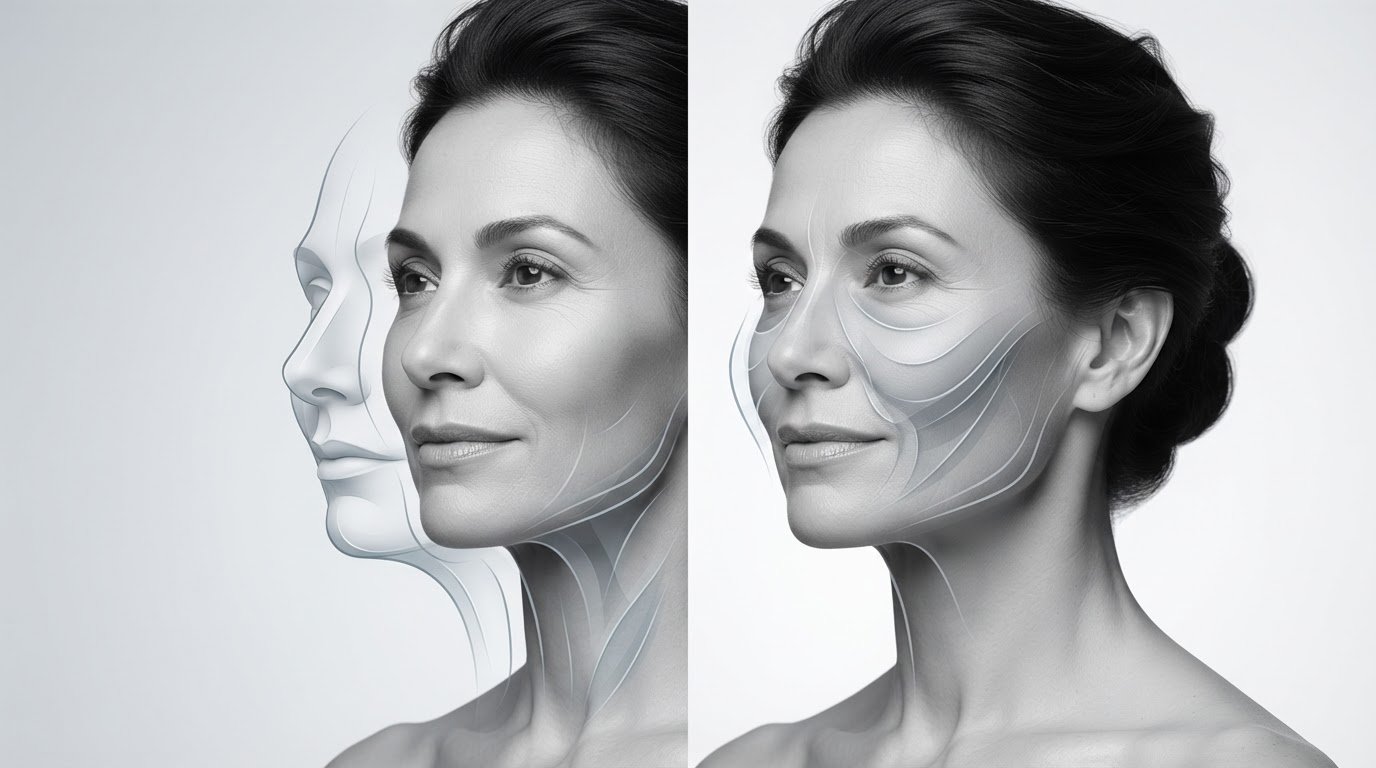
The more extensive facelift isn’t automatically the better choice. In the deep plane facelift vs. SMAS facelift decision, SMAS may suit mild to moderate sagging around the jawline, while a deep plane approach may better address midface descent and deeper folds. Results typically last 5 to 10 years after an SMAS facelift and 10 to 15 years or longer after a deep plane facelift.
It’s understandable to focus on which technique creates the most natural-looking result. Both work beneath the skin, but they reposition facial tissues differently. The right fit depends on where sagging is most noticeable, your anatomy, and your goals.
This guide explains how the procedures differ, what their results and recovery may involve, and how the location and degree of facial sagging can shape the choice. You’ll find a practical way to compare the options and prepare for a facelift consultation.
Key Takeaways
- Match the technique to where sagging is most noticeable: jawline and upper-neck changes differ from midface descent and deeper folds.
- SMAS techniques adjust the supportive tissue layer; a deep plane approach repositions deeper facial tissues together.
- Compare recovery expectations alongside the technique, since healing and the return to everyday activities follow different timelines.
- Age can offer context, but facial anatomy, degree of laxity, health, and aesthetic goals are more useful when weighing suitability.
- Use the decision guide to identify which questions about your facial changes and desired result to bring to a facelift consultation.
Natural-Looking Results: Which Facelift Delivers Better?
Deep plane and SMAS facelifts can both create natural-looking changes when their tissue adjustments match the face. Results typically last 10 to 15 years or longer after a deep plane facelift, compared with 5 to 10 years after an SMAS facelift.
Natural-Looking Results and Skin Tension
Naturalness depends in part on where the lift’s tension is placed. An SMAS facelift lifts and tightens the SMAS layer, which supports the facial skin, rather than relying on skin pull alone. A deep plane facelift repositions deeper tissues together, which can reduce tension across the skin. With either approach, over-tightening can make features look strained rather than refreshed.
Results Across Facial Areas
An SMAS approach may suit changes concentrated along the jawline and upper neck, while a deep plane technique can address descent through the midface. Someone chiefly concerned about early jowls, for example, may have different priorities from someone noticing lowered cheeks and deep nasolabial folds. These distinctions matter because lifting one area does not necessarily correct changes elsewhere. The desired facial balance helps guide the approach.
Suitability by Health and Desired Results
Health and goals matter alongside the visible pattern of aging. Facelift patients should be in relatively good health and not smoke. A deep plane approach may be particularly suited to older patients with severe skin laxity or pronounced facial wrinkles. Someone seeking a more focused lift for the jawline may want to discuss an SMAS approach. The priority is matching the amount and location of correction to the person’s anatomy and desired change.
Longevity can help set expectations, but it doesn’t mean one result is right for everyone. Typical SMAS results last 5 to 10 years; deep plane results last 10 to 15 years or longer. These timeframes describe typical results, not a fixed schedule for every face. The visible outcome changes over time as facial tissues continue aging, so compare the expected duration with the areas you want to address and the degree of correction you seek.
| Option | Typical longevity | Common focus | Skin tension |
|---|---|---|---|
| SMAS facelift | 5 to 10 years | Jawline and upper neck | Lifts and tightens the SMAS layer and skin |
| Deep plane facelift | 10 to 15 years or longer | Midface, cheeks, and deeper folds | Repositions deeper tissues together |
Choose by matching the area of sagging, desired degree of change, and health considerations to the technique’s approach to facial tissues, rather than choosing based on longevity alone.
What’s the Difference Between a Deep Plane Facelift and a SMAS Facelift?
Recovery differs in expected downtime, but both procedures involve swelling and bruising as tissues heal. Patients typically return to social activities 2 to 3 weeks after an SMAS facelift and 10 to 14 days after a deep plane facelift.
A surgeon’s experience with facial anatomy and the chosen technique supports careful planning, especially for deeper work near facial nerves. Board certification is a professional credential to consider, while relevant facelift experience indicates familiarity with the procedure. Neither alone determines an individual outcome.
A deep plane facelift can be combined with a neck lift or other procedures as part of a coordinated surgical plan. The areas treated, overall health, and demands of combined recovery all affect whether that approach is suitable.
Recovery Milestones and Downtime
Desk work commonly resumes 10 to 14 days after either technique, while social plans may take longer. Most bruising after a deep plane facelift resolves in 1 to 2 weeks, and swelling and bruising can take up to two weeks to subside. These milestones describe different parts of recovery, not a promise that every visible symptom disappears on schedule.
Typical recovery ranges are 2 to 6 weeks for an SMAS facelift and 4 to 8 weeks for a deep plane facelift. Yet some activity milestones differ: moderate exercise usually resumes after 4 to 6 weeks with SMAS and 3 to 4 weeks with deep plane. Follow the operating surgeon’s specific instructions before restarting exercise.
Aftercare During Healing
After an SMAS facelift, initial recovery takes about one week. Patients are advised to wear a compression garment during the first week and avoid strenuous activity for six weeks. These instructions address different needs: early support and protection from exertion while healing. Keep follow-up appointments so the surgical team can assess incisions, swelling, and progress.
After deep plane surgery, plan around the procedure’s typical 4 to 8 week recovery range, even if social activities resume sooner. Avoid treating a return to desk work as clearance for exercise. A gradual return, based on the surgeon’s instructions and healing progress, helps keep recovery stages distinct.
Results and Recovery Timeline
Visible final results take 3 to 6 months after an SMAS facelift and 6 to 12 months after a deep plane facelift. Early swelling can temporarily obscure the facial contours, including the midface. That difference means patients should assess the result over the stated healing period, rather than judging the procedure while swelling remains.
For a comparison of recovery planning and combined treatment areas, review facelift and neck lift options as part of your preparation. In the deep plane facelift vs. SMAS facelift comparison, weigh work, social plans, exercise, and the longer settling period together.
Deep plane facelift technique
A deep plane facelift works with deeper facial tissues to reposition them. The surgeon releases retaining ligaments and repositions the skin, fat, and SMAS together. This deeper movement aims to restore the position of descended tissues rather than relying on skin tension alone. Because facial nerves lie near the operative area, careful attention to anatomy is essential throughout surgery.
In a preservation deep plane technique, important blood vessels, ligaments, and connective tissue are maintained rather than widely separating skin from underlying tissues. The technique releases zygomatic and masseteric retaining ligaments, then moves connected facial tissues into a more youthful position. Deep plane surgery is technically complex and requires extensive knowledge of facial anatomy. Its depth distinguishes it from SMAS methods, which adjust the supportive layer without repositioning the same set of deeper tissues together.
SMAS procedures vary in how the surgeon tightens the layer. With SMAS plication, the surgeon folds the SMAS over itself and stitches it higher. A SMASectomy removes a strip of the layer, then sews its edges together to reduce slack. A lateral SMAS approach elevates and repositions the SMAS toward the side of the face. Each method changes the layer’s position or tension, while a deep plane lift releases retaining ligaments and moves deeper tissues together.
These distinctions matter because facial aging doesn’t affect every area in the same way. Someone with looseness mainly along the jawline, for example, may need a different tissue adjustment from someone with descended cheeks and deeper midface folds. Skin laxity, tissue position, and the relationship between skin and underlying structures all shape the surgical plan. A superficial pull can tighten skin, but skin tension alone doesn’t reposition deeper tissues.
- Deep plane: Releases retaining ligaments and repositions skin, fat, and SMAS together.
- SMAS plication: Folds the SMAS over itself and secures it in a higher position.
- SMASectomy: Removes a strip of SMAS and stitches the remaining edges together.
- Lateral SMAS: Elevates and repositions the supportive layer toward the side of the face.
Technique selection is personalized to facial anatomy, goals, and stage of aging. A useful planning step is to identify which area concerns you most, such as the jawline, cheeks, or midface, then discuss how each method changes tissue position there. Because deep plane work takes place near facial nerves, preserving facial function requires exceptional care. The appropriate approach balances the intended lift with the structures that need support.

Candidate suitability by age and degree of facial sagging
A good candidate has facial sagging that aligns with the technique’s lifting pattern, is in relatively good health, and doesn’t smoke. SMAS facelifts often suit mild to moderate aging, while deep plane approaches may suit pronounced laxity, wrinkles, or midface descent. Age offers context, but the location and degree of underlying changes help guide the choice.
SMAS facelift patients are typically between 40 and 60 years old, and the technique can suit patients in their 40s to 60s with mild to moderate facial aging. Patients under 70 often do well with SMAS techniques. These ranges describe common patterns, not fixed eligibility limits. For example, a patient in their 50s with early jowls may have a different anatomical pattern from another patient of the same age with marked cheek descent.
Deep plane facelift patients are usually in their 50s to 70s, but a surgeon may consider this approach for patients as young as 40 and as old as 80. The stronger indicator is often the extent and position of sagging, such as severe skin laxity or pronounced wrinkles. A younger patient with substantial midface descent may have different needs from an older patient whose concerns are limited to the jawline.
The stage of facial aging also matters. Early laxity concentrated at the jawline or upper neck can align with an SMAS approach. More pronounced midface descent and deep folds can point toward deeper tissue repositioning. Prepare by noting where you see changes, whether they affect the cheeks, jawline, or neck, and what kind of improvement you hope to see. These observations help make a surgical discussion specific.
Health influences suitability alongside facial anatomy. Patients should be in relatively good health and not smoke before facelift surgery. A deep plane facelift may be unsuitable when a patient’s BMI is less than 20. These considerations matter because the operation involves tissue healing as well as lifting; a desired facial change alone doesn’t establish candidacy.
During an assessment, a plastic surgeon considers the patient’s anatomy, stage of aging, health, and goals together. Frame the decision by comparing the area needing the most correction with the technique’s depth: focused jawline sagging differs from broad cheek and midface descent. Age can help set expectations, but the visible pattern and overall health carry practical weight.
Choosing between deep plane and SMAS
Choose by matching the operation’s depth to the facial changes you want addressed. An SMAS facelift involves less extensive dissection, while a deep plane facelift works beneath the superficial musculo-aponeurotic system to reposition connected tissues. The best comparison starts with your appearance goals, the areas affected, and the recovery demands you can accommodate.
For sagging concentrated along the jawline or upper neck, an SMAS technique may address the main concern without deeper midface release. It lifts and tightens the SMAS layer, which supports the facial skin. Deep plane lifting may suit midface descent and deeper nasolabial folds because it repositions tissues together. Both methods use discreet incisions around the ear and hairline, but their adjustments to facial tissues differ.
Recovery and procedural scope also matter. SMAS facelifts involve less extensive dissection and typically have shorter recovery and lower complication risk than deeper techniques. A deep plane facelift is more technically complex, requiring careful work around facial nerves. If you’re weighing a pronounced midface concern against a preference for shorter recovery, discuss those tradeoffs directly rather than choosing by technique name alone.
Bring these questions to the consultation:
- Which facial areas show the most significant sagging, and how does each technique address those tissues?
- Would my goals require repositioning the midface, or does my concern focus on the jawline and upper neck?
- What recovery stages should I plan around for work, social activities, and exercise?
- How does my anatomy and stage of aging shape the recommended lifting approach?
- What makes the proposed plan appropriate for my health and desired rejuvenation?
Clear answers connect the proposed procedure to your anatomy, rather than simply describing a preferred method. Ask the plastic surgeon to explain which tissues will be lifted, how the plan addresses your specific concerns, and why its depth fits your goals. That explanation helps you compare the expected changes with the recovery commitment.
Use this decision guide: consider SMAS when sagging is mainly along the jawline or upper neck and a less extensive approach fits your priorities. Consider deep plane when midface descent or deep folds are central concerns and deeper tissue repositioning matches your goals. Facial aging patterns vary, so the choice rests on anatomy, health, and desired appearance together.
To discuss how your facial concerns relate to facelift techniques, schedule a facelift consultation.
Dr. Leonard Grossman: Fat Grafting to the Breasts
Fat Grafting to the Breasts is available for people whose aesthetic goals also include breast appearance. Facelift techniques address facial aging, while this separate procedure focuses on the breasts. It’s relevant when considering broader cosmetic goals, rather than choosing between deep plane and SMAS approaches.
Dr. Leonard Grossman also offers Fat Grafting to the Face, Fat Grafting to the Buttocks, and TUBA Breast Augmentation. Each addresses a different aesthetic concern, so identify the area you want to discuss and the change you hope to achieve. A conversation about breast fat grafting can help you consider how the procedure relates to your individual goals.
Contact Dr. Leonard Grossman to discuss Fat Grafting to the Breasts.
Take the Next Step Toward a Personal Plan
Think of your consultation as a chance to translate aesthetic priorities into a plan, not simply select a procedure name. Beforehand, note which changes most affect your confidence, what adjustment would feel appropriate, and what you hope to preserve about your appearance. Consider the expressions and features that feel distinctly yours, too. These priorities give the conversation a clear starting point.
The deep plane facelift vs. SMAS facelift decision is personal. A useful next step is to discuss how your facial anatomy and goals fit the available approaches. Dr. Leonard Grossman also offers Fat Grafting to the Breasts, Fat Grafting to the Face, and Fat Grafting to the Buttocks for people considering broader aesthetic goals. Each addresses a distinct area, so focus the discussion on what matters most to you.
Contact Dr. Leonard Grossman to begin a thoughtful conversation about your goals. A clear, individualized plan can help you move forward with greater confidence and direction.
Frequently Asked Questions
Can a deep plane facelift look natural, or will it appear overly tight?
A deep plane facelift can look natural when the planned lift suits the patient’s facial structure and desired change. The goal is not to pull every feature tightly, but to improve facial balance while maintaining a recognizable appearance. Before a consultation, note what you’d like to preserve, such as cheek fullness or a familiar jawline. That gives the discussion a clear reference for the intended result.
First, what is the SMAS?
SMAS stands for the superficial musculo-aponeurotic system, a layer of supportive tissue covering facial muscles and bones. It helps connect the face’s soft tissues, making it relevant to facelift planning. When considering lower-face sagging, for example, a surgeon evaluates how the SMAS and overlying skin relate rather than treating loose skin as an isolated concern. Understanding the layer’s role makes the differences between facelift approaches easier to follow.
How Do These Facelifts Compare?
The deep plane facelift vs. SMAS facelift comparison comes down to the level and pattern of tissue adjustment. A deep plane operation addresses connected structures at a deeper level; SMAS methods adjust the supportive layer. To compare options, identify your main concern, such as cheek descent, deeper folds, or jowls, then consider which tissue pattern corresponds to it. Both approaches aim for a refreshed appearance that remains in proportion with your features.
What Results Can I Expect From Each Procedure?
Each procedure aims to improve facial contours in the areas addressed, but changes depend on your starting anatomy and the surgical plan. A patient focused on jowls may notice a different change from someone whose main concern is midface descent. Neither operation stops the natural aging process. Think about what “refreshed” means to you, then discuss how that goal relates to your facial structure.
What are the Major Differences Between These Surgeries?
The main difference is how deeply the surgeon works and which facial tissues are repositioned. Deep plane surgery releases retaining ligaments and moves deeper structures together; SMAS approaches adjust the supportive layer using methods such as folding or removing a strip of tissue. These distinctions affect planning, not just terminology. To compare them, ask which tissues the proposed operation will address in the areas that concern you.
What are the Potential Risks Associated with these Procedures?
Potential risks include facial nerve injury, hematoma, infection, and skin necrosis. Facial nerve injuries occur in less than 1% of facelift surgeries; hematoma formation occurs in fewer than 2% of deep plane procedures. Infections occur in under 1% of facelift procedures, and skin necrosis after deep plane surgery typically affects no more than 3% of patients. These risks make careful surgical planning and attentive postoperative follow-up important parts of care.
Where are the Incision Sites?
SMAS and deep plane facelifts use discreet incisions around the ear and hairline. Their placement gives the surgeon access to facial tissues while following natural borders. During planning, discuss how the proposed incision pattern relates to your hairline and the areas being treated. Understanding the location and purpose of each incision can help you prepare for healing and know which areas the surgical team will monitor during follow-up.
What is a deep plane facelift and how is it performed?
A deep plane facelift is a surgical technique that works beneath the SMAS to reposition deeper facial tissues together. The surgeon releases retaining ligaments, including the zygomatic and masseteric ligaments, then repositions skin, fat, and SMAS. Because facial nerves are nearby, the procedure requires careful attention to facial anatomy and function. The planned tissue movement depends on the patient’s anatomy and the facial changes being addressed.