Skip to content

What if the secret to a more balanced, natural silhouette wasn’t found in a synthetic implant, but within the vital resources of your own body? It’s natural to feel a blend of hope and hesitation when you consider enhancing your curves using your own tissue. You likely want a subtle, graceful change; however, you might worry that the transferred fat will simply disappear or that you’ll need a long series of surgeries to see a difference. One of the most common questions patients ask is exactly how many cup sizes can you go up with fat transfer during a single procedure.
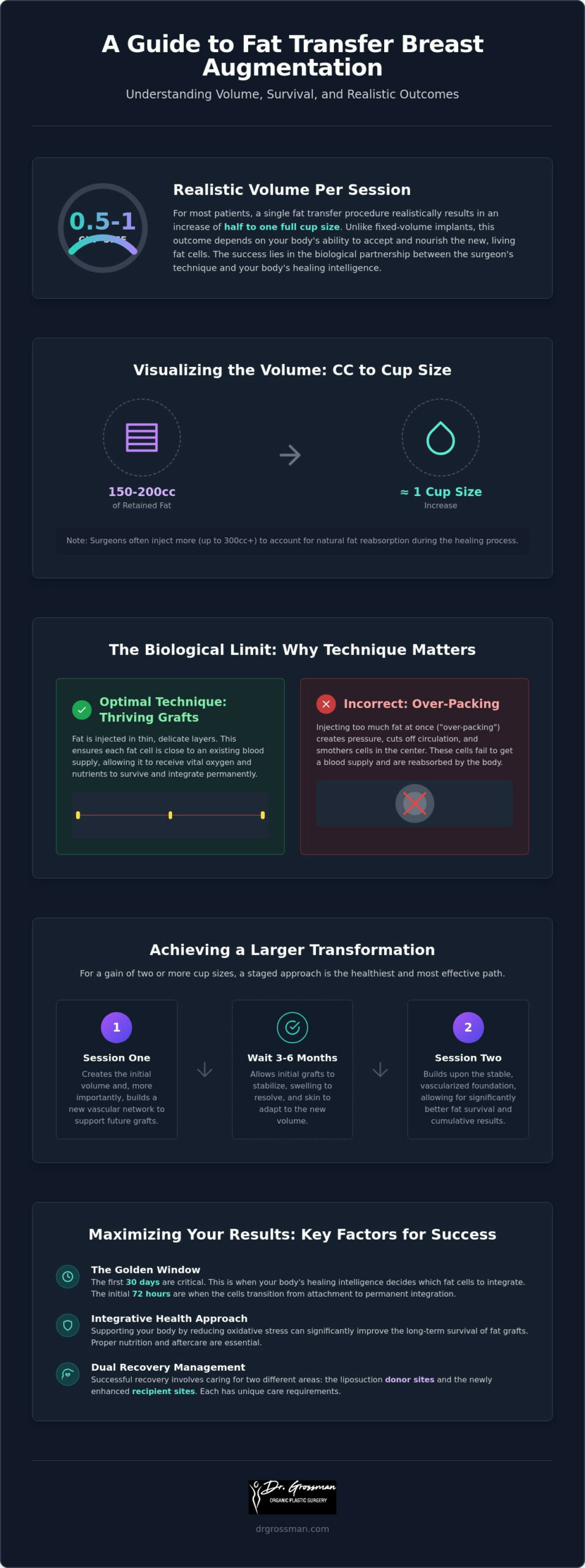
We understand these anxieties and believe that successful enhancement is a partnership between clinical expertise and your body’s natural healing intelligence. While most patients can realistically expect an increase of half to one full cup size per session, the true success lies in how well those cells are nourished. This integrative guide explores the biological limits of fat grafting and provides actionable steps to maximize graft survival. You’ll learn the science behind the CC to cup size ratio and how a holistic approach can protect your results, ensuring your body has everything it needs to support and maintain your new, natural volume.
Key Takeaways
- Discover why most patients realistically achieve an increase of half to one full cup size per session, helping you understand how many cup sizes can you go up with fat transfer.
- Learn about “vascular competition” and why transferring fat in delicate layers is essential for ensuring the new cells receive the nourishment they need to thrive.
- Prepare for the dual recovery process by understanding the different care requirements for your donor liposuction sites and your newly enhanced curves.
- Identify how an integrative approach that reduces oxidative stress can significantly improve the long-term survival of your natural fat grafts.
- Understand the “settling point” and how your body eventually integrates the transferred tissue as a permanent part of your natural anatomy.
Understanding Realistic Volume: How Many Cup Sizes Can You Gain?
When you begin exploring natural enhancement, the most common question is how many cup sizes can you go up with fat transfer. For most women, the realistic expectation is an increase of 1 to 1.5 cup sizes in a single session. This outcome isn’t just a matter of surgical technique; it’s a reflection of how your body accepts and nourishes the newly placed tissue. Unlike a fixed-volume silicone implant, fat is a living graft that requires a biological partnership with your existing anatomy to survive and thrive.
Traditional breast augmentation using implants provides a predictable, instant volume. However, fat grafting follows a different, more organic path. Because the fat must establish a new blood supply to remain permanent, there’s a biological limit to how much can be safely injected at once. If too much volume is introduced into a confined space, the cells in the center may not receive the oxygen they need, leading to reabsorption rather than integration. We view this process as “planting” rather than simply “filling,” where the quality of the soil determines the success of the harvest.
Your available donor fat also plays a significant role in your final results. Since the procedure involves harvesting fat through liposuction, your potential for breast volume is directly tied to the areas we can sculpt, such as the abdomen, thighs, or flanks. The first 72 hours after the procedure are the most critical. This is when the fat transitions from a state of simple attachment to permanent integration. Supporting your body’s natural healing intelligence during this window is essential for maximizing the “take” rate of the transferred cells.
The CC to Cup Size Conversion
To visualize your potential results, it helps to understand the volume in cubic centimeters (cc). Generally, 150cc to 200cc of retained fat equals roughly one cup size. Surgeons often inject more than this target amount, sometimes up to 300cc or more, to account for the natural reabsorption that occurs during the healing phase. Your existing tissue density and skin elasticity also matter. If you have very firm breast tissue, the volume may provide more of a subtle “lift” and fullness rather than a dramatic change in projection.
Why Multiple Sessions May Be Necessary
If your goal is a gain of two or more cup sizes, a staged approach is often the most health-forward path. This cumulative method respects the body’s vascular limits while allowing for a more significant transformation over time.
- Building the Foundation: The first session creates a new vascular network that supports even better fat survival in a second session.
- Tissue Stability: Waiting three to six months between procedures ensures the initial grafts are fully stable and the skin has adapted to the new volume.
- Cumulative Results: Staging allows for a natural, progressive transformation that looks and feels entirely like your own tissue.
The Biological Limits: Why Single-Session Volume is Restricted
Understanding the biological threshold of your body is the first step toward a successful transformation. While it’s natural to desire a significant change, the survival of transferred fat depends on a delicate process called “Vascular Competition.” Each fat cell is a living entity that requires immediate access to oxygen and nutrients. When we perform Fat Transfer Breast Augmentation, we must place the fat in thin, strategic layers. This ensures that every cell is close enough to an existing blood vessel to begin the process of angiogenesis, or the growth of new blood vessels, to nourish the graft.
When you ask how many cup sizes can you go up with fat transfer, the answer is fundamentally governed by this vascular limit. If a surgeon attempts to “over-pack” the breast pocket with too much volume, the resulting internal pressure can actually compress existing capillaries. This cuts off the very circulation the new fat needs to survive. Instead of becoming a permanent part of your body, the “smothered” fat cells may be reabsorbed or lead to complications. We prioritize the “Golden Window” of the first 30 days, as this is the critical time when your body’s natural healing intelligence decides which cells to integrate and which to clear away.
Tissue Tension and the Recipient Site
The “tightness” of your skin acts as a natural container for the new volume. If the skin is very taut, it creates higher internal pressure, which can limit the amount of fat that safely “takes.” Interestingly, women who have experienced previous pregnancies or breastfeeding often have slightly more skin laxity. This extra room allows for a more generous transfer because there’s less tension on the newly placed cells. Maintaining a calm, supportive environment during recovery helps ensure that tissue tension doesn’t interfere with the delicate integration of your fat grafting results.
Avoiding Fat Necrosis and Oil Cysts
Fat necrosis is a term used to describe fat cells that didn’t receive enough blood supply to survive. When this happens, the body may replace those cells with firm scar tissue or small oil cysts. By using smaller, precise injections and an integrative approach to reduce systemic inflammation, we can protect the delicate membranes of the new cells. This meticulous care leads to a softer, more natural-looking result that feels identical to your original breast tissue. We don’t just want to add volume; we want to ensure that volume remains vital and healthy for years to come.
Managing the Dual Recovery: Donor Site vs. Recipient Site
Recovery from this procedure is a unique journey because it involves two distinct areas of the body, each with its own set of needs. You’ll likely find that the sites where liposuction was performed feel significantly more sore than your breasts. This is a common experience; the donor areas often feel like a deep, heavy muscle ache, while the breasts may simply feel tight or full. Localized numbness and bruising are natural parts of the healing process as your body works to resolve inflammation and integrate the transferred tissue.
The first 72 hours represent the critical attachment phase where newly transferred fat cells begin their journey toward permanent integration. During this window, your approach to compression must be precise and intentional. We use firm compression garments on the donor site to reduce swelling and support the newly sculpted contours of your abdomen, thighs, or flanks. However, the breasts must remain entirely pressure-free. Any restrictive clothing or external weight can compress the delicate new capillaries that are trying to reach the fat cells. When you think about how many cup sizes can you go up with fat transfer, remember that protecting the grafts from pressure in these early days is vital for your final volume.
Donor Site Care and Body Contouring
Nurturing the New Breast Volume
Maximizing how many cup sizes can you go up with fat transfer requires a commitment to a protective recovery environment. Sleeping on your back is non-negotiable for at least three weeks. This ensures you don’t accidentally “squish” the grafts while you sleep, which could lead to reabsorption. You should also avoid extreme temperatures, such as saunas, hot tubs, or ice packs directly on the breasts. These extremes can interfere with the delicate process of vascularization. As you heal, you can gradually reintroduce supportive, non-wire bras that offer comfort without adding unnecessary tension to the tissue.
The Integrative Approach: Maximizing Fat Survival Through Vitality
We view the success of natural breast enhancement as a profound biological partnership between the surgeon’s technique and your body’s internal environment. While the surgical procedure places the cells, your systemic health dictates the “take” rate. To support this process, we focus on reducing oxidative stress, which can otherwise damage delicate new cell membranes during the transfer. By providing your body with the right resources, you can influence how many cup sizes can you go up with fat transfer by ensuring the highest possible percentage of fat survives the transition.
Hydration serves as a fundamental tool for cellular repair and lymphatic efficiency. A well-hydrated system allows nutrients to reach the recipient site more effectively while helping the body clear the metabolic byproducts of surgery. We also emphasize the impact of cortisol. High stress levels aren’t just an emotional burden; they’re a clinical obstacle. Chronic stress triggers cortisol, which can suppress the body’s natural healing intelligence and slow down the integration of new tissue. Practicing patience and calm is as much a part of your medical protocol as any supplement.
Nutritional Foundations for Angiogenesis
Angiogenesis, or the creation of new blood vessels, is an energy-intensive process. This is why a caloric deficit is entirely counterproductive during your recovery. Your body needs a nutritional surplus to “feed” the grafts and fuel tissue repair. We recommend prioritizing healthy fats, particularly Omega-3 fatty acids, which support vascular health and reduce systemic inflammation. Specific micronutrients, such as Vitamin C and Zinc, are also essential. These elements nourish the production of collagen and help the new fat cells become a stable, permanent part of your anatomy.
Lifestyle Factors and the “Nicotine Rule”
If there’s one absolute enemy of fat transfer survival, it’s nicotine. Nicotine is a potent vasoconstrictor, meaning it narrows the blood vessels and chokes off the oxygen supply to the newly placed fat. Without adequate oxygen, the grafts cannot survive the first critical weeks. Beyond avoiding toxins, we encourage a focus on deep sleep cycles. Sleep is the time when the body’s natural repair mechanisms are most active, allowing for the gentle integration of your new volume. Using mindfulness or simple breathing techniques can help you manage the emotional “waiting game” as your results settle.
If you’re ready to learn how a holistic approach can enhance your results, explore our integrative fat grafting options to see how we support your body’s natural healing potential.
Long-Term Outcomes: The Permanence of Natural Results
Once you pass the initial stages of healing, your body reaches what we call the “Settling Point.” This is the moment when the transferred fat is no longer just a guest in your tissue; it has become a permanent, integrated part of your anatomy. When considering how many cup sizes can you go up with fat transfer, the final answer isn’t truly visible until the surgical swelling has completely dissipated. This transition is often a psychological journey. You may initially feel a sense of loss as the surgical volume subsides, but this is simply the reveal of your true, natural silhouette. This process ensures your results age harmoniously with your body, avoiding the “frozen in time” look often associated with synthetic materials.
A common concern regarding long-term outcomes involves breast health and diagnostic clarity. It is a relief for many to learn that fat grafting NYC, when performed with precision, does not interfere with modern mammography. Because the fat is placed in thin layers within the subcutaneous space or under the gland, radiologists can easily distinguish it from other tissues. We prioritize the preservation of your long-term wellness, ensuring that your aesthetic enhancement supports, rather than complicates, your proactive health screenings.
The 3-Month to 1-Year Reveal
The three-month mark is the first true indicator of your long-term volume retention. By this time, the surgical edema has resolved; the remaining fullness consists of stabilized fat cells that have successfully established a blood supply. We recommend scheduling follow-up consultations during this period to evaluate the harmony between your donor sites and your new breast volume. It’s a time to celebrate the “take” rate and assess if your goals were met or if a second, staged session is desired to further build upon this healthy vascular foundation.
Maintaining Your Results Through the Years
Because your new volume is living tissue, it will behave exactly like the rest of your body. If you experience significant weight fluctuations, the fat cells in your breasts will expand or contract just as they would anywhere else. This is the beauty of a natural approach; your curves remain in proportion with your frame. By maintaining an integrative lifestyle focused on whole-body health, you protect the skin quality and tissue support that keep your results looking vibrant as you age. If you’re ready to create a personalized plan, consult with an expert like Dr. Leonard Grossman to explore the best breast augmentation options NYC has to offer for your unique biology.
Embracing Your Natural Transformation
Choosing natural enhancement is an act of honoring your body’s inherent wisdom. We’ve explored the biological thresholds that define your journey, from the necessity of thin layering to the critical role of angiogenesis. While you now understand how many cup sizes can you go up with fat transfer in a single session, the most vital takeaway is that your internal health serves as the foundation for your new silhouette. By prioritizing hydration, managing cortisol, and supporting cellular repair, you aren’t just adding volume; you’re nurturing a permanent part of your living anatomy.
With over 25 years of specialized experience in advanced fat grafting, Dr. Leonard Grossman is a pioneer in natural-looking, implant-free breast augmentation techniques. His integrative approach prioritizes whole-body health, ensuring superior graft survival and results that age gracefully with you. You don’t have to navigate this path alone; professional guidance can help demystify the process and empower your decisions. Schedule your integrative consultation with Dr. Leonard Grossman to discuss your natural breast enhancement. We look forward to supporting your vision of a more vital, confident self.
Frequently Asked Questions
How many cup sizes can you go up with fat transfer in a single session?
Most patients can realistically expect an increase of half to one full cup size during a single surgical session. When you consider how many cup sizes can you go up with fat transfer, it’s essential to remember that volume is limited by your body’s ability to provide an immediate blood supply to the new cells. While some may see a slightly larger gain, we prioritize the health and vitality of the tissue over aggressive overfilling to ensure the best long-term results.
How much of the transferred fat actually stays permanently?
On average, about 60% to 80% of the transferred fat remains permanently once the initial settling period concludes. The remaining percentage is naturally reabsorbed by the body during the first few months as it clears away cells that didn’t fully integrate. By following an integrative recovery plan that supports the body’s natural healing intelligence and minimizes oxidative stress, you can optimize these retention rates for a more successful outcome.
Will my breasts feel natural after a fat transfer?
Yes, your breasts will feel entirely natural because the enhancement uses your own living adipose tissue rather than a synthetic material. Once the fat integrates and the initial surgical firmness resolves, the breasts move and feel just like your original tissue. This organic integration is one of the primary benefits for those seeking an authentic transformation that ages gracefully and harmoniously with the rest of their body.
Can I breastfeed after a fat transfer to the breasts?
Fat transfer does not typically interfere with your ability to breastfeed because the grafts are placed in the subcutaneous layers or under the breast tissue, rather than into the milk ducts or glands. Because our technique respects the delicate anatomy of the breast, the functional aspects of the mammary glands remain protected. If you plan to breastfeed in the future, your body’s natural nurturing capacity should remain fully intact.
Does fat transfer to the breasts cause lumps or calcifications?
While small calcifications or firm spots can occur, they are much less common when the fat is placed in thin, precise layers to ensure proper nourishment. Modern imaging techniques allow radiologists to easily distinguish these natural occurrences from other breast health concerns during routine screenings. By avoiding “over-packing” the tissue and supporting the body’s vascularization process, we minimize the risk of fat necrosis and support a soft, uniform result.
How soon can I exercise after a breast fat transfer?
You can typically begin gentle walking within a few days to support healthy circulation and lymphatic drainage. However, you should avoid vigorous exercise, especially upper body movements or high-impact activities, for at least four to six weeks. This period allows the new vascular network to become fully established without the disruption of intense physical stress or accidental pressure on the delicate new grafts.
What happens to the results if I lose weight later?
Because the transferred fat is living tissue, it will respond to weight fluctuations just like the fat cells in the rest of your body. If you lose a significant amount of weight, the fat cells in your breasts may shrink, which can reduce the overall volume of your results. Maintaining a stable, healthy weight through a balanced, whole-body approach is the best way to protect the long-term harmony and permanence of your new silhouette.
Is fat transfer safer than breast implants?
Fat transfer offers a different safety profile by eliminating risks associated with synthetic materials, such as rupture, capsular contracture, or implant-associated illnesses. It uses your body’s own biological resources, which reduces the chance of an adverse reaction to a foreign object. While every procedure has its own considerations, fat transfer is often preferred by those seeking a health-forward alternative that avoids the need for long-term implant maintenance or replacement.