Skip to content

Did you know that up to 50 percent of the fat cells transferred during your procedure might naturally disappear within the first few months? It is a startling figure that often fuels the anxiety patients feel when they look in the mirror during the first week of healing. You likely worry about looking overfilled or “done,” while simultaneously fearing that your investment won’t survive the transition. We understand that this journey is about more than just aesthetics; it’s about restoring a sense of vitality and whole-body harmony through the body’s natural healing intelligence.
By mapping out the day by day fat transfer to face recovery time, we can replace that uncertainty with a clear, integrative roadmap for your healing. You’ll discover exactly how to nourish your system to optimize fat survival and when you can confidently return to your social life. This guide provides a detailed look at the first 30 days of your transformation, offering expert insights on managing swelling at the donor site and supporting the delicate integration of new, living tissue for a naturally rejuvenated appearance.
Key Takeaways
- Learn how revascularization helps 50 to 70 percent of your transferred cells survive permanently, creating a foundation for lasting, natural results.
- Navigate the day by day fat transfer to face recovery time with a clear roadmap for managing initial numbness and the peak of your body’s inflammatory response.
- Identify the visual milestones of healing, such as the shift in bruising colors and the moment your facial contours begin to soften into a natural look.
- Optimize your results using an integrative checklist that focuses on anti-inflammatory nutrition and specific lifestyle habits to support the body’s healing intelligence.
- Gain a realistic estimate for social downtime so you know exactly when to return to work with confidence.
Understanding the Biological Journey of Facial Fat Grafting
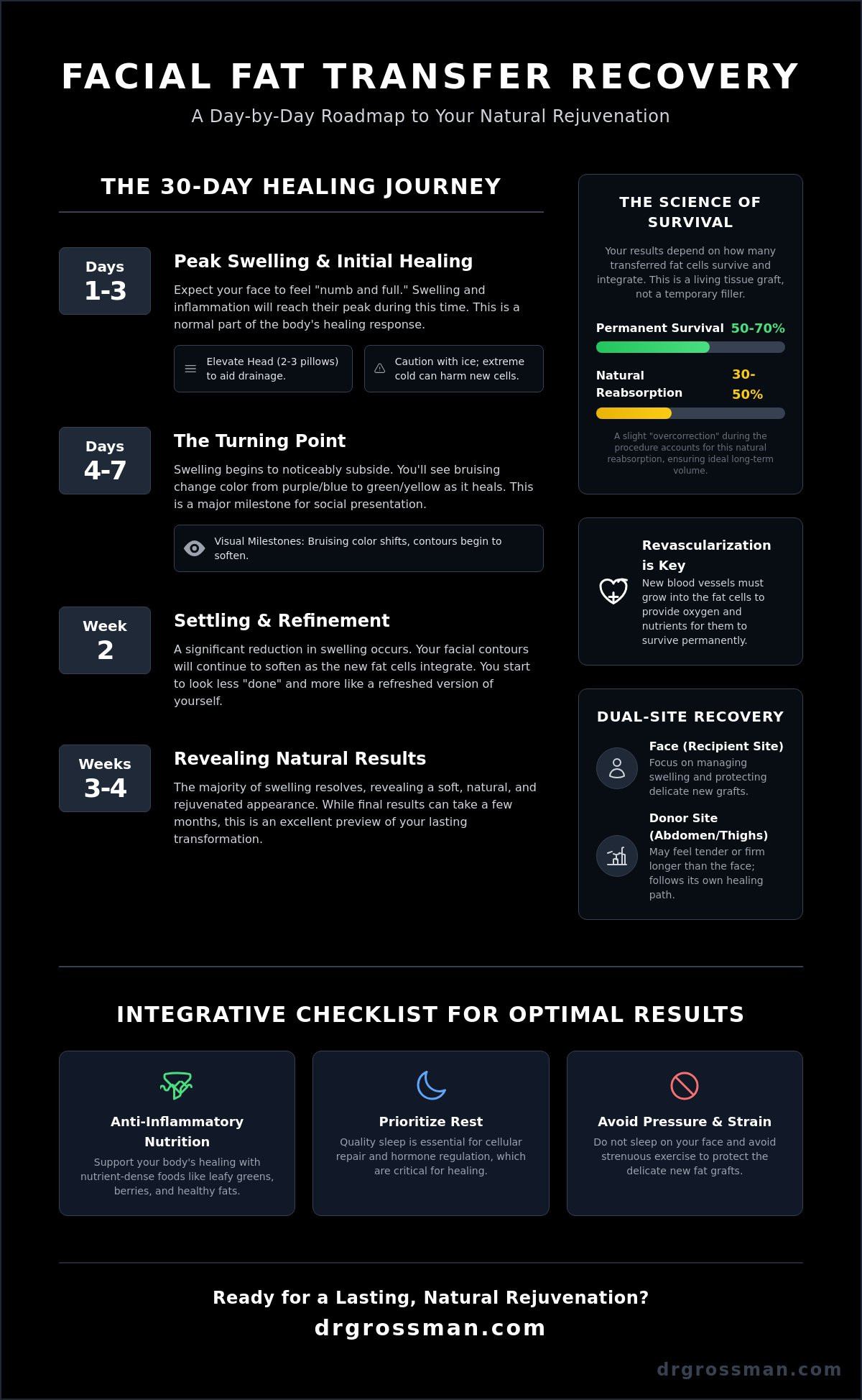
Fat transfer is a sophisticated biological transplant, not a temporary cosmetic mask. When we move adipose tissue, we are performing a living tissue graft. This distinction is vital for your peace of mind. Unlike dermal fillers that eventually dissolve, the fat that successfully integrates becomes a permanent part of your facial structure. The secret to this success lies in a process called revascularization. This is the body’s remarkable ability to grow new microscopic blood vessels into the transferred cells, providing them with the oxygen and nutrients they need to thrive.
During the initial day by day fat transfer to face recovery time, your body is working hard to support this integration. Because we anticipate that roughly 30 to 50 percent of the transferred fat will be naturally reabsorbed, your surgeon will likely perform a slight overcorrection. This means you may look more “full” than expected in the first week. This isn’t a mistake; it’s a calculated part of the surgical plan designed to ensure that once the settling occurs, you are left with a soft, natural harmony. By viewing this through an integrative lens, we see that the body isn’t just healing from a procedure; it’s actively incorporating new life into your facial contours.
Why Fat Survival is the Key to Longevity
The ultimate goal of any fat grafting procedure is high graft survival. In the first few days, what you see in the mirror is a mix of living fat and inflammatory edema. While the swelling is temporary, the survival of the adipose tissue depends on your whole-body health. We emphasize an integrative approach because factors like oxidative stress and poor nutrition can hinder the “take” rate of the cells. By supporting your body’s natural healing intelligence with anti-inflammatory foods and proper rest, you nourish the environment where these new cells must grow. Gentle handling during the purification phase, often using advanced systems like Puregraft, further ensures that only the most viable cells are used for the transfer.
The Two-Site Recovery: Face and Donor Area
Immediate Post-Op: Navigating Days 1 to 3
The first 24 hours after your procedure are often defined by a sensation of being “numb and full.” This is a time for compassionate self-care as your body begins the delicate work of integration. You might notice that your face feels tight or heavy; this is a normal reaction to the local anesthesia and the initial volume of the graft. During this initial stage of the day by day fat transfer to face recovery time, focusing on rest and gentle hydration supports your system’s baseline needs as it transitions from the surgical environment to a state of healing.
By Day 2 and Day 3, you’ll reach the peak of the inflammatory response. This is when swelling is most pronounced and visible. It’s common to feel a surge of anxiety when looking in the mirror during these 72 hours. Edema is simply the body’s natural protective response to tissue movement; it’s a sign that your immune system is active and engaged in the healing process. While you may feel “overfilled,” remember that much of this volume is fluid, not the final result of the fat graft. Understanding these nuances is a key part of your recovery after surgery.
To support your body’s natural drainage, keeping your head elevated is essential. Sleeping with two or three extra pillows helps gravity assist your lymphatic system in moving fluid away from the facial tissues. While traditional medicine often suggests ice for everything, we recommend caution with extreme cold. While a cool compress can soothe, excessive cold can actually constrict the tiny blood vessels your new fat cells need for survival. Gentle warmth, or simply room-temperature care, is often more harmonious with the revascularization process and supports the body’s natural healing intelligence.
Managing the Peak Swelling Phase
Fluid balance is dynamic. You might wake up with more swelling on one side of your face if you leaned that way during sleep. This temporary asymmetry is a normal part of the day by day fat transfer to face recovery time and usually resolves as you move throughout the day. If you have questions about your specific progress, a consultation for Fat Grafting to the Face can provide personalized reassurance and guidance for your unique journey.
Caring for the Donor Site
Your abdomen or thighs require their own specific attention. We recommend wearing compression garments as directed to prevent fluid collection and provide support to the tissues. You might see minor drainage from the small incision sites; simply keep them clean and protected with sterile dressings. While your face needs rest, your body benefits from gentle movement. Taking short, slow walks around your home supports healthy circulation without placing undue strain on the delicate facial grafts, helping you maintain vital functions while you recover.
The Turning Point: Days 4 to 7 and Social Presentation
Day four marks a significant milestone in your journey. The intense pressure and “fullness” of the first 72 hours finally begin to ease. This is a critical window in the day by day fat transfer to face recovery time where your body transitions from acute protection to active refinement. You’ll see the initial “overfilled” appearance soften as the most intense edema begins to drain, allowing your natural facial architecture to peek through the swelling.
By days five through seven, your bruising will likely undergo a colorful transformation. The deep purples and blues shift toward yellow and green hues. While this might look unusual, it’s actually a positive sign that your system is successfully breaking down heme and clearing away cellular debris. This color change indicates that your body’s natural healing intelligence is working efficiently to restore balance to the treated areas.
We define “social presentation” as the point when you can comfortably run errands, visit a cafe, or see friends without feeling self-conscious. While you aren’t at your final result yet, most patients find they reach this stage by the end of the first week. Restoring a healthy glow during this time is best achieved through consistent hydration and gentle, non-invasive skin care that respects the delicate nature of the healing tissue. Avoid any aggressive scrubbing or chemical peels, as your skin is still in a heightened state of sensitivity.
Transitioning Back to Daily Life
If you have residual yellowing or minor bruising after day five, mineral makeup is an excellent tool for camouflage. Unlike heavy liquid foundations, mineral powders are breathable and won’t clog your pores or irritate the tiny injection sites. You can safely resume light daily activities, such as walking or light household tasks; however, it’s vital to avoid high-impact exercise. Strenuous activity increases blood pressure, which can provoke new swelling or disrupt the delicate revascularization process that’s currently keeping your new fat cells alive.
Integrative Support for Tissue Repair
To nourish your body’s internal environment, focus on nutrient-dense foods that support collagen production and tissue health. Consider these dietary pillars:
- Healthy Fats: Avocados, walnuts, and wild-caught fish provide the essential fatty acids needed for cell membrane repair.
- Vitamin C: Bell peppers, kiwi, and citrus fruits support the structural integrity of your skin and help with tissue knitting.
- Hydration: Pure water and herbal teas maintain the fluid balance necessary for efficient lymphatic drainage.
Weight stability is equally important during this phase. Because the transferred fat cells are living tissue, they respond to weight fluctuations just like the rest of your body. Avoiding restrictive diets ensures these new cells have the caloric support they need to “take” permanently and integrate into their new home. Finally, support your lymphatic flow by staying well-hydrated and avoiding excess salt, which can cause the body to hold onto unnecessary fluid and prolong the “puffy” look of early recovery.
Settling and Refinement: Week 2 and Beyond
Entering week two, the “puffy” or overcorrected look finally subsides. This is a rewarding phase of the day by day fat transfer to face recovery time where you start to see the true beauty of the procedure. Your facial contours become more defined as the initial inflammatory response quiets down, allowing the living grafts to settle into their new environment. It is a period of transition where the “surgical” appearance gives way to a soft, refreshed vitality that looks entirely like you.
By weeks three and four, you’ll notice a tactile change. The treated areas no longer feel firm or foreign; instead, the fat begins to feel like your own soft, natural tissue. This integration is a beautiful sign that revascularization is successful. While micro-swelling may linger, particularly in delicate areas like the under-eyes or lips, your social confidence usually returns in full. For patients specifically concerned about hollowing or dark circles beneath the eyes, understanding the recovery nuances of fat grafting under eyes can provide additional clarity on what to expect as this sensitive zone heals. Patience is a virtue during this second month. Your body is still fine-tuning the blood supply to every individual cell, supporting the body’s natural healing intelligence as it anchors the graft into place.
Looking toward the long term, the fat that remains at the three-month mark is typically yours for years to come. Research indicates that 50 to 70 percent of transferred fat cells survive permanently after this initial integration period. Once these cells establish a stable blood supply, they behave like any other adipose tissue in your body. They will age naturally with you and respond to your lifestyle, providing a foundation for long-term facial harmony. Patients considering facial fat transfer NYC will find that this biocompatible, living tissue approach offers a uniquely natural alternative to synthetic fillers for lasting rejuvenation.
Watching Your Results Mature
It’s common for patients to feel a brief moment of concern as the initial swelling vanishes. You might worry that your results are “disappearing.” It’s important to distinguish between the loss of inflammatory fluid and the actual survival of adipose cells. As the edema clears, you are seeing the true, stable volume of the graft. We encourage you to focus on the overall refreshed appearance and the improvement in skin texture rather than microscopic daily details. By maintaining a nutrient-dense diet, you continue to nourish the environment where these new cells thrive.
Resuming Your Full Wellness Routine
By the end of the first month, you can usually return to the gym and resume high-intensity cardiovascular exercise. We recommend a gradual re-entry to ensure you don’t trigger residual swelling or oxidative stress. Sun protection remains non-negotiable; healing tissues are more sensitive to UV rays, which can lead to hyperpigmentation. A high-quality mineral SPF is your best ally in protecting your investment. Maintaining a connection with your practitioner is vital for long-term monitoring of your facial fat transfer. If you want to ensure your healing is progressing perfectly, you can contact our office for a follow-up assessment to support your journey toward lasting rejuvenation.
The Integrative Recovery Checklist for Optimal Results
Successful healing is an active process of stewardship. It requires more than just letting the calendar pages turn; it involves a commitment to supporting your body’s natural healing intelligence through every stage of the day by day fat transfer to face recovery time. By focusing on whole-body health, you create the ideal internal environment for your new tissue to thrive and integrate. This checklist serves as your roadmap for the critical first two weeks, ensuring you remain empowered and informed throughout your transformation.
Daily Essentials for the First 14 Days
Consistency is your greatest ally during the initial fortnight. To manage fluid balance and protect the delicate grafts, follow these daily pillars:
- Maintain Elevation: Sleep with your head at a 30 to 45 degree angle. This simple use of gravity assists your lymphatic system in draining excess fluid and reduces the pressure on your new facial contours.
- Donor Site Compression: Wear your compression garments on the abdomen or thighs as directed, typically for 22 hours a day. This prevents fluid collection and helps the skin adhere smoothly to the new underlying shape.
- Vigilant Monitoring: Check both your face and the donor site daily. Look for a natural progression of color and swelling. While some tenderness is expected, you’re looking for a steady trend toward comfort.
- Hydration and Rest: Sip pure, filtered water throughout the day. Dehydration can lead to increased swelling and a feeling of sluggishness as your body tries to clear inflammatory markers.
Nourishing Your New Fat Cells
The survival of your graft depends on the rapid development of a new blood supply. To support this, prioritize foods rich in omega-3 fatty acids, such as walnuts and flaxseeds, which help maintain cell membrane integrity. Antioxidant-dense berries and leafy greens help neutralize oxidative stress, protecting the living cells during their transition. It’s vital to avoid nicotine and even secondhand smoke during this window. Nicotine constricts blood vessels, which can starve the new fat cells of the oxygen they desperately need to survive. Focus on whole-body health as the foundation for your fat transfer surgery success.
When to Seek Reassurance
While the vast majority of patients heal without incident, knowing the warning signs provides peace of mind. Reach out to your surgical team if you experience a sudden, sharp increase in pain that isn’t managed by your care plan. Excessive heat, spreading redness, or a fever are also signals that your body may need additional clinical support. Most of the time, these are simply minor hurdles, but addressing them early ensures your day by day fat transfer to face recovery time remains a positive and life-affirming journey toward natural rejuvenation.
Embracing Your Path to Natural Facial Harmony
Understanding the day by day fat transfer to face recovery time allows you to move through each stage of healing with confidence and clarity. By viewing your recovery as a partnership with your body’s natural healing intelligence, you transform a clinical procedure into a journey of vitality. We’ve explored how supporting revascularization through integrative nutrition and proper rest ensures that your new tissue integrates seamlessly. Remember that the initial overcorrection is temporary, but the living results you achieve after the settling phase are designed to remain a part of you for years.
Achieving a naturally refreshed look requires a delicate balance of clinical precision and compassionate holism. Dr. Leonard Grossman brings over 25 years of specialized experience in fat grafting, serving as a pioneer in integrative aesthetic surgery. His expertise focuses on facial harmony, ensuring that every graft supports your unique features while maintaining whole-body wellness. If you’re ready to explore how this regenerative technique can restore your youthful volume, schedule your integrative consultation with Dr. Leonard Grossman today. We look forward to supporting your transition toward a more vibrant and authentic version of yourself.
Frequently Asked Questions
How long is the actual social downtime for facial fat transfer?
Most patients find that social downtime lasts approximately 7 to 10 days. By the end of the first week, the most noticeable swelling has subsided, and any residual bruising usually shifts to a faint yellow hue. This allows you to return to work or social engagements with confidence. While your face will continue to refine for several weeks, you’ll likely feel “restaurant ready” by day 7.
Will I look “overfilled” or “puffy” immediately after the procedure?
Expect a significant degree of “fullness” or puffiness during the first 72 hours. This is a combination of the surgeon’s intentional overcorrection and the body’s natural inflammatory response. This initial volume is not your final result; it is a temporary phase that peaks around day 3. As the edema drains, your facial contours will soften and reveal a much more natural, refreshed appearance.
When can I safely wear makeup and resume my skincare routine?
You can typically resume wearing mineral makeup and gentle skincare by day 5 or 6. It is vital to wait until the tiny injection sites have completely closed to prevent irritation or infection. Avoid any aggressive scrubbing, chemical exfoliants, or retinoids for at least two weeks. This cautious approach protects the delicate healing tissue and supports the body’s natural healing intelligence during the early stages of recovery.
How can I ensure the highest percentage of fat survival during recovery?
You can support the highest percentage of fat survival by prioritizing whole-body health and avoiding any pressure on the treated areas. Focus on a diet rich in omega-3 fatty acids and antioxidants to nourish the new cells. Avoiding nicotine is also critical, as it constricts blood flow. Following a mindful approach during the day by day fat transfer to face recovery time ensures the living tissue receives the oxygen it needs to thrive.
What should I do if one side of my face looks more swollen than the other?
Temporary asymmetry is a very common part of the healing process and is rarely a cause for concern. Gravity often causes fluid to settle more on one side, especially if you unintentionally lean or turn during sleep. This imbalance usually resolves on its own by the end of the second week. If the swelling is accompanied by excessive heat or redness, contact your surgical team for a professional assessment.
Is it normal for the donor site to be more uncomfortable than my face?
It is perfectly normal for the donor site, such as the abdomen or thighs, to feel more tender than your face. The liposuction required to harvest the fat involves more tissue disruption than the delicate facial injections. You might experience a sensation of firmness or “soreness” in these areas for several weeks. Consistent use of your compression garment for 22 hours a day will significantly help manage this discomfort.
When can I return to high-intensity exercise like running or HIIT?
We recommend waiting at least four weeks before returning to high-intensity cardiovascular exercise or heavy lifting. Strenuous activity increases your heart rate and blood pressure, which can provoke new swelling and potentially disrupt the delicate revascularization process. Gentle walking is encouraged early on to support circulation, but you should allow your body the full 30 days to firmly anchor the new fat cells before resuming HIIT.
Does the fat transfer look better over time or does it disappear?
Fat transfer results typically look more harmonious and natural as the months progress. While a portion of the fat is naturally reabsorbed in the first 90 days, the cells that remain establish a permanent blood supply. These survivors behave like living tissue, improving skin texture and providing a soft, enduring volume. Rather than disappearing, the results age gracefully alongside your natural facial structure as part of your day by day fat transfer to face recovery time journey.