Skip to content

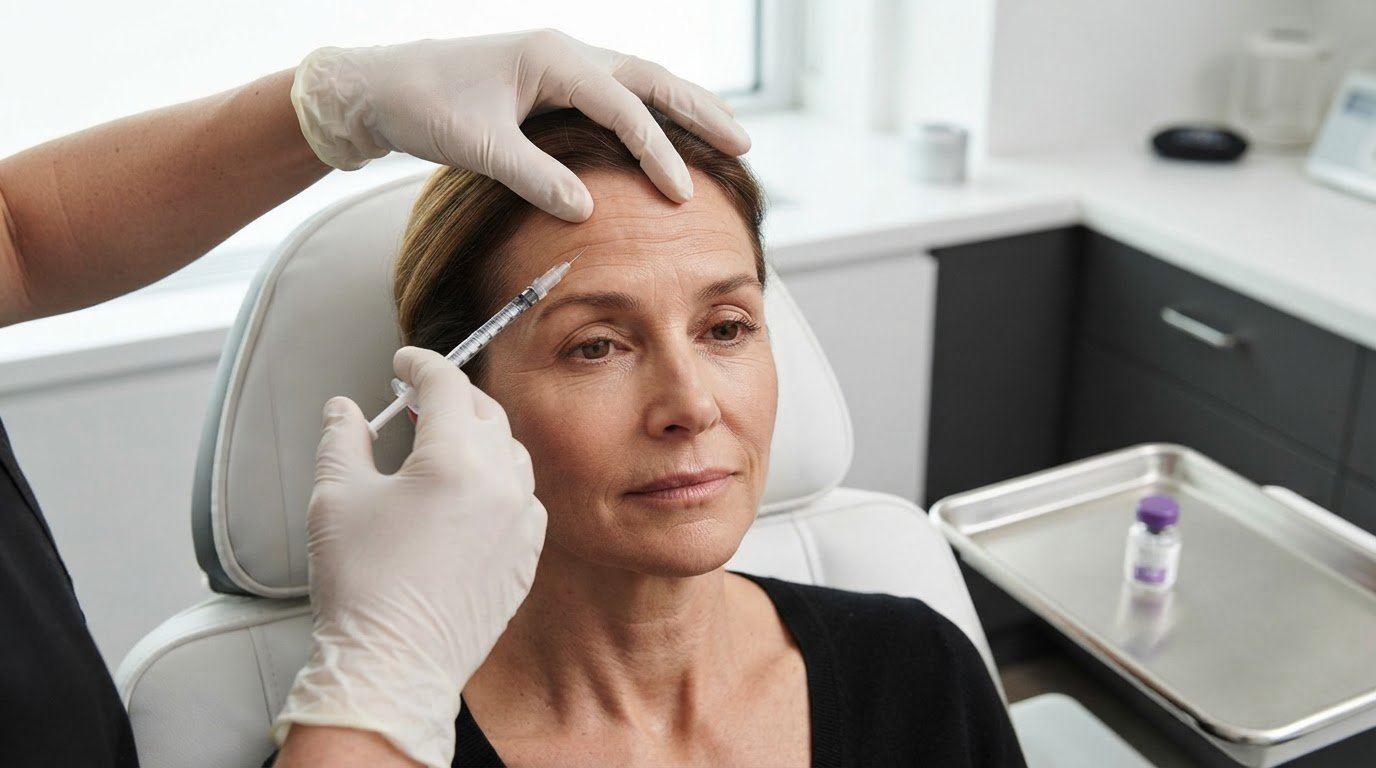
Forehead Botox usually lasts about 3 to 4 months, and its effects build gradually rather than appearing right away. If you’re wondering how long Botox lasts in the forehead, the timeline includes both the days it takes to take effect and the months before muscle movement begins returning.
It’s natural to want to know when you’ll see a difference and how long it will stay. Most people notice early smoothing within 3 to 7 days, with full results visible around the two-week mark. Results commonly begin to fade between months 3 and 4, although the timing varies from person to person.
This guide explains what happens after forehead Botox, from the initial injection to peak effect and gradual fading. It also covers how repeat treatments may affect duration and how Botox differs from fillers, brow lift surgery and other neuromodulators, helping you understand which option addresses your concern and what timeline to expect.
Key Takeaways
- Understand why a first treatment may feel different from repeat sessions, and what can influence how long results remain noticeable.
- Learn how Botox gradually affects the nerve-muscle connection, so you can set realistic expectations for when changes become apparent.
- Recognize the difference between gradual fading and an abrupt return of forehead movement.
- See how Botox compares with fillers, brow lift surgery, and other neuromodulators based on the concern each option addresses.
Duration for first-time patients and with repeat treatments
For first-time patients, forehead Botox may last about 2 to 3 months; repeated treatment can extend results for some. The timeline depends on factors such as dose, muscle activity, and treatment history.
First-Time Treatment Duration
A first injection gives patients a useful baseline for how their forehead muscles respond. Results may last about 2 to 3 months for first-time patients, while Botox results generally last 3 to 6 months when appropriately dosed. Differences in muscle activity and dose help explain why one person’s results fade sooner than another’s. A consultation can set expectations around movement, wrinkles, and the desired effect.
In the United States, forehead Botox cost depends on the treatment plan and is provided after a quote request. The treated area and amount of product used affect the plan.
A common maintenance interval is 3 to 4 months. The timing is planned around returning muscle movement and the treatment approach, rather than repeating injections as soon as any movement appears.
Botox injections in the forehead aren’t recommended during pregnancy or breastfeeding. Avoid treatment during these periods.
Treatment History and Repeat Injections
Repeated treatments are injections given over time, and a patient’s prior response helps guide future planning. Some patients with regular treatment may see results last 4 to 6 months, and some report effects lasting 6 months or more. The American Academy of Dermatology says treated muscles may thin with repeated Botox, which can help results last longer. Treatment history informs decisions about timing and dose.
Botox Cosmetic is FDA-approved for moderate to severe forehead lines in adults. Its label describes five injection points across the forehead. Botox relaxes muscle movement that contributes to expression lines; dermal fillers add volume rather than changing muscle activity. The FDA recommends against injecting fillers into the forehead because accidental injection into blood vessels can cause serious injury. Skin treatments address texture, while deeper wrinkles may call for a combination approach discussed during consultation.
When do forehead wrinkle injections reach their peak effect?
Forehead Botox builds gradually: early smoothing often appears within 3 to 7 days, and most people see results within 10 to 14 days. Botulinum toxin temporarily weakens signals between nerves and muscles, reducing contractions that create horizontal forehead lines.
Results depend on factors such as dose, muscle strength and activity, injection placement, and treatment history. Stronger muscle movement can affect how the forehead responds. Repeated injections may thin treated muscles and help results last longer. A consultation can take both wrinkle softening and eyebrow balance into account.
Placement matters because the frontalis muscle lifts the eyebrows and creates horizontal lines. A cosmetic injection plan targets the muscles contributing to the concern while aiming to preserve a balanced appearance. Larger muscles receiving fewer units may take longer to respond than smaller muscles receiving more.
Common temporary effects include small bumps, mild redness, tenderness, or slight bruising at injection sites immediately after treatment. Avoid rubbing or massaging the forehead for 24 hours unless given different instructions, and avoid intense exercise for several hours. Seek immediate medical help for breathing, swallowing, or speaking difficulties.
To support a consistent result, follow post-treatment instructions and plan future injections around the return of muscle movement. Daily broad-spectrum SPF 30 or higher helps protect skin from UV-related aging, although it doesn’t extend the toxin’s muscle-relaxing effect. The treated muscles gradually regain activity as the effect fades.
At the two-week point, the full effect is generally apparent, making it a useful time to assess symmetry and movement. If the forehead still moves more than expected, discuss dose and placement at a follow-up. A measured plan aims to soften lines while retaining natural expression.

Typical duration and fading timeline
If you’re estimating how long Botox lasts in the forehead, think in terms of a gradual change rather than a sudden stop. Results commonly begin fading between months 3 and 4, while movement returns progressively.
Typical Forehead Botox Duration
Forehead Botox typically lasts about 3 to 4 months, which gives you a general timeframe for planning treatment. The FDA prescribing information describes Botox Cosmetic results for frown lines lasting approximately 3 to 4 months. Your own timeline can differ, so noting when expression lines start to reappear helps make the duration more meaningful than relying on a calendar alone.
Dose and Duration of Effects
Dose affects duration: lighter Botox dosing may last 6 to 8 weeks, while heavier dosing may last more than 6 months. Cleveland Clinic notes that higher Botox doses tend to last longer. These ranges describe different dosing patterns, not a reason to choose a larger dose. A treatment plan balances the desired degree of wrinkle softening with natural facial movement.
Fading of Forehead Lines and Crow’s Feet
Forehead results commonly begin fading between months 3 and 4, while Botox around the eyes typically lasts 3 to 4 months. Botox Cosmetic studies tracked improvement for up to 120 days, and forehead Botox usually wears off completely by around 6 months. These timelines help explain how long Botox lasts in the forehead, but they don’t mean every line changes at once.
For example, a line may first appear when you raise your eyebrows, then become more noticeable at rest as movement returns. This gradual change differs from an abrupt loss of effect. Watching how your expression changes over time can help you see whether forehead lines or crow’s feet are fading at different rates.
Comparison with fillers, brow lift surgery, and other neuromodulators
Botox temporarily reduces muscle movement, which can soften forehead lines that appear with expression. Fillers work differently, adding volume beneath the skin, while a brow lift changes brow position through surgery. Start by identifying the concern: active muscle movement, volume loss, or brow position.
Botox and other forehead wrinkle injectables in the neuromodulator category act on muscle activity, but their formulations and dosing differ. They aren’t interchangeable by unit, and results depend on the product and treatment plan. Fillers, by contrast, don’t relax the muscles that create horizontal lines. The FDA recommends against injecting dermal fillers into the forehead because accidental injection into blood vessels can cause serious injury.
A brow lift is a surgical option for changing brow position, rather than temporarily limiting muscle movement. It may be considered when brow position is the main concern; Botox targets expression-related movement. These approaches address different features, so comparing them only by how long results last misses the key distinction. Consider whether the desired change involves movement, volume, or position.
Treatment area also matters. Botox around the eyes typically lasts 3 to 4 months, while Cleveland Clinic says a lip flip typically lasts 2 to 5 months. Those examples show why duration in one facial area doesn’t establish duration in another. A treatment plan should match the targeted muscles and the desired appearance.
For forehead lines that appear mainly during expression, a neuromodulator addresses muscle movement. Surgery addresses a different concern: brow position. Fillers aren’t a safe substitute for forehead Botox, given the FDA’s warning. Keeping your goal specific clarifies the comparison: movement, volume, or position.
Dr. Leonard Grossman: Botox Injections
Dr. Leonard Grossman’s Botox Injections offer an option for softening forehead lines caused by repeated muscle movement. If you’re weighing treatment after learning how results develop and fade, a consultation can help connect your goals with a suitable approach. The discussion can consider which lines appear during expression, how much movement you want to retain, and your previous treatment experience. Botox addresses muscle activity, so it may not suit concerns centered on skin texture or brow position. Understanding that distinction can help you decide whether this treatment aligns with the change you’re seeking. For a personal discussion about forehead Botox, contact Dr. Leonard Grossman.
Choose a Plan That Fits Your Goals
Knowing how long Botox lasts in the forehead can help you think beyond a single appointment and decide how treatment fits your aesthetic goals. Consider the change you want, how much facial movement you prefer to keep, and whether your priorities may shift over time. These preferences can guide a focused conversation about an approach that feels consistent with your natural expression.
Before discussing treatment, describe what bothers you most: lines that appear when you raise your eyebrows, a change in brow position, or another concern. Each goal points to a different approach. Dr. Leonard Grossman also offers Fat Grafting to the Breasts, Fat Grafting to the Face, and Fat Grafting to the Buttocks, procedures that address areas other than the forehead.
Let your questions and preferences guide the next step. Contact Dr. Leonard Grossman to discuss whether Botox Injections fit your goals and explore a considered plan that feels right for you.
Frequently Asked Questions
When does Botox take effect?
Early changes can appear within 3 to 7 days, while the fuller effect develops over the following days. For example, forehead movement may gradually feel less pronounced rather than changing all at once. If you’re planning treatment around an event, allow at least two weeks beforehand so the result has time to develop.
Does forehead line treatment remove deep wrinkles completely?
No. Botox can soften forehead lines, but deep creases visible when your face is relaxed may remain. A line that appears when you raise your eyebrows, for example, may respond differently from an etched crease visible without expression. Reducing muscle movement doesn’t erase every change in skin texture or restore lost volume.
How does it feel when Botox starts working?
Some people notice a slightly tight or heavy feeling after their first treatment, and it may ease within 1 to 2 weeks. The sensation can vary; the visible change develops as forehead movement softens. Small bumps, mild redness, tenderness, or slight bruising at injection sites can also occur right after treatment and are usually temporary.
What happens when you stop using Botox?
As the effect wears off, treated muscles gradually regain movement, and expression lines can become more visible again. Stopping treatment doesn’t maintain reduced movement indefinitely. You may notice a crease returning when you raise your eyebrows before it becomes as noticeable at rest. The pattern depends on your facial movement and the lines present before treatment.
When do forehead Botox results start and reach their peak?
Initial smoothing often starts within 3 to 7 days, and results generally become clearer over the next week. Around 10 to 14 days after treatment, most people see the fuller effect. A change on day three doesn’t show the final outcome; assessing the forehead later gives a more useful sense of the overall response.
Does forehead Botox last longer with repeated treatments?
For some people, results may last longer after repeated treatments, though duration varies. The American Academy of Dermatology explains that a treated muscle may thin with repeated Botox, potentially extending results. Your treatment history is useful context: how quickly movement returned after earlier injections can help inform future timing and expectations.