Skip to content

A polished before-and-after gallery shouldn’t be your main reason for choosing a surgeon. Red flags when choosing a plastic surgeon include credentials you can’t verify, vague answers about the surgical facility or anesthesia, and results that look inconsistent or unlike your goals. Start by verifying the surgeon’s specialty credentials, then assess their approach, safety planning, and patient photos.
It’s natural to focus on the result you hope to see, especially when photos make a procedure feel more tangible. But realistic expectations matter: your starting point, the surgeon’s judgment, and how healing unfolds all shape the outcome. A thoughtful consultation should leave you feeling heard and informed, not rushed into a decision.
This guide explains how to assess a surgeon’s credentials, review before-and-after photos for authenticity and natural-looking results, and ask about the facility, anesthesia, and emergency planning. You’ll also learn which sales tactics and promises warrant closer scrutiny, so you can compare your options with greater confidence.
Key Takeaways
- Verify a surgeon’s American Board of Plastic Surgery certification and make sure your consultation is directly with the surgeon.
- Compare patient photos for consistent lighting, angles, and realistic outcomes, and ask whether the images show the surgeon’s own patients.
- Understand where surgery will take place, whether the facility is accredited, and how its emergency plans and anesthesia arrangements are explained.
- Look for results that appear balanced and suited to the patient, not identical; clear expectations and honest discussion of risks matter as much as the gallery.
1. How do I choose a cosmetic plastic surgeon?
Start by matching the surgeon’s training to the procedure you’re considering. In the United States, any licensed physician can legally use the title “cosmetic surgeon,” regardless of specialty. There’s no federal requirement for specific plastic surgery training to use that title. The title alone, therefore, doesn’t establish expertise in cosmetic surgery or a particular operation.
Look for American Board of Plastic Surgery (ABPS) certification. It requires six years of surgical training, including at least three years of plastic surgery residency. Candidates must also pass written and oral examinations that include a clinical case collection. ABPS certification requires surgeons to operate in accredited medical facilities, and board members are expected to maintain high ethical standards.
Verify certification directly through the ABPS or the American Society of Plastic Surgeons. Patients can also check a doctor’s credentials through plasticsurgery.org. Confirm that the surgeon is certified in plastic surgery, not only in another specialty or a narrower area. In a case described by the U.S. Government Publishing Office, the plaintiff alleged that a surgeon held facial cosmetic surgery certification but lacked certification in a specialty encompassing abdominal procedures.
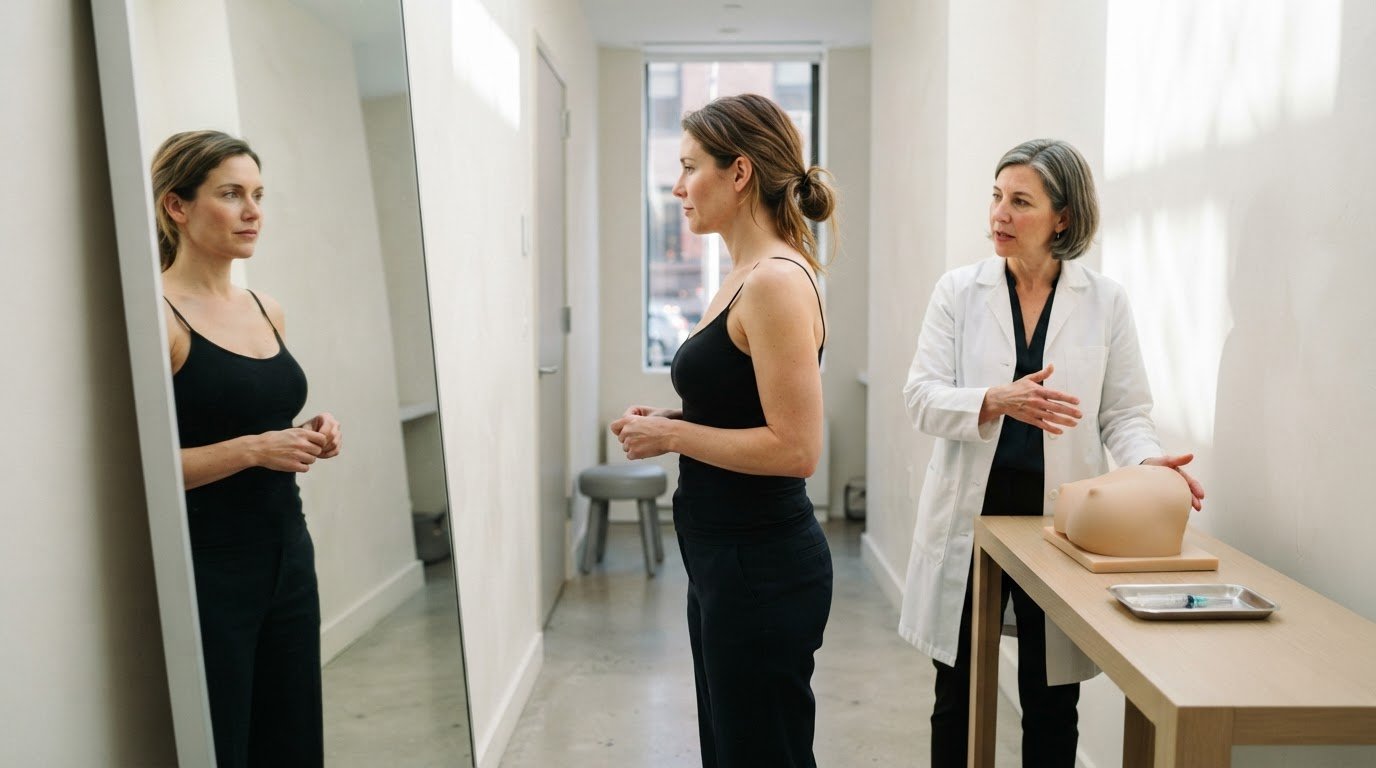
What are red flags during a plastic surgery consultation? Watch for rushed answers, pressure to book immediately, unwanted add-ons, or guarantees of a specific result. A surgeon should listen, explain risks, and discuss expectations in relation to your goals. Your primary consultation should be with the surgeon, not solely an assistant or nurse.
How to report a plastic surgeon for unsafe practices in the United States? Preserve relevant records and submit a complaint to the appropriate state medical board. Include dates, procedure details, communications, and documents that support your concern.
2. Assessing photo consistency, diversity, and realism
Treat a before-and-after gallery as evidence to examine, not a promise of your result. Ask whether each photo shows a patient the surgeon personally treated. Images copied from the internet or shown without clear context don’t demonstrate that surgeon’s work. Ask which procedure was performed, when the “after” image was taken, and whether the same surgeon performed it.
Compare each pair carefully. Look for similar camera angles, lighting, distance, posture, and facial expression, since changes in these details can make results look more dramatic. For example, a tilted head or different lighting may alter how facial contours appear. Consistent presentation helps you focus on the aesthetic change rather than the photography. Note any differences you want the surgeon to explain.
Look for patients with varied starting features and body types, not a gallery of seemingly identical examples. A diverse selection can help you assess whether the surgeon has treated people with concerns similar to yours. If the online gallery is limited, ask whether a broader in-office collection is available. A small online selection alone doesn’t prove the photos are inauthentic, but context matters.
Use images to guide a conversation, not predict an exact outcome. Point to specific features you like, such as a natural-looking contour, and explain what feels too pronounced. Ask how your anatomy and chosen procedure could affect the result. Photos can illustrate possibilities, but they can’t show every factor in healing or how complications were handled.
Look for red flags when choosing a plastic surgeon, such as pressure to select a procedure based only on a striking image. Another of the red flags when choosing a plastic surgeon is avoiding reasonable questions about who is pictured or when the photos were taken. Bring a short list of images and observations to your consultation. For a separate look at non-surgical facial options, explore dermal filler treatment as another aesthetic approach.

3. Surgical facility, anesthesia, and emergency planning
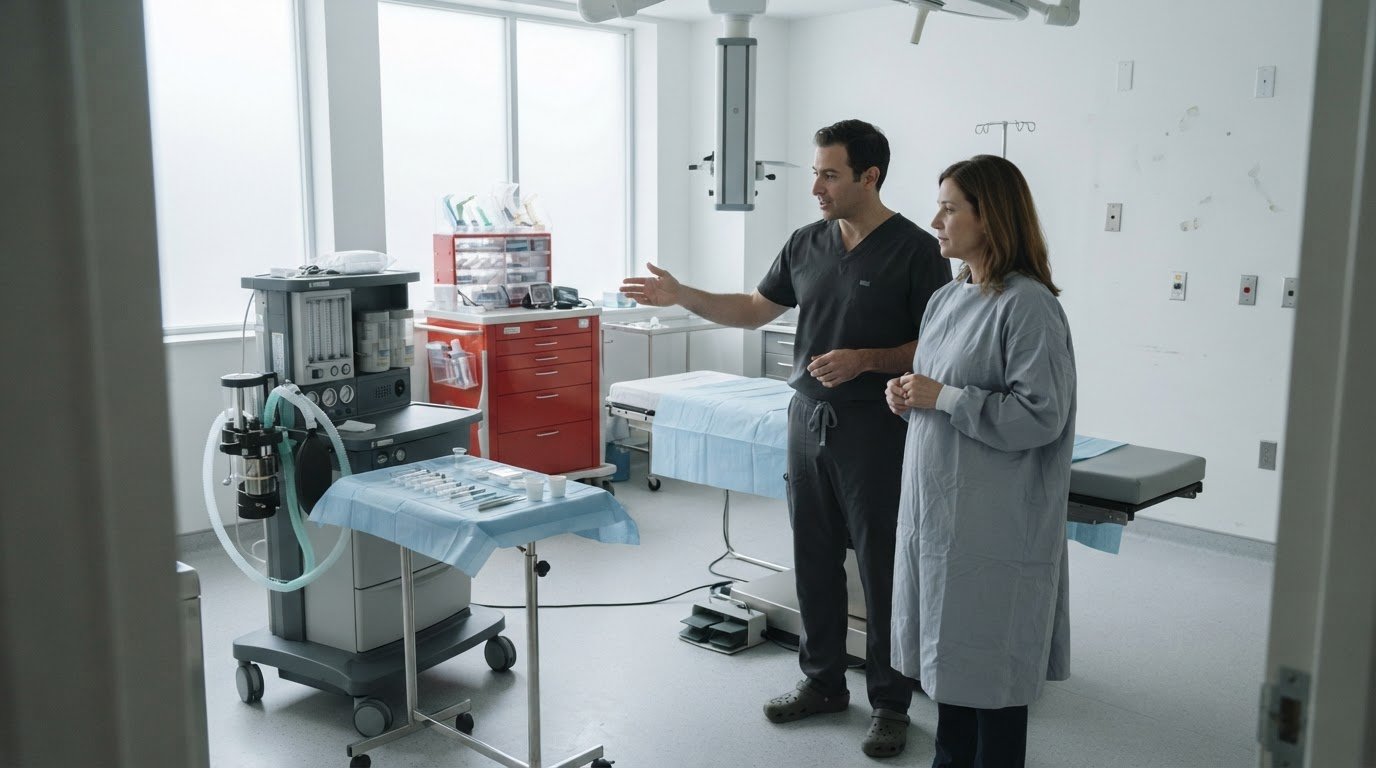
Ask where the cosmetic procedure will take place, why that location suits it, and who provides anesthesia. A facility’s accreditation helps assess standards for equipment, safety, surgeon credentials, and staffing. Ask whether the site is accredited by AAAASF or another recognized body, and how its emergency protocols work. An unaccredited surgical facility is a warning sign, not a detail to overlook.
What safety standards should an accredited plastic surgery facility meet? Accreditation evaluates equipment, safety practices, staff, and surgeon qualifications. Ask how the facility prepares for emergencies and whether its team has experience with the planned procedure.
Discuss the operation’s risks and possible complications before deciding. No procedure should be presented as risk-free; informed consent depends on understanding potential harms as well as expected benefits. Ask the surgeon to explain the proposed approach in plain language and address your concerns. For anesthesia, clarify the planned method, who administers it, and how the team monitors you during surgery.
What questions should you ask before choosing a plastic surgeon? Ask about the surgeon’s training and experience with your specific operation, the surgical site, anesthesia arrangements, and emergency response. Also ask why the location was selected and how care is coordinated before and after surgery. If the consultation and operation sites are far apart, consider how distance could complicate follow-up.
How can you verify a plastic surgeon’s hospital privileges for a procedure? Ask which hospital grants privileges for that exact operation, then contact its medical staff or credentialing office to verify them. A surgeon’s general qualifications don’t automatically establish privileges for every procedure.
Be cautious of unusually low surgical fees or deep discounts, especially when paired with pressure to book quickly. A steep offer may distract from questions about staffing, anesthesia, or emergency planning. Choosing a suitable surgeon means comparing the full care plan, not deciding by price alone.
4. Natural-looking before-and-after results
A natural-looking outcome should suit the person, not reproduce one template. Compare the overall balance in each photo: facial features should remain recognizable, and body contours should look proportionate to the patient’s frame. For example, a subtle change around the eyes may preserve expression, while a reshaped nose should remain harmonious with the face. These details help clarify what “natural” means to you.
Choose a photo and identify the exact feature you admire. Then ask the surgeon whether your anatomy and the proposed procedure support a similar goal. A clear answer should explain which changes are realistic for your starting point, rather than treating another patient’s outcome as a blueprint. If you’re considering different procedures, compare examples of the same procedure instead of judging unrelated transformations side by side.
Look for results that appear balanced from more than one viewpoint. In facial photos, compare the front and profile; in body images, consider how the contour looks across the full treatment area. Notice whether the result seems consistent with the patient’s proportions, rather than focusing on a single dramatic angle. Ask how the images relate to the procedure and healing stage, and whether editing or styling affects what you see.
A natural result is also a matter of personal preference. Bring a specific example to a consultation and describe what feels right, such as a softer contour or preserved facial character. Ask the surgeon to explain how the plan supports that goal and what trade-offs matter. A mismatch between your request and the doctor’s explanation deserves discussion before deciding. For a conversation about facial aesthetic goals, schedule a discussion of your options.
Ask whether consultation photos show genuine patients operated on by the surgeon, rather than images from the internet. An online gallery may be limited, while an in-office collection can show patients the surgeon operated on. Breast augmentation patients may not see actual results until about six months after surgery, when implants have settled.
Periodic imaging is recommended after gel breast implant surgery because implants may rupture without symptoms. Also consider care-setting and payment concerns: inability to operate in nearby surgery centers may be a warning sign, as it can result from a surgeon being disinvited or banned. Be wary of incentives to pay a non-refundable deposit before meeting the surgeon.
Dr. Leonard Grossman: Fat Grafting to the Breasts
Dr. Leonard Grossman offers Fat Grafting to the Breasts for people considering this option as part of their aesthetic goals. After reviewing credentials, patient photos, and surgical safety, discuss directly whether the procedure aligns with your priorities. Bring examples of results you find natural-looking and describe the changes you hope to achieve.
A consultation can help you discuss the proposed approach, expected outcome, risks, and questions about the surgical facility and anesthesia plan. Use the conversation to clarify what matters most and understand the considerations before deciding. If you’re comparing options, Dr. Grossman also offers TUBA Breast Augmentation.
Contact Dr. Leonard Grossman to discuss Fat Grafting to the Breasts and your goals.
Make your next step a considered one
Choosing surgery is not a race to secure a date. Give yourself room to consider whether the procedure, the surgeon’s explanations, and the outcome you hope for feel aligned. Red flags when choosing a plastic surgeon matter because they can reveal a mismatch between your priorities and the care being discussed. Keep your goals at the center, and take unresolved questions seriously before moving forward.
If you’re considering fat transfer, Dr. Leonard Grossman offers Fat Grafting to the Breasts, Fat Grafting to the Face, and Fat Grafting to the Buttocks. A discussion can help you explore whether one of these procedures fits the change you’re seeking and understand the considerations involved. The decision is yours, made at your pace and with clear information.
Contact Dr. Leonard Grossman to discuss your goals and possible next steps. A thoughtful decision starts with asking what matters to you, and you can move forward with care and confidence.
Frequently Asked Questions
How do I choose a cosmetic plastic surgeon?
Choose based on verified specialty credentials, experience with your specific procedure, and the quality of the consultation. Before meeting, write down your goals, concerns, and what you hope to preserve. Notice whether the surgeon responds to each point with a clear rationale rather than a standard plan. A useful discussion should also leave room to consider alternatives, including deciding against surgery.
What risks come with choosing an unqualified or inexperienced plastic surgeon
A surgeon without relevant plastic surgery training may not have expertise in the procedure you’re considering. Surgery also carries risks and possible complications, so choose a surgeon who explains them and sets realistic expectations.