Skip to content

The habits you avoid after a buttock fat transfer can matter as much as the care you give yourself. Knowing what not to do after fat transfer to buttocks means protecting the area from pressure, returning to activity gradually, and following your surgeon’s recovery instructions. Recovery can last up to 6 weeks after surgery, so give your body time to heal.
It’s natural to focus on the shape you hope to achieve and wonder how everyday choices might affect it. This guide explains which recovery habits, foods, and drinks to avoid, how to reduce pressure while sitting or sleeping, and how compression garments and stable weight can support your results.
You’ll also learn why gentle movement matters, when to ease back into exercise, and which warning signs need prompt medical attention. A clear plan and patience during recovery can help you make informed choices as your body heals.
Key Takeaways
- Protect healing tissue by limiting pressure on the buttocks and easing back into movement according to your recovery plan.
- Choose nourishing foods and drinks, and avoid habits such as smoking or alcohol that can interfere with healing.
- Wear your prescribed compression garment as directed, while avoiding tight clothing that adds unwanted pressure.
- Keep your weight relatively stable after recovery; substantial weight changes can affect buttock volume and contour.
- Be patient with changes in swelling and shape, since final results can take about six months to appear.
1. Protecting transferred fat cells during early recovery
For American Society of Plastic Surgeons aftercare, the core safety steps are to follow your surgeon’s postoperative plan, protect grafted tissue from pressure, and return to activity gradually. These measures support healing after a butt lift while your body establishes a blood supply to the injected fat. Recovery can last up to 6 weeks after surgery, and final results take longer to emerge.
Plan for practical help before surgery. Arrange a ride home and have someone assist you during the first 24 hours. Spend your first night at home resting in bed, getting up only with help to use the restroom. Starting the day after surgery, walk indoors for 2-5 minutes every 2 hours while awake. These short walks support circulation without replacing rest.
Protect both the treated area and liposuction sites. Avoid strenuous exercise, heavy lifting, bouncing, and movements that put pressure on your buttocks during early recovery. Don’t apply hot, warm, cold, or ice compresses to the treated area. Keep incisions clean and dry for 48 hours, then follow your surgeon’s showering and wound-care instructions. If redness, swelling, or pain increases, contact your surgical team.
Liposuction can cause swelling and discomfort where fat was harvested. Lymphatic massage by a trained therapist may help ease these symptoms, but it may not suit every patient or treatment area. Ask your surgeon before scheduling a massage, and avoid pressure on the buttocks unless specifically cleared.
Nutrition and hydration also support recovery. Drink at least 64 ounces of water per day after surgery, unless your care team gives different instructions. During the first eight weeks, include electrolytes in your daily diet as recommended in the recovery guidance. Protein supplies building blocks for tissue repair: the guidance gives targets of about 1.2 grams per kilogram of body weight per day for women and 1.5 grams for men after surgery. For example, include a protein source with meals rather than relying on one large serving.
Swelling and bruising may persist for a few weeks, so your early appearance does not show the final contour. Fat cells that establish a blood supply can contribute to lasting volume, while some transferred fat is naturally lost during healing. Don’t judge your results or restart intense exercise based on appearance alone. Follow each postoperative milestone and increase activity only as your surgeon’s recovery plan allows.
2. Post-surgery foods and drinks to avoid
For the first month after surgery, avoid or limit salt, sugar, caffeine, alcohol, and refined carbohydrates, as advised in your recovery guidance. These choices can make balanced nutrition harder while your body heals. Choose meals built around protein, vegetables, and whole-food carbohydrates instead of relying on salty packaged snacks or sweets. Drink water regularly; the previous section covers hydration targets and daily electrolytes.
Alcohol needs particular care after a Brazilian butt lift. Avoid it for at least 1 week after surgery, and continue avoiding it while taking pain medication. Alcohol can interact with medication, so follow your plastic surgeon’s instructions about when to resume drinking. Avoid smoking tobacco or marijuana for at least 3 weeks after surgery. Nicotine restricts blood flow, which can interfere with healing. Don’t restart either habit simply because incisions look closed.
Medication choices matter, too. Avoid NSAIDs such as ibuprofen, naproxen, or aspirin during the first week after surgery because of bleeding concerns. Don’t stop or change prescribed medication on your own. If you’re unsure whether a prescription, supplement, or over-the-counter product is suitable, contact your surgical team for instructions before taking it.
A Brazilian butt lift uses liposuction to collect fat, which is then processed and injected into the buttocks. The injected fat needs to establish a blood supply, and some transferred cells may not survive, even with careful aftercare. Follow-up visits let your plastic surgeon assess healing, review symptoms, and discuss how your contour is developing. Swelling can obscure changes, so your early appearance isn’t a reliable guide to final results.
Contact your surgeon promptly for a fever over 100.4, persistent dizziness, redness and heat at an incision, severe nausea or vomiting, or fluid leaking from an incision. Shortness of breath, painful breathing, or chest pain during initial recovery calls for urgent medical help. Increasing redness, swelling, or pain can also signal a possible infection and deserves medical attention.
Results continue to develop over time. Final fat-transfer results can take about six months to appear, and roughly 30 to 40 percent of transplanted fat cells may not survive BBL recovery. A plastic surgeon may discuss further surgery if the desired volume isn’t achieved, but decisions should account for healing and the settled contour. Don’t use restrictive dieting, alcohol, or smoking to try to alter recovery or force a faster cosmetic result.
3. Avoiding pressure on the buttocks
Avoid direct pressure on the transferred fat for at least eight weeks during recovery. Pressure can disrupt healing around newly injected fat cells, so plan sitting, sleeping, and travel around that restriction. During the first 10-14 days, many aftercare plans limit sitting to essential activities such as eating and using the toilet. Follow the specific instructions given for your procedure.
For the first three weeks, avoid prolonged pressure and keep toilet visits under 10 minutes at a time. When resting, lie on your stomach or side rather than your back. If you sleep on your side during the first week, place a pillow between your legs to reduce contact and help keep your hips comfortable. Avoid rolling onto your back while asleep by arranging pillows for support.
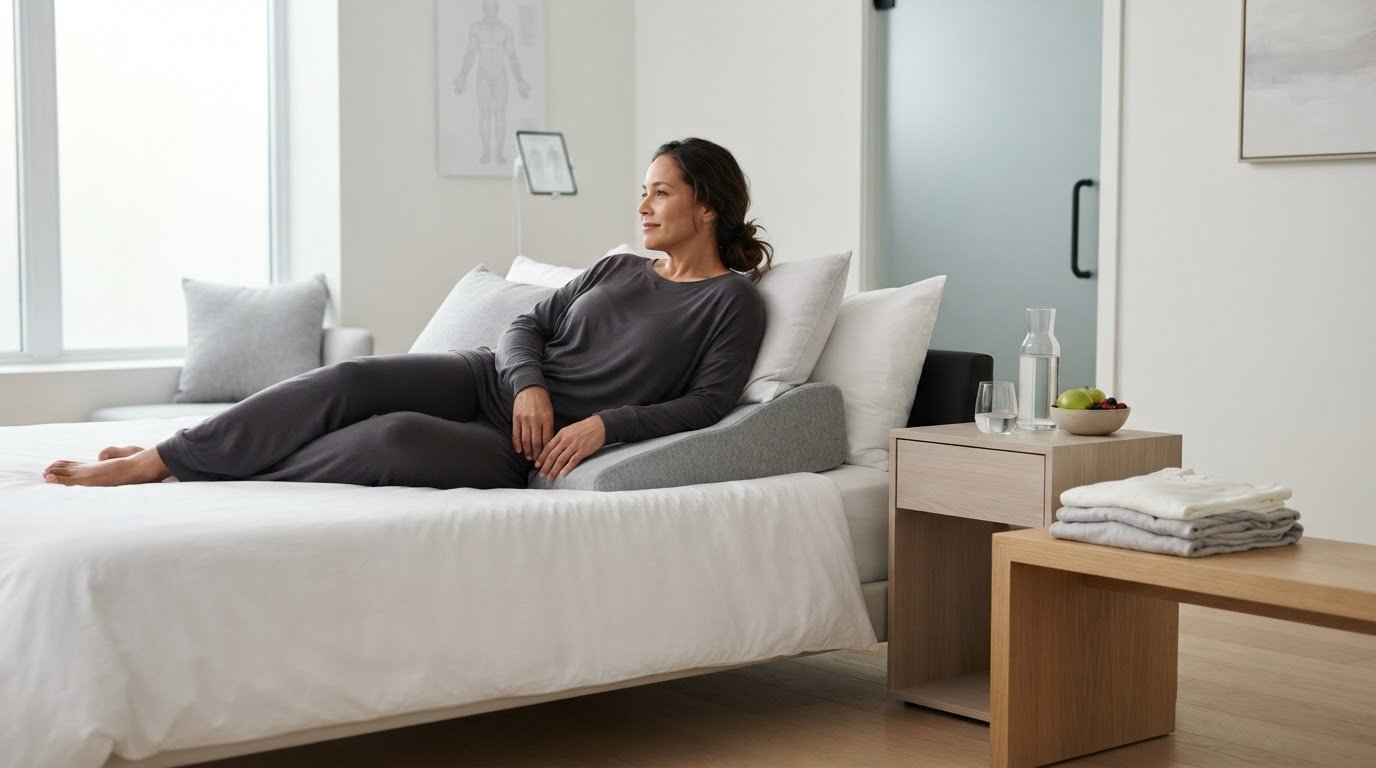
Returning to a desk or car seat takes planning. When cleared to sit, use a wedge-shaped cushion beneath your thighs so your weight shifts away from the buttocks. A donut pillow is appropriate only after your doctor clears you to use one. Don’t improvise with a cushion that presses on the grafted area. During the first three weeks, avoid sitting on the toilet longer than 10 minutes.
Exercise can create pressure or movement around the graft. Avoid squats, lunges, stationary bikes, and leg sleds until week six or later, when buttock-targeting movements may be introduced. Don’t rush back to running or bouncing activities. When exercise resumes after eight weeks, avoid pressure, compression, or trauma to the transferred fat. Let healing guide your pace rather than using soreness to test what you can tolerate.
Protect incision areas from heat and smoke, too. Avoid hot showers after the procedure, and follow your surgeon’s instructions for bathing and incision care. Don’t smoke tobacco or marijuana for at least three weeks after surgery; nicotine restricts blood flow to the skin. Keep indoor spaces smoke-free during recovery to reduce secondhand smoke exposure.
These precautions can feel demanding, especially when sitting is part of work or daily routines. Arrange a standing workspace, take short standing breaks, and ask for help with tasks that require prolonged sitting. Direct pressure is the key restriction, not all movement: short, gentle walks support circulation while avoiding compression on the buttocks. If a position puts pressure on the treated area, change position rather than enduring it. The goal is to protect the graft as your body heals.

4. Compression garments
After a Brazilian butt lift, the right garment depends on where liposuction was performed and where fat was injected. Wear the compression garment recommended by your plastic surgeon, especially over liposuction areas. It can help manage swelling and support smooth healing there. The garment should not squeeze the transferred fat or put pressure on your buttocks. Avoid tight pants, leggings, and restrictive clothing during recovery.
Garment schedules vary with the surgeon’s instructions. Recommendations range from 3 weeks to 3 months after surgery, while six to eight weeks is a commonly described duration after a butt lift. Some postoperative plans call for wearing the garment as close to 24 hours a day as possible during the first 6 weeks. These are not interchangeable schedules. Follow the specific timing and fit instructions provided for your procedure.
Check the fit each time you put the garment on. Smooth out folded fabric, seams, and fasteners that could press into your skin or incision areas. The garment should feel supportive, not painfully tight or restrictive. If it shifts, rolls, or leaves uncomfortable pressure marks, contact your surgical team for advice rather than altering it yourself. The fit can change as swelling changes.
A BBL pillow serves a different purpose from a compression garment. It helps redirect weight toward your thighs when sitting, but use one only after you’re cleared to sit. Place it beneath your thighs so your buttocks rest beyond the cushion, rather than directly on the treated area. A pillow doesn’t remove the pressure restriction or replace the garment your surgeon prescribed.
Plan ahead for sitting during recovery. Keep a BBL pillow near your usual chair, and choose loose clothing that won’t add compression over the buttocks. For example, avoid tight leggings on a car ride, even if you’re using a cushion. During the first 3 weeks, avoid prolonged pressure on the buttocks, and keep toilet visits under 10 minutes at a time. Follow your recovery plan for when sitting is permitted.
At a follow-up consultation, describe any garment discomfort, swelling, or difficulty positioning your cushion. Bring the garment if you need help understanding its fit or placement. The goal is targeted compression where liposuction was performed while protecting the volume transferred to your buttocks. Don’t add extra shapewear or tighten straps to control swelling. Use only the garment and sitting support specified in your postoperative instructions.
5. Maintaining weight after fat transfer
Maintaining a stable weight after recovery helps preserve the contour created by fat grafting. Transferred fat cells that survive can respond to later weight changes, just like fat elsewhere in the body. Significant weight loss may reduce buttock volume, while weight gain can increase it. The practical takeaway is steady maintenance, not strict dieting or trying to force a particular shape.
During healing, avoid treating the scale as a daily verdict on your results. Swelling can obscure your developing contour, and early measurements don’t show the final outcome. Final fat-transfer results may take about six months to appear. Focus on your recovery instructions first, then build a sustainable routine with balanced meals and regular exercise after recovery.
Rapid weight-loss plans can work against your goal of preserving volume. After recovery, choose consistent meals that include protein, vegetables, and satisfying whole-food carbohydrates. Avoid severe restriction or skipping meals to change your shape quickly. Those approaches can make weight harder to maintain and may reduce overall body fat, including in your buttocks.
Weight gain also affects contour. That isn’t a target to aim for or a threshold that predicts a particular appearance. Instead, notice sustained changes in your weight and habits, and return to balanced eating and regular movement.
A compression garment and a pillow have different roles in recovery. The garment supports healing where liposuction was performed; a pillow helps reduce pressure when you’re cleared to sit. Neither controls weight or guarantees that grafted fat will survive. Don’t wear extra-tight shapewear or sit longer to try to “set” volume. Use each only as directed during recovery.
Once your surgeon clears regular activity, choose exercise you can maintain, such as walking and a gradual return to your usual routine. Keep activity consistent rather than cycling between intense workouts and long breaks. If your weight changes substantially after recovery, remember that your body’s fat distribution can change, too. Sustainable habits, including balanced nutrition and regular exercise, best support a stable result over time.
Dr. Leonard Grossman: Fat Grafting to the Breasts
Fat Grafting to the Breasts with Dr. Leonard Grossman may be relevant if you’re exploring a separate breast enhancement goal. It addresses a different area from buttock fat transfer, so consider it in light of your priorities rather than as part of buttock recovery.
A conversation about your goals can help clarify whether breast fat grafting suits the change you have in mind. If you’re still healing from another procedure, focus first on recovery and follow your postoperative instructions before considering additional cosmetic treatment. Dr. Grossman also offers Fat Grafting to the Face, Fat Grafting to the Buttocks, and TUBA Breast Augmentation.
Contact Dr. Leonard Grossman to discuss Fat Grafting to the Breasts or visit drgrossman.com.
Make Your Next Step a Thoughtful One
Knowing what not to do after fat transfer to the buttocks can help you approach recovery with greater clarity. Keep your goals connected to your health, healing, and everyday life. Rather than judging progress at a single moment, give yourself space to consider what feels right for your longer-term plans.
If you’re exploring other fat-grafting goals, Dr. Leonard Grossman offers Fat Grafting to the Breasts, Fat Grafting to the Face, and Fat Grafting to the Buttocks. A conversation can help you discuss these options in the context of your individual goals and treatment considerations.
Contact Dr. Leonard Grossman to discuss your goals and possible next steps. Thoughtful planning can help you move forward with confidence and care.
Frequently Asked Questions
How can I maximize my body contouring results through recovery?
Protect healing tissue and keep your weight relatively stable after recovery. Understanding what not to do after fat transfer to the buttocks can help you avoid choices that work against healing, such as returning to intense exercise too quickly or starting a strict diet. Follow your postoperative plan and attend scheduled follow-ups. For example, note questions about swelling or activity changes so you can discuss them at your next appointment.
How does a BBL work?
A Brazilian butt lift uses liposuction to collect fat from areas such as the abdomen, hips, waist, or thighs. The fat is prepared and injected into the buttocks in thin layers, into tissue under the skin rather than directly into the muscle. The transferred cells need to establish a blood supply. Some fat is absorbed during healing, so the initial shape can differ from the later contour.
How long does full recovery after a BBL take?
Early recovery can last up to 6 weeks after surgery, but “full recovery” also depends on what you mean. Returning to everyday routines, resuming strenuous exercise, and seeing the settled contour happen on different timelines. Final fat-transfer results can take about six months to appear as swelling changes and the grafted tissue develops a blood supply. Don’t use early swelling or appearance alone to judge your eventual result.
Warning Signs: When Should I Call My Doctor?
Call your surgeon promptly for a fever over 100.4, redness or heat at an incision, fluid leaking from an incision, severe nausea or vomiting, or dizziness that doesn’t go away. Increasing pain, redness, or swelling can also need assessment. Shortness of breath, painful breathing, or chest pain during initial recovery requires urgent medical help. If symptoms are rapidly worsening, don’t wait for a routine follow-up appointment.
When can I return to work or my usual activities?
Some patients return to work about 1-2 weeks after surgery, depending on their job; others need two weeks or more. A desk job may be manageable earlier than work involving lifting, prolonged sitting, or physical effort. Jobs requiring heavy lifting call for waiting at least 6 weeks before resuming that activity. Plan your return around the duties you actually perform, not just your job title.
When should I see my healthcare provider?
Attend the follow-up appointments scheduled for your recovery, even if your incisions appear to be healing well. At a visit, your healthcare provider can assess changes that are difficult to judge at home, including swelling and incision healing. Contact the surgical team sooner if symptoms worsen, new concerns arise, or you’re unsure how to follow an instruction. Keep a brief record of symptoms and medication questions for your next visit.
What activities should you avoid after a Brazilian butt lift or buttock fat transfer?
A practical way to remember what not to do after fat transfer to buttocks is to avoid activities that create impact, strain, or direct compression before your recovery plan allows them. Examples include running, high-cardio workouts, squats, lunges, heavy lifting, and prolonged sitting. Aerobic exercise is commonly restricted for the first 3 weeks, while lifting 10 lbs. or more is restricted for 6 weeks in the supplied guidance. Don’t assume feeling better means you’re ready for strenuous exercise.
When can you sit normally after buttock fat transfer, and should you use a BBL pillow?
Direct pressure on the buttocks is commonly avoided for at least eight weeks after fat transfer. Sitting rules can differ by activity: short, necessary sitting may be treated differently from a long car ride or desk shift. Use a BBL pillow only when cleared, placing it under your thighs to shift weight away from the grafted area. A pillow doesn’t make prolonged sitting pressure-free, so take breaks as your plan permits.